I’m looking through the bus windows, studying every branch we pass for signs of wildlife. I crane my neck, trying to catch sight of a sloth, or a toucan, or a monkey.
But all I see are trees, a thick expanse of trees in every shade of green imaginable. It’s the thing I noticed most flying into Costa Rica, how green the landscape was below us. A landscape meant for animals.
We’re on our way to Tortuguero National Park in Costa Rica, travelling through Braulio Carrillo National Park. It’s the second largest national park in Costa Rica at 50,000 km. Our guide, Sebastian, reels off the types of animals we might find in this park – two of the four species of monkeys (howlers and white-faced monkeys) and more than 300 species of birds including the Quetzal, the sacred bird of the Mayan.
With each name, each species of wildlife, our excitement builds at the promise of what’s to come on our own wildlife adventure in Tortuguero.
Sebastian tells us that when there are landslides on this road, which happen frequently in the wet season, they have to take a different road which adds three hours to the journey.
We see streams of water falling over rocks between the trees creating narrow waterfalls alongside the road.
We stop in the rainforest for breakfast and sit outside on a covered patio surrounded by green, where we see a hummingbird and red poker plants.
We drive on, past bamboo and banana plantations and see quetzals sunning themselves at the tops of the trees. past villages and cow paddocks to the rivers’ edge where we load our luggage on one boat and ourselves on the other.
The road is muddy, hours of rain have left puddles in the car park and along the edge of the river. Guests help each other, carrying bags and wheelie suitcases high out of the mud, as the rain continues to fall around us.
There are 40 in the group including friends, families, kids and retirees.
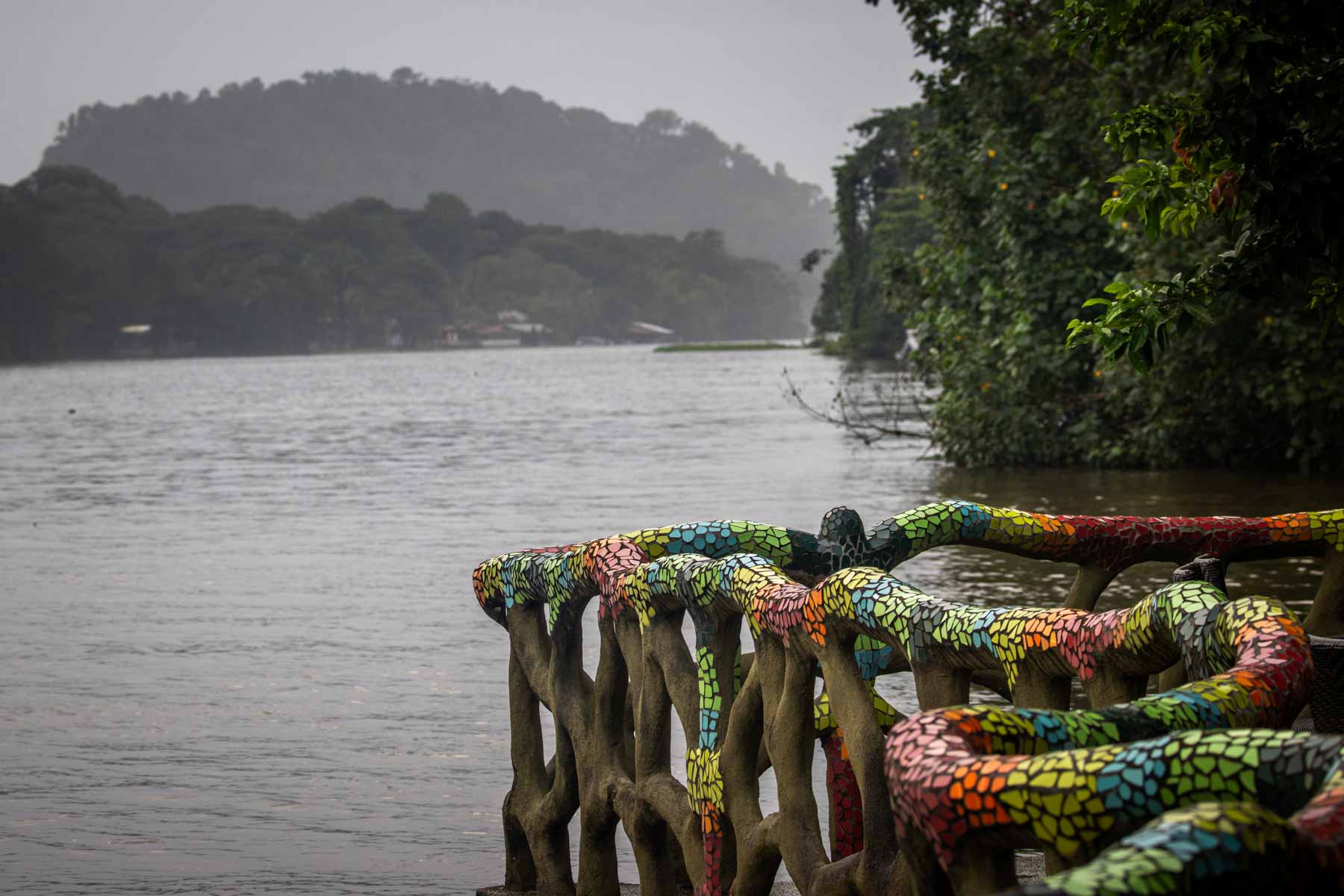
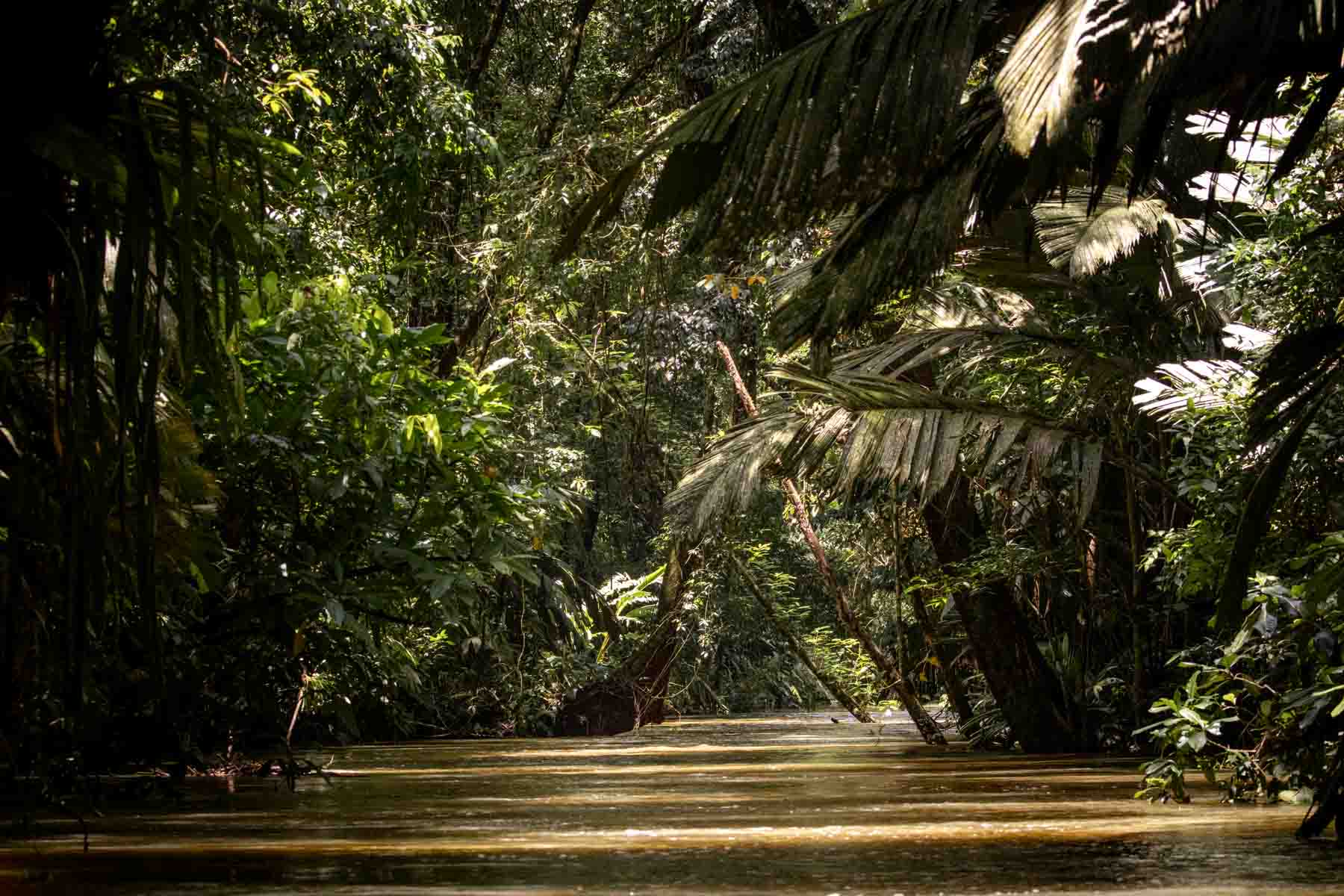
In our boat, we glide across the river through narrow channels edged by thick forest. At one point we slow to open the plastic sides on the boat. We all work together to roll up our sides, giving us a better view of the landscape outside.
And then we’re off again.
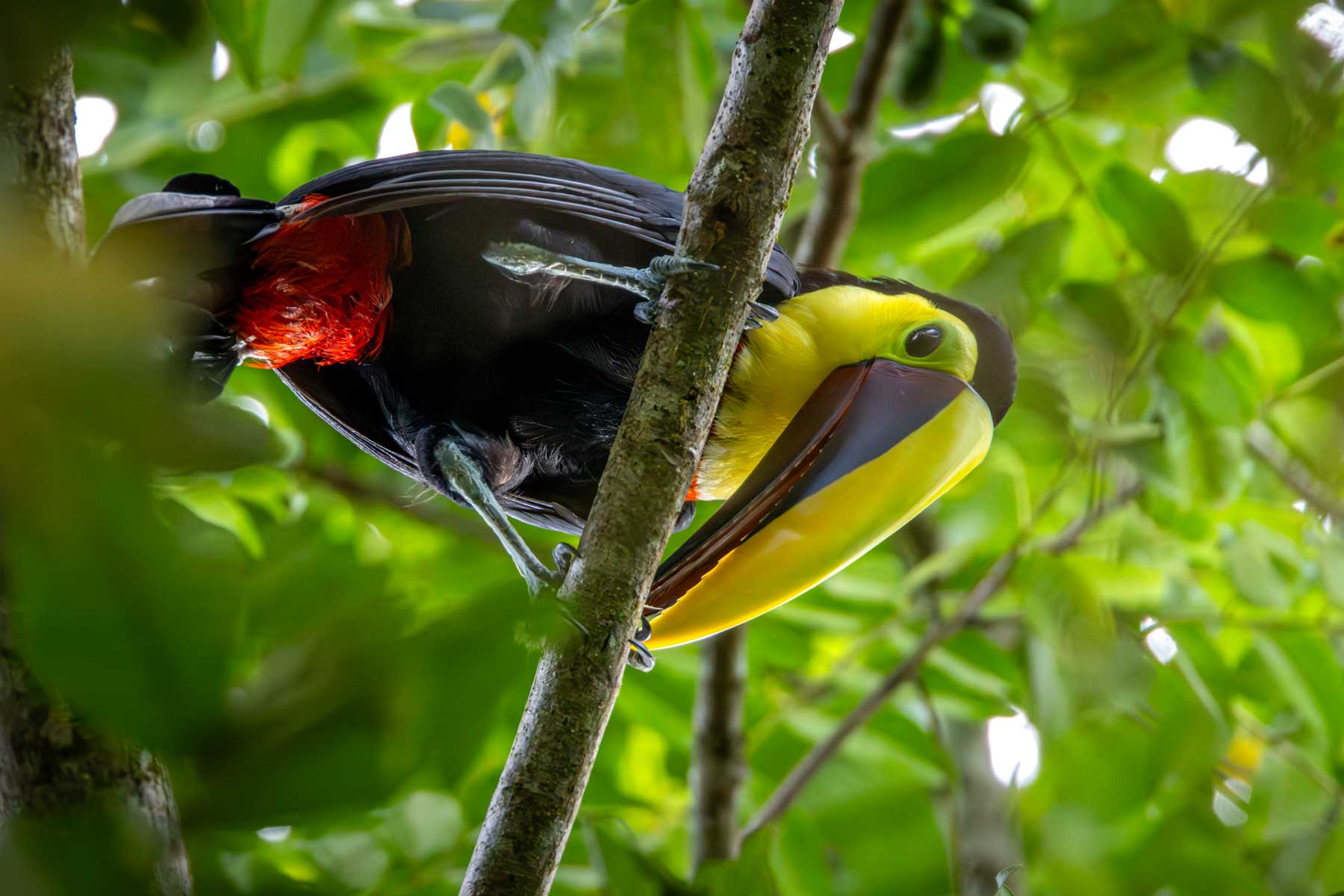
We pass a tiny toucan high in the trees, ibises and something that could be an eagle but we’re travelling too fast to really know.
We don’t slow down, we keep moving through the waters.
It rains on and off until we get close to Laguna Lodge, our home for three nights, and then it really pours.
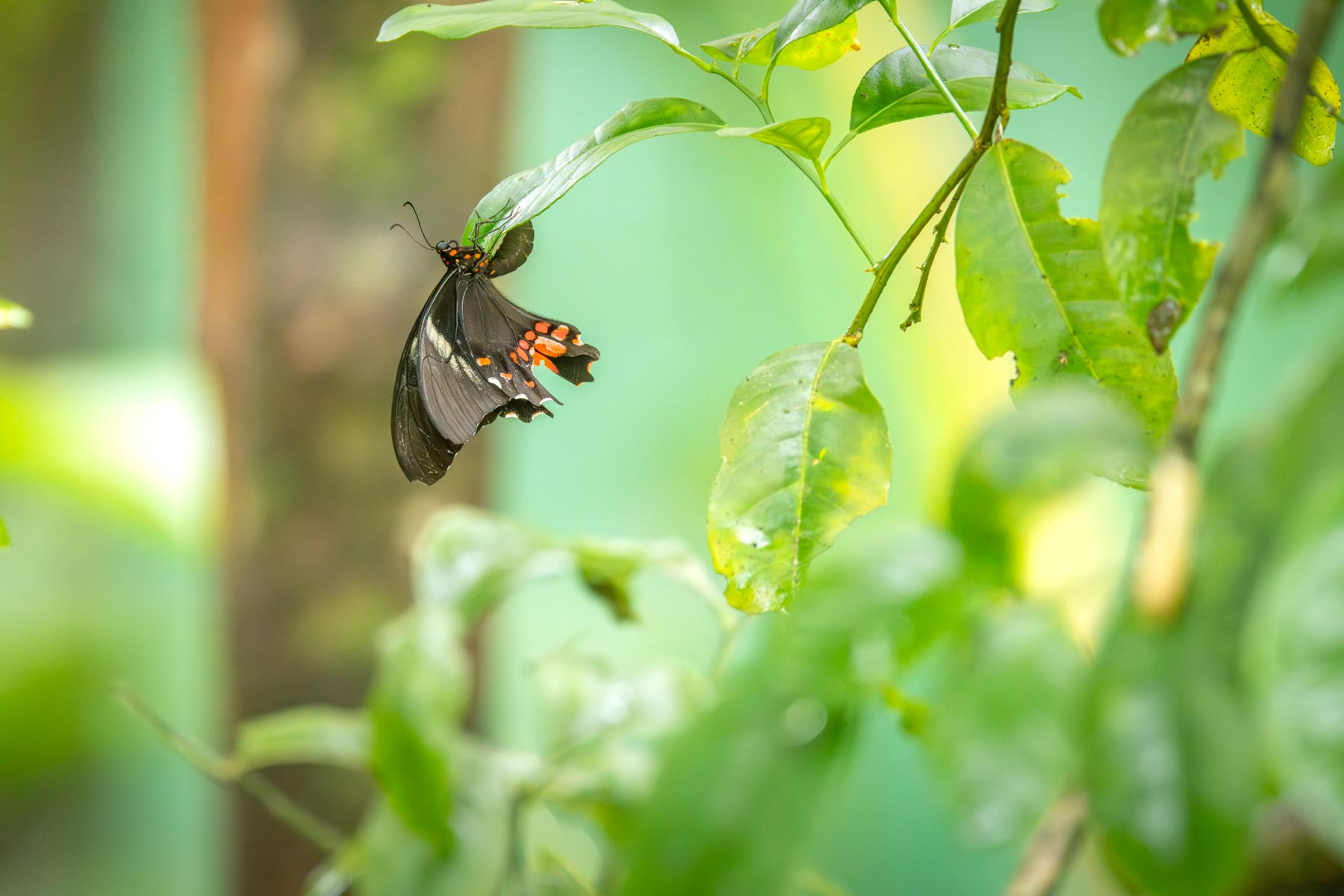
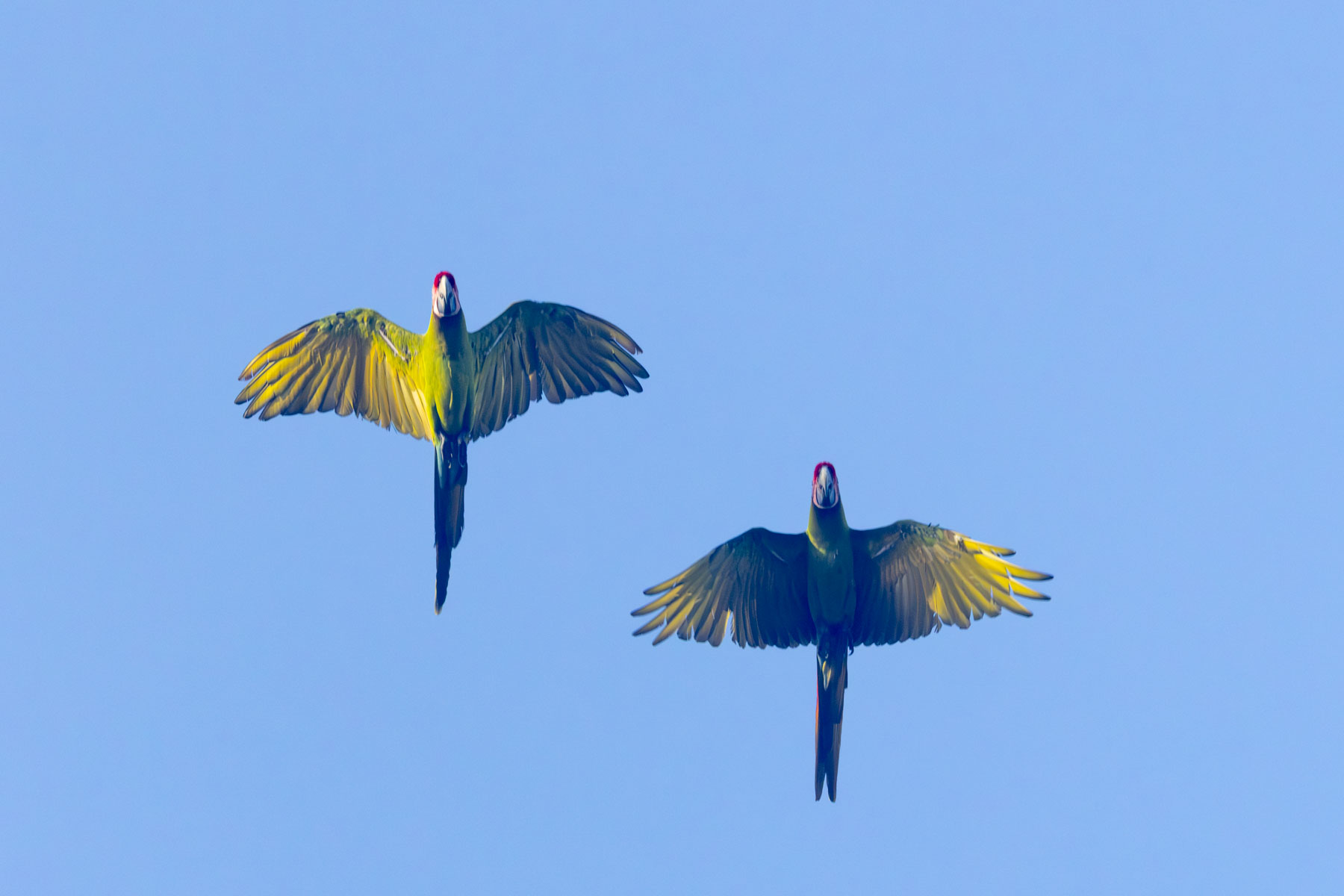
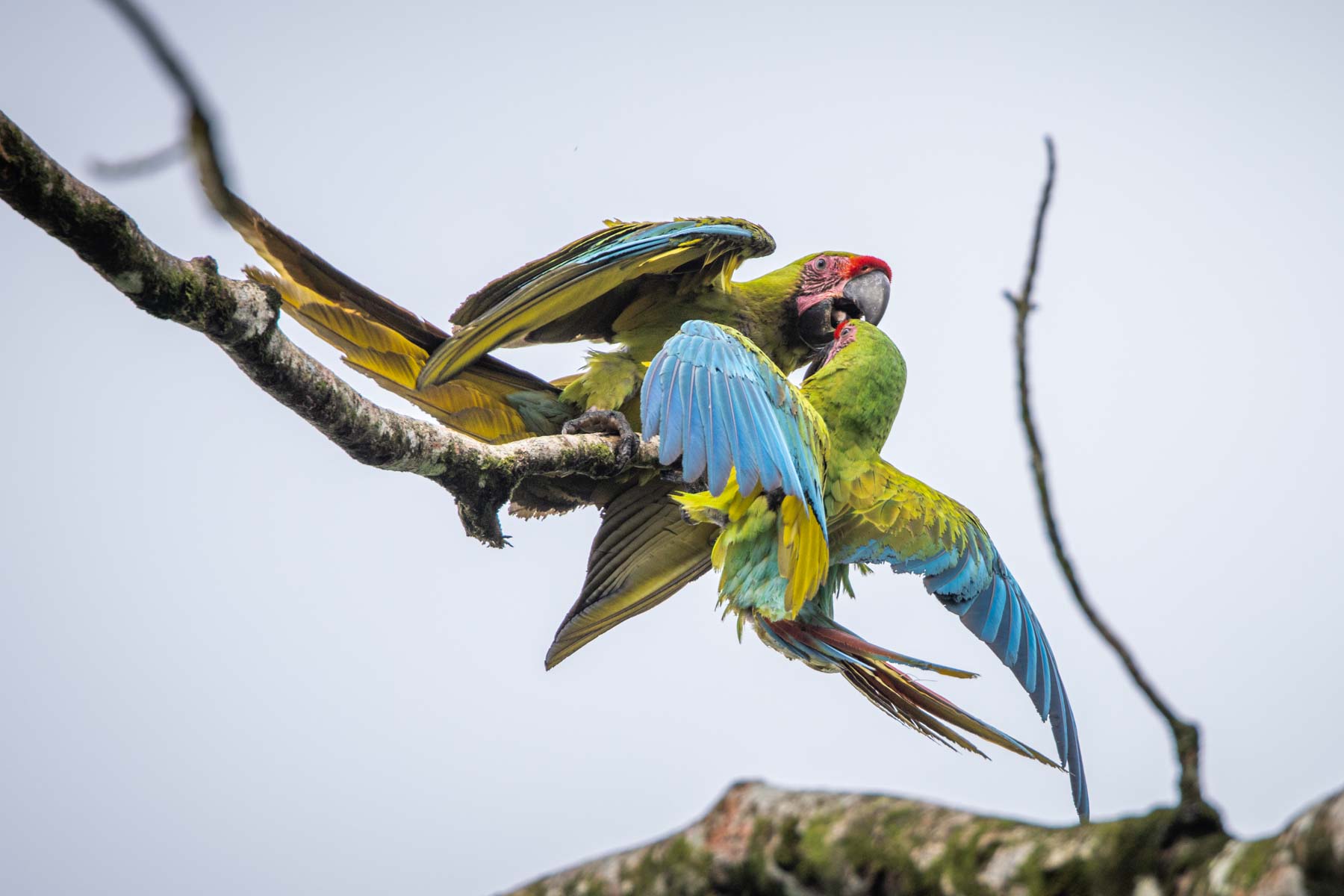
At the lodge we have a buffet lunch and then go for a walk through the stunning grounds, past the two swimming pools and hammock gardens. Water has soaked the earth and sits in pools across the paths. We see butterflies, black birds with yellow breasts, two macaws and a woodpecker.
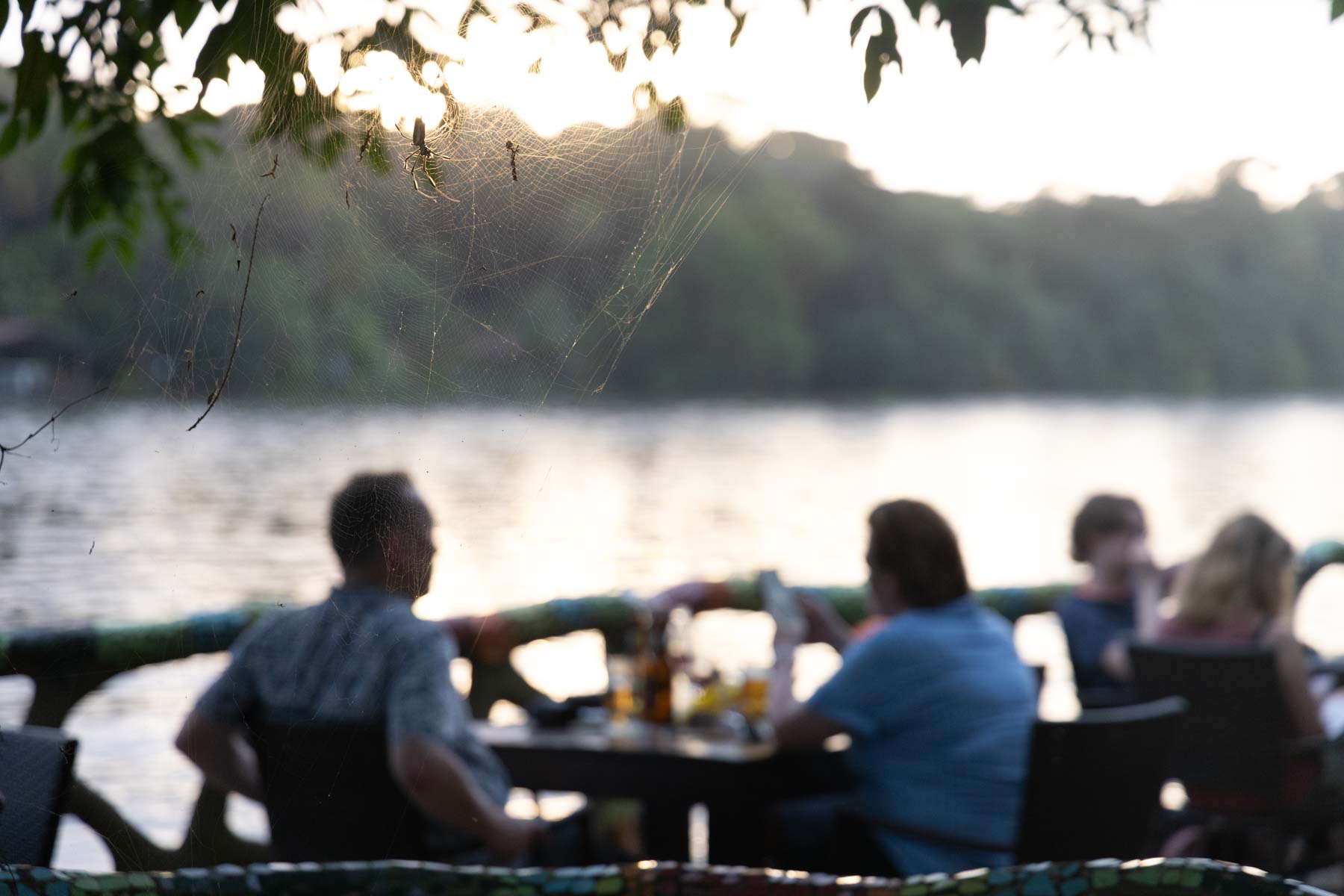
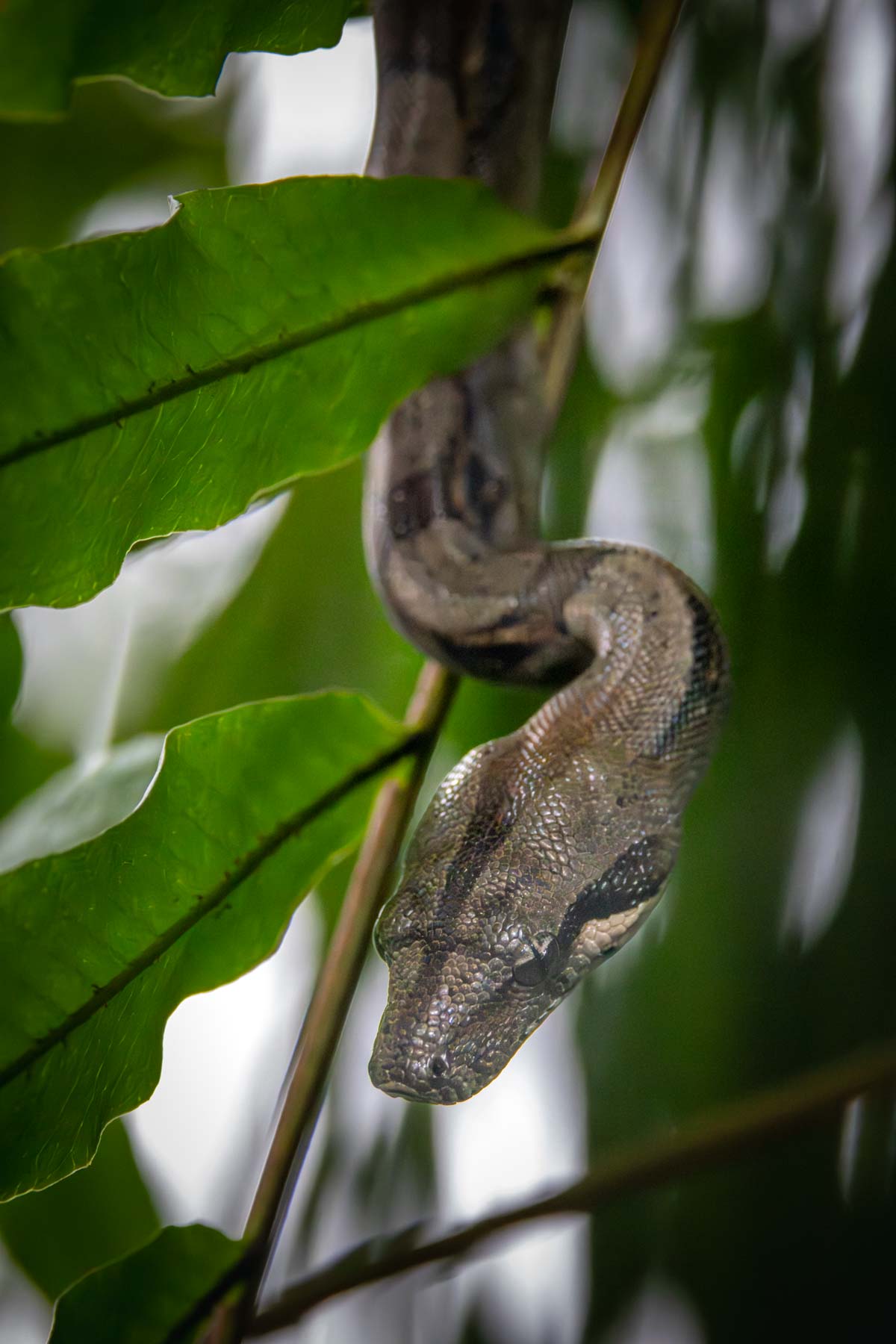
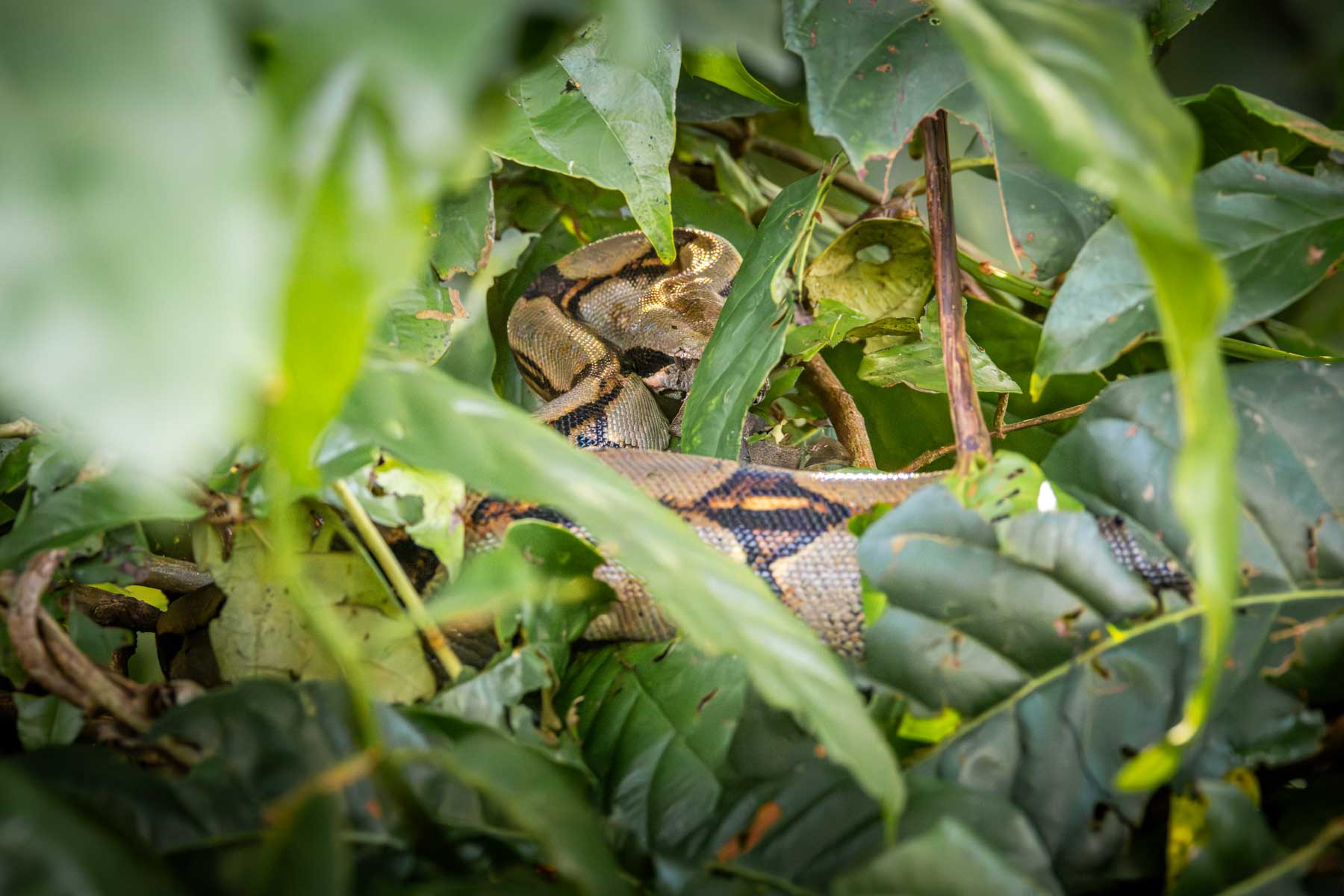
A baby boa constrictor rests in a tree beside the staff quarters, hidden amongst the leaves and an orb spider hangs in its web right next to the dining area.
Mid-afternoon we load back into the boat and drive out to a local village.
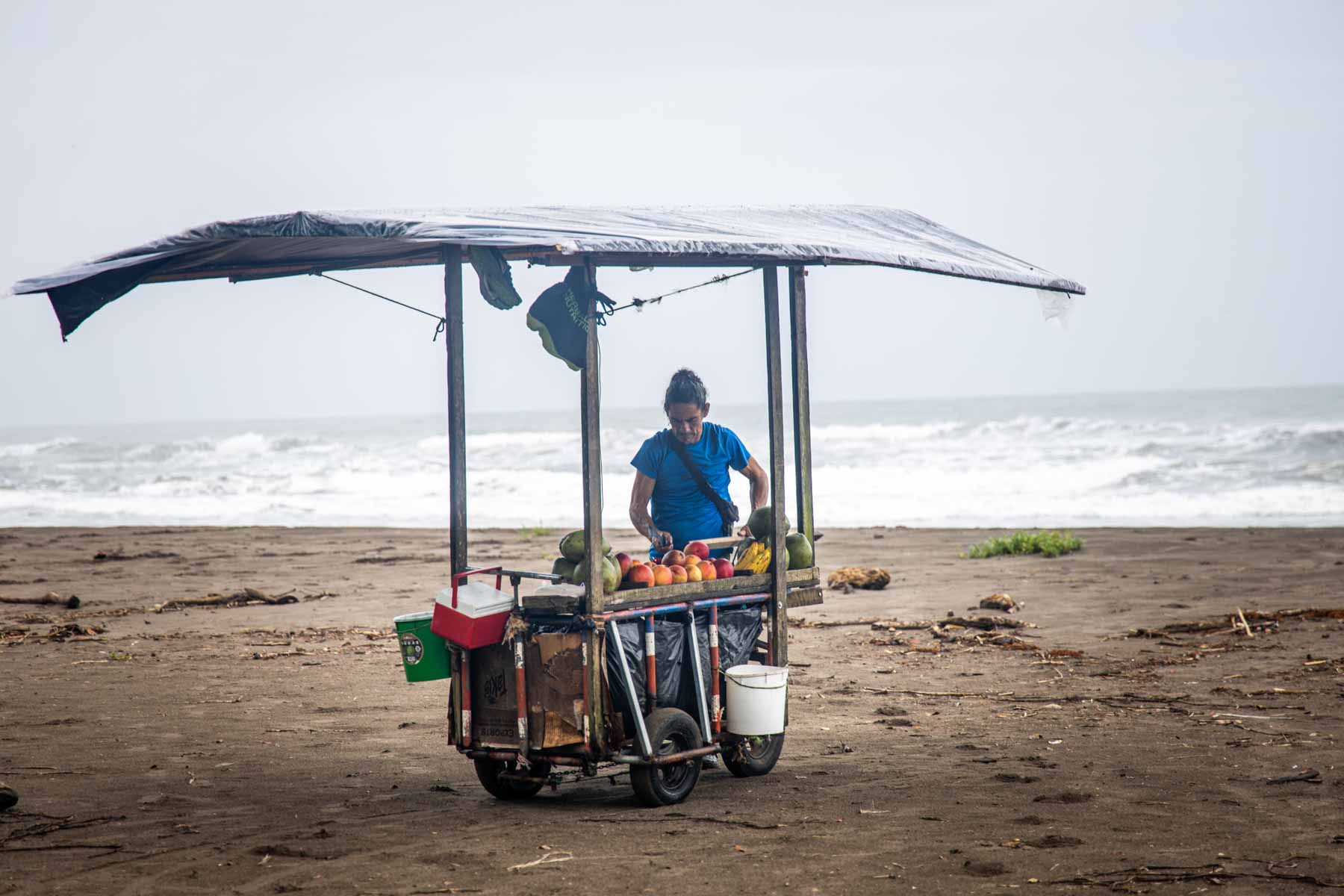
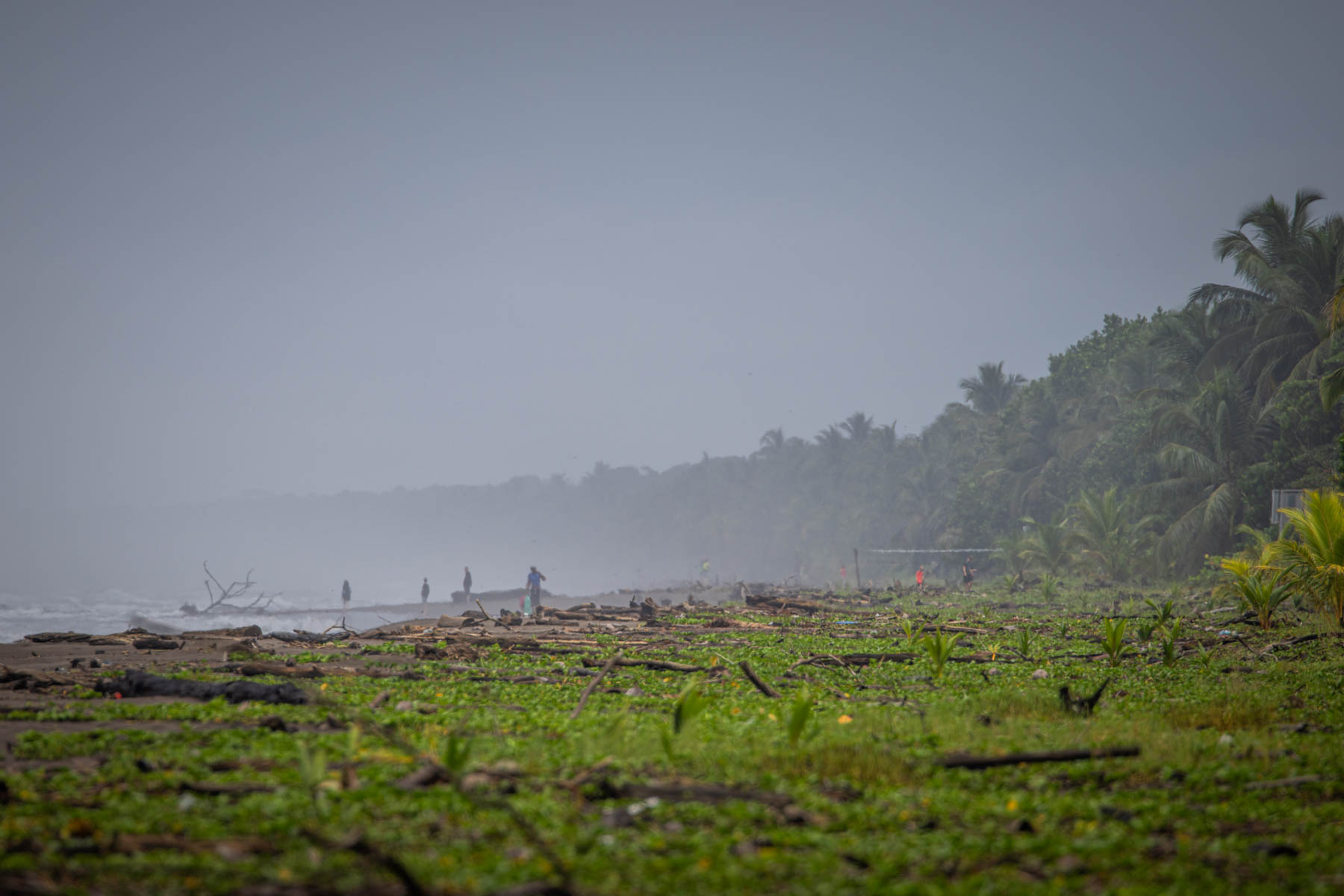
Our group is split in two and we walk through the village as our local guide tells us about the people who live here and the work they do, mostly in tourism. We pass a school and see where the turtles come to nest, this is the main reason people come to Tortuguero, we learn, to see the turtles nesting.
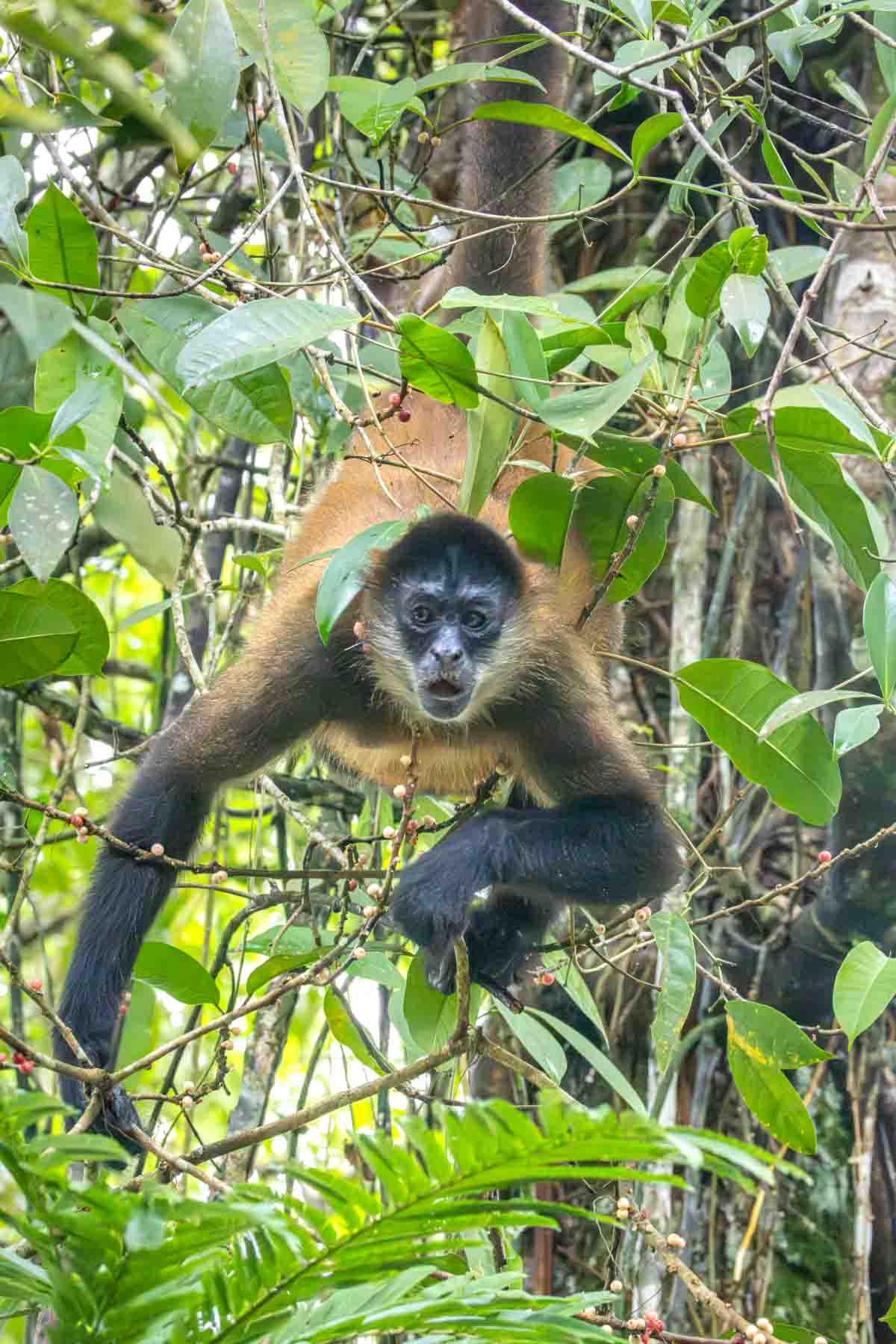
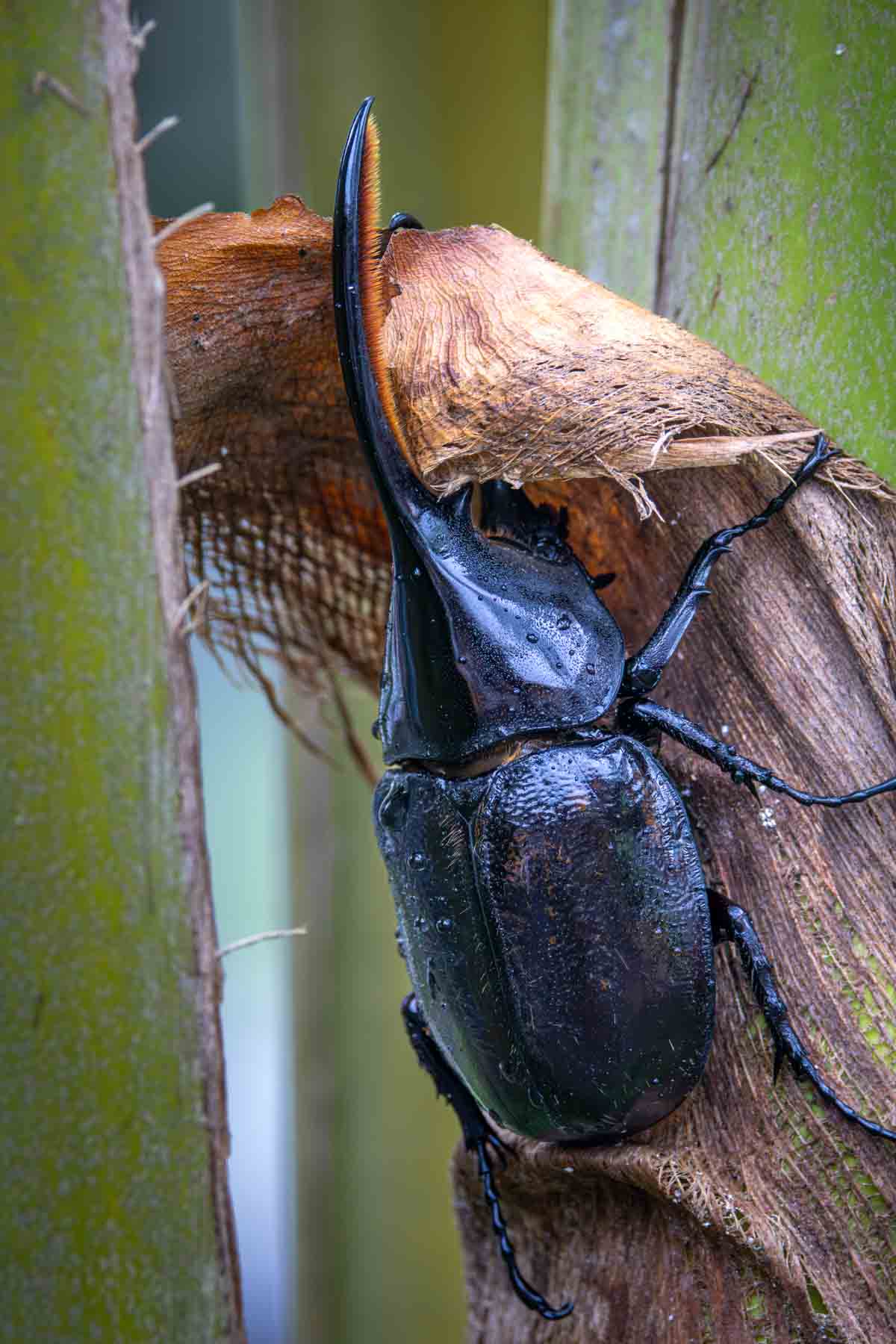
We see spider monkeys playing in the trees, giant crickets on a log and a Hercules bug on the side of the footpath.
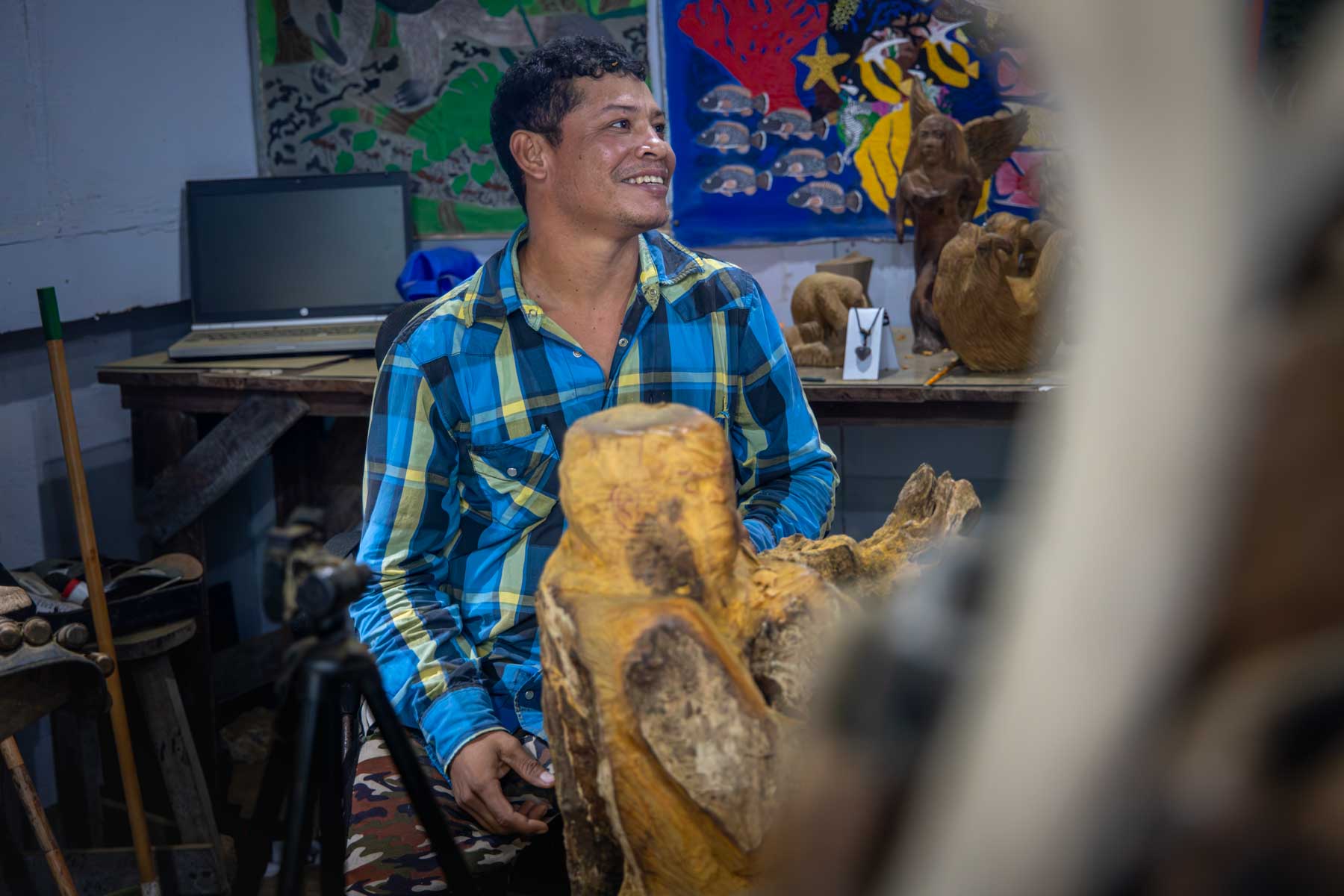
We stop in to watch a wood carver carving a monkey into a slab of wood from memory.
At night I wake up and hear the rain. So loud it sounds like it’s raining inside our small wooden cabin.
But the morning is bright. The sun rises to blue skies. Perfect weather for our early morning cruise. In small boats we glide across the water once more. We look into the trees and along the ground searching for the famed Costa Rican wildlife.
One by one we tick off the bird life: a Tiger heron, a Yellow crested heron, a red heron…
And then our guide points into the trees, as the mist falls in the hills around us. We peer up, trying desperately to see what he’s found.
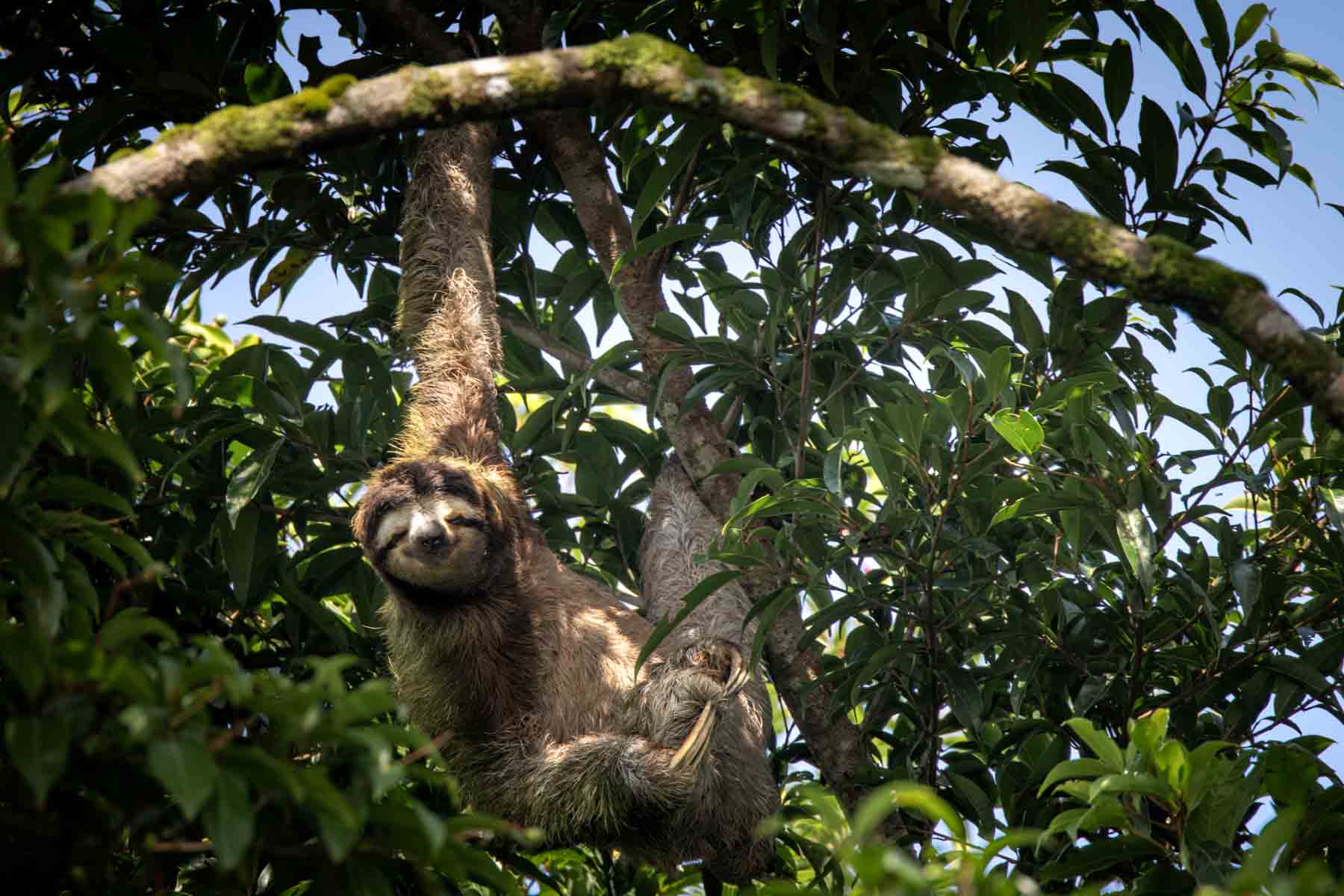
Excitement builds, it’s a sloth, there in the trees. There in front of us, a Two-toed sloth in the wild.
We move on and see a Great wing macaw, a Green back heron, a yellow fly catcher and a needle bird.
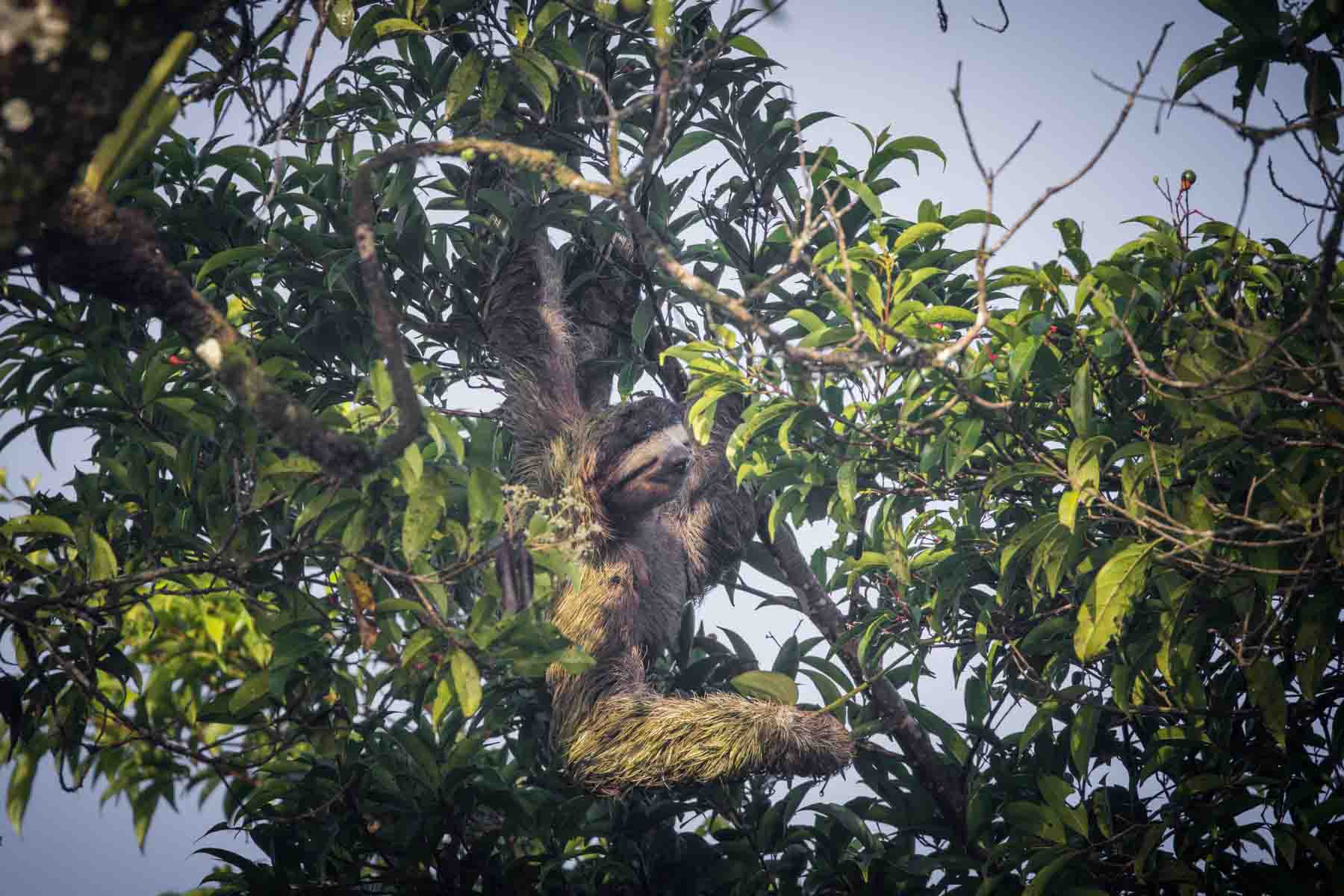
Our guide looks up again, points into the trees. We follow his finger, it’s another sloth. A three-toed Sloth moving in the tree this time. And we marvel at how slowly they move.
Sebastian tells us they live about 20 years but are solitary. They give birth in the trees and the mums have to catch their newborns before they fall to the ground.
We see all this, and yet we’re not really even in the park yet. We’re still on the outskirts.
And just before we head into the actual Tortuguero National Park proper we see a Montezuma Oropendola. The iconic bird of Costa Rica and central America. We take it as a good sign for what’s to come.
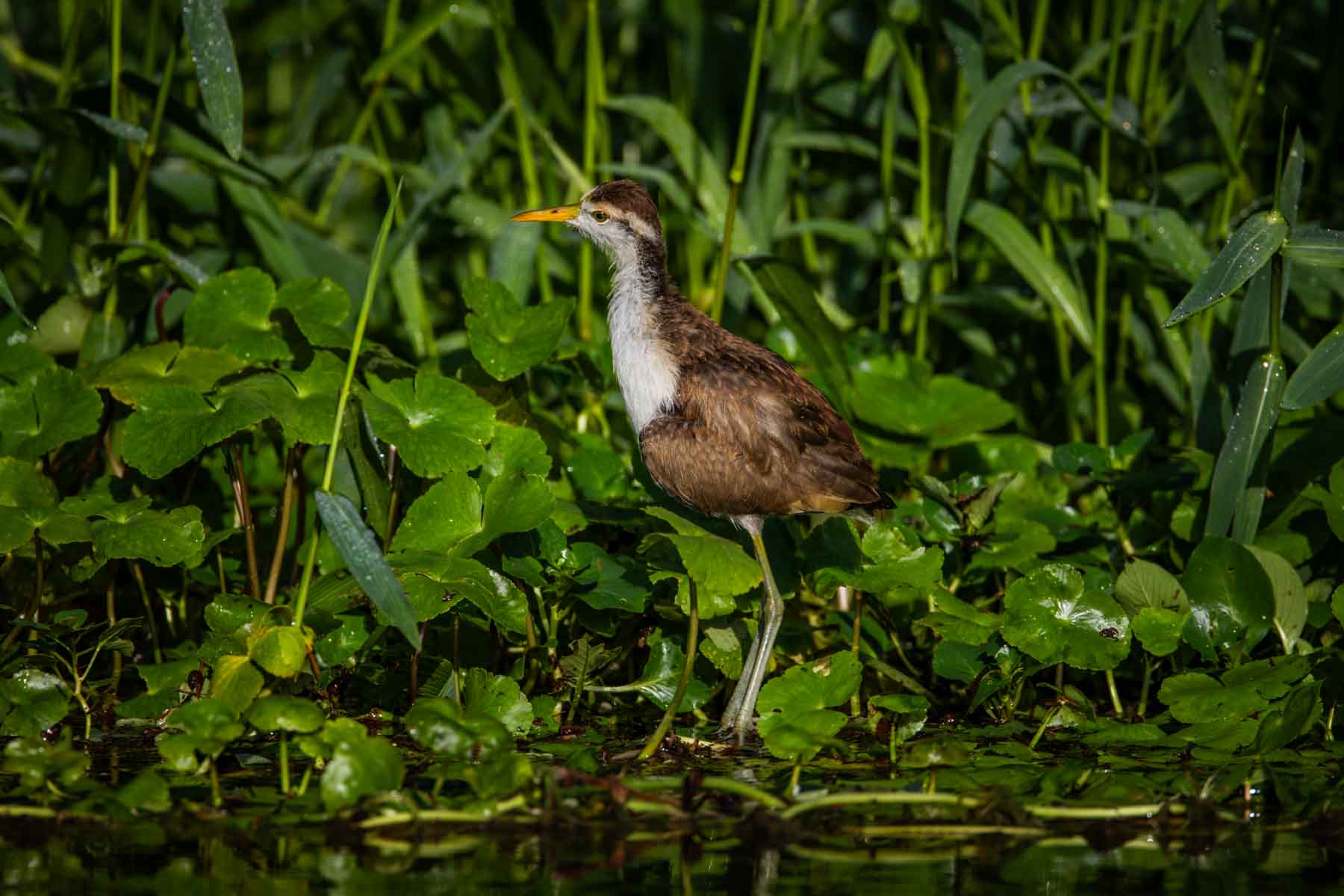
Inside the park we continue to glide over waterways, through smaller channels now. We see light blue heron and three baby northern jacanas playing in the long reeds edging the canal.
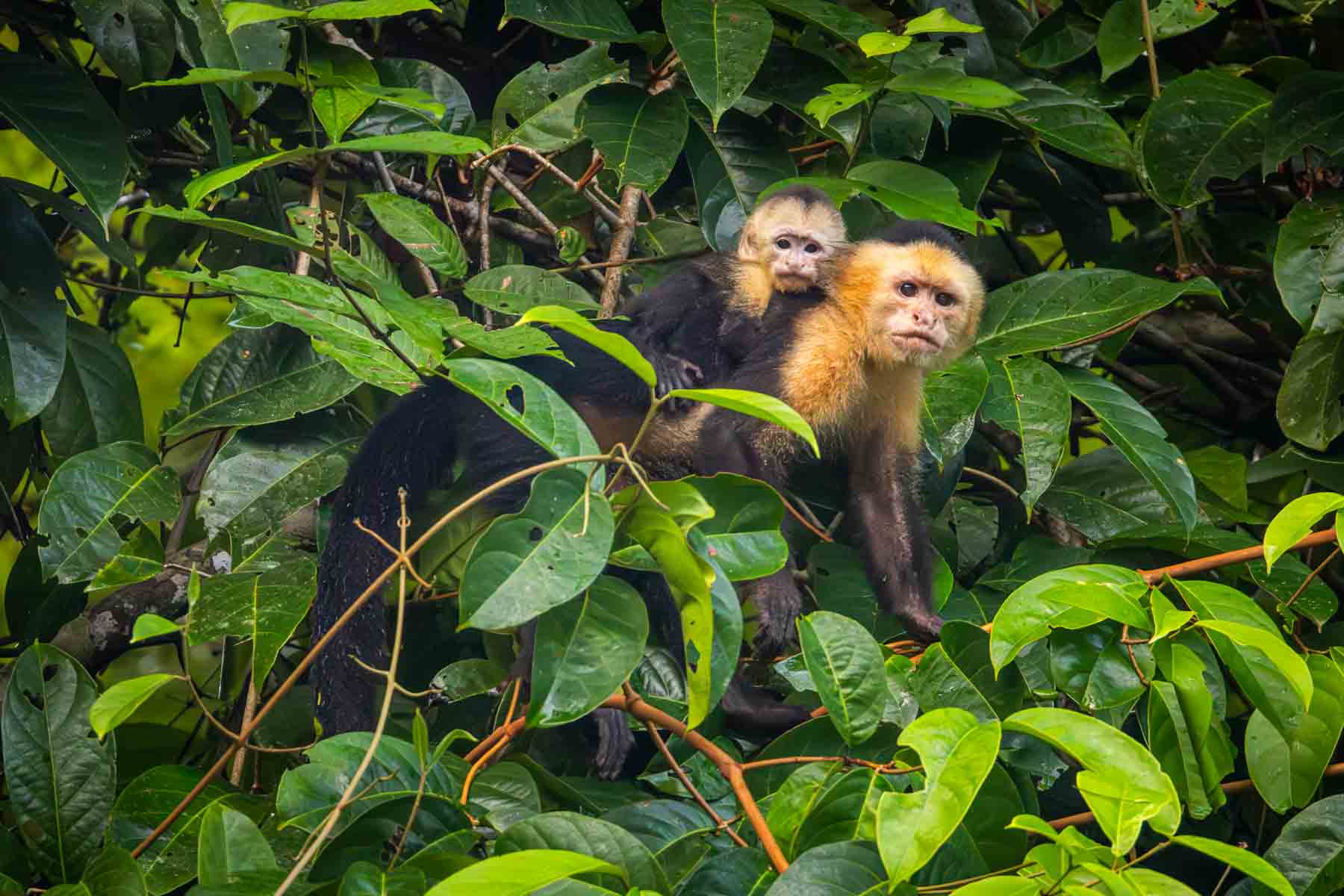
We see a Green Ibis and a white-faced monkey, the smallest monkey in the Caribbean, so small we can barely see it playing in the trees.
As we watch the monkeys play, our guide tells us about a spider monkey that was kicked out of its troupe and was adopted by the howler monkeys at Laguna Lodge. The two species now live happily together.
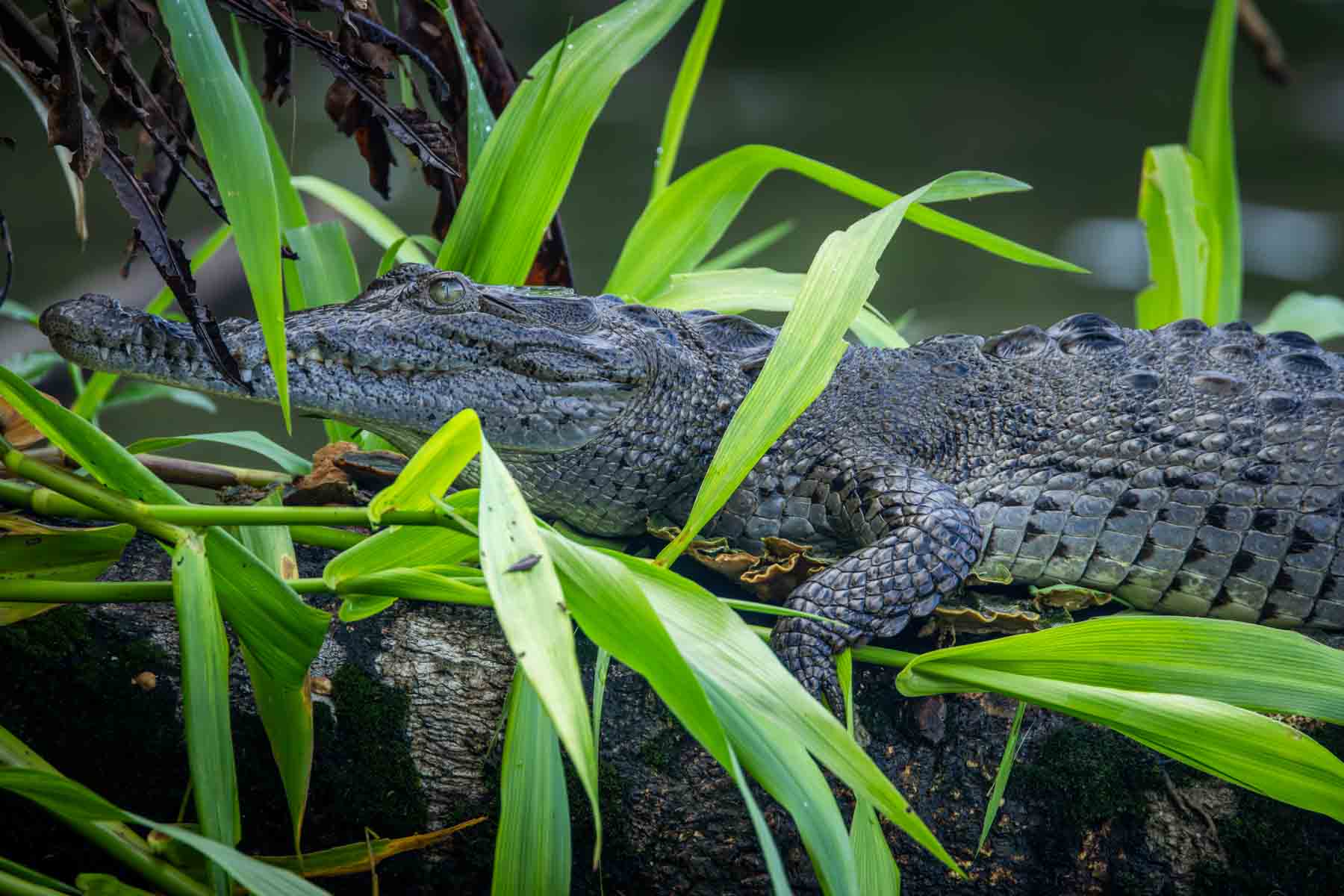
Further along the river we see a double tooth kite bird and someone in our group sees a baby crocodile swim past our boat.
A yellow throated Toucan flies overhead, while a second lands high in the trees.
On an afternoon cruise we see a howler monkey in the trees right next to our lodge and a Boa constrictor wrapped around a branch, bigger than the one we saw in the lodge grounds but I’m not sure how anyone would have seen this snake hidden in the branches and leaves.
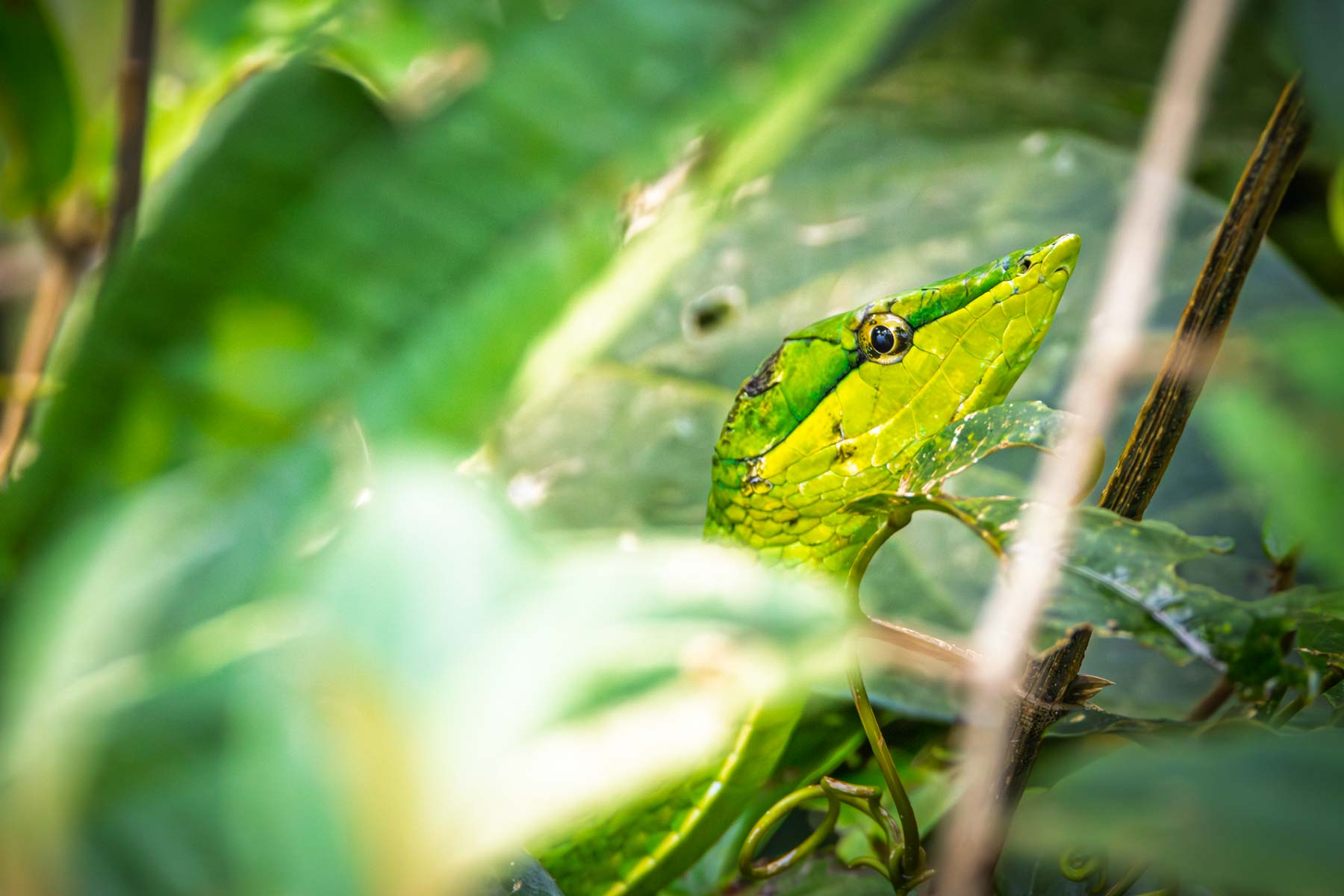
We see another two-toed sloth and a three-toed sloth, a crocodile and a green vine snake lying in the trees.
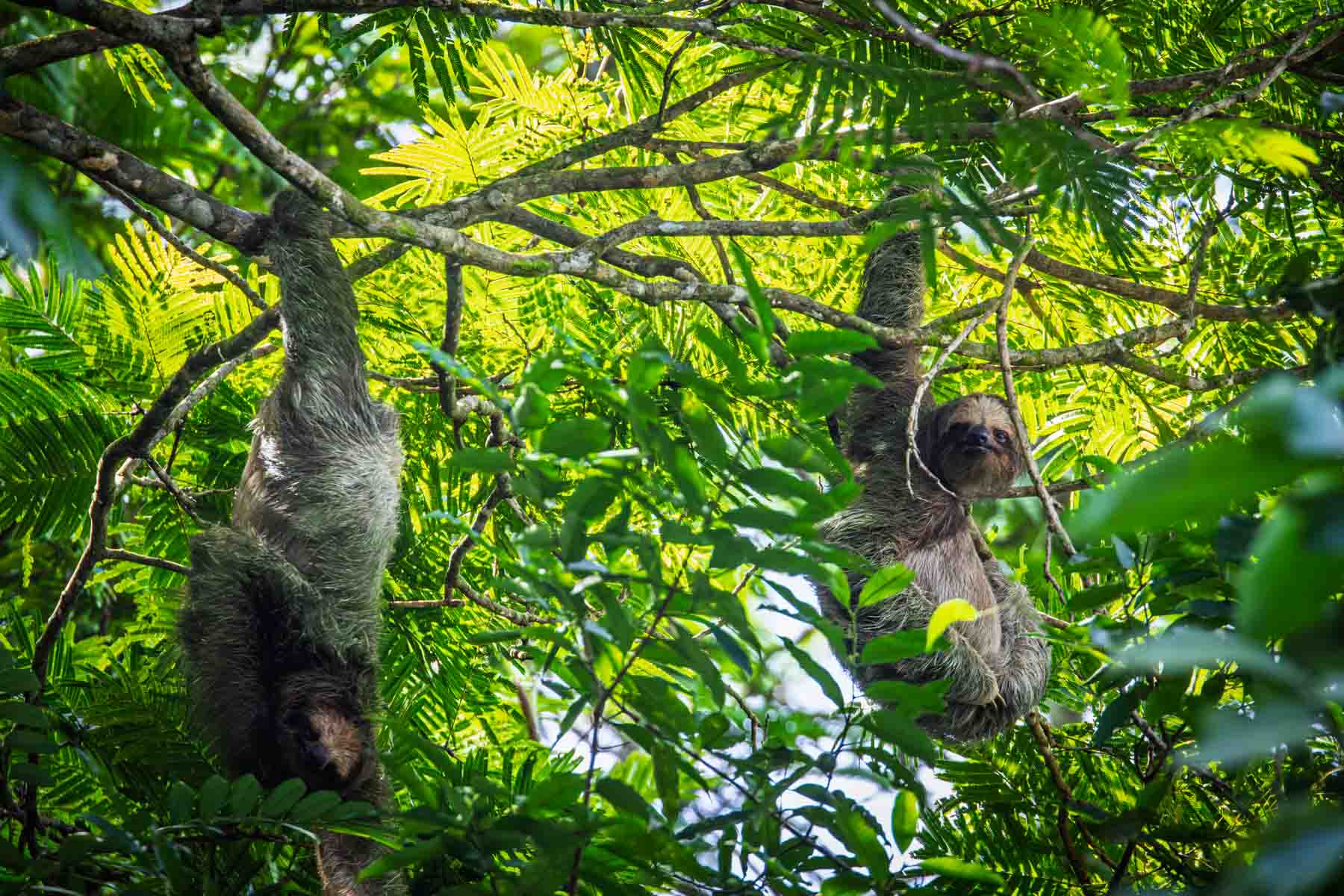
And then a passing boat captain points to the trees, there, hanging side by side, are two sloths. We sit and watch them in silence, camera lenses trained on faces.
The sun shines down on us, Sebastian tells us it’s the first sunny day they’ve had in 15 days.
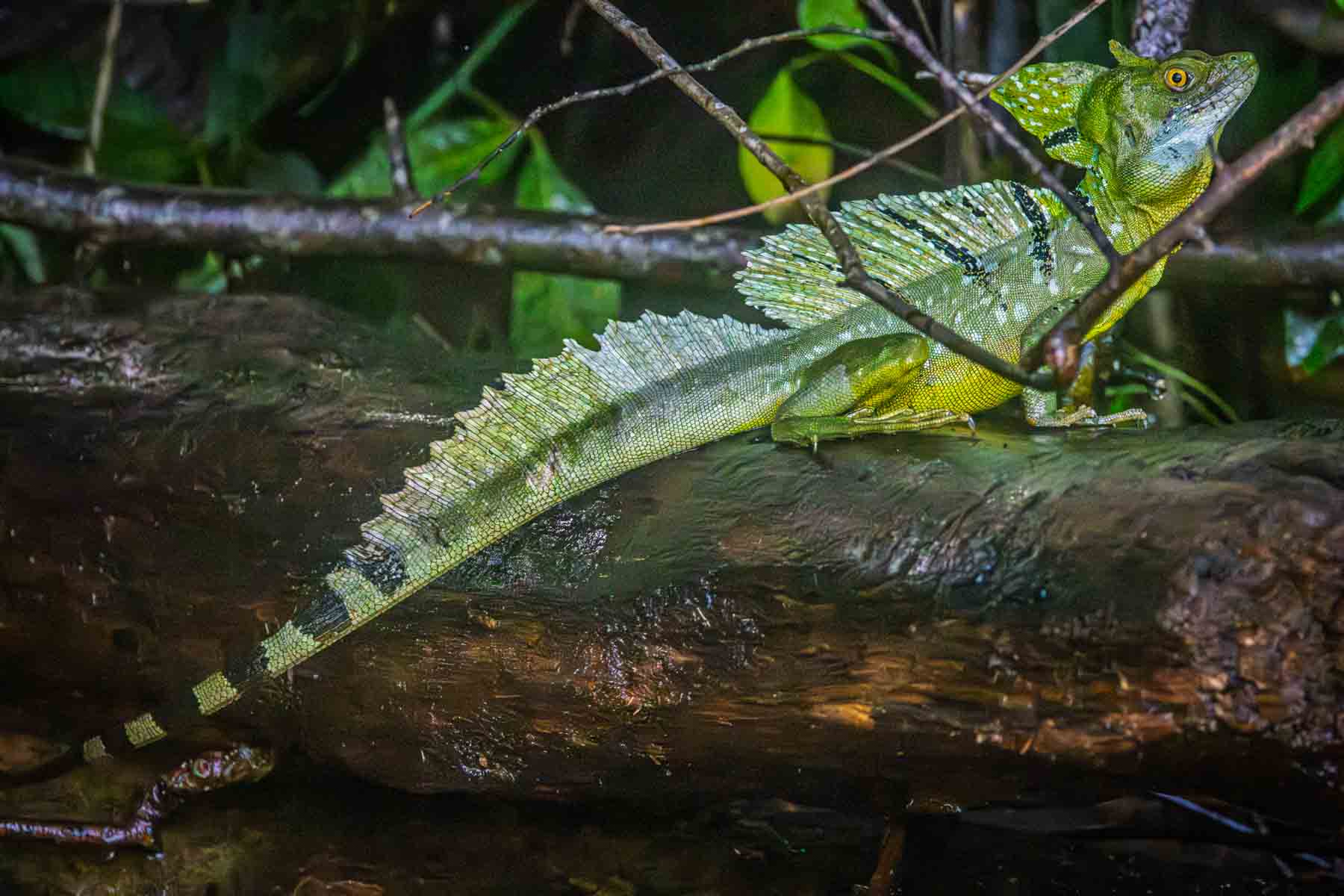
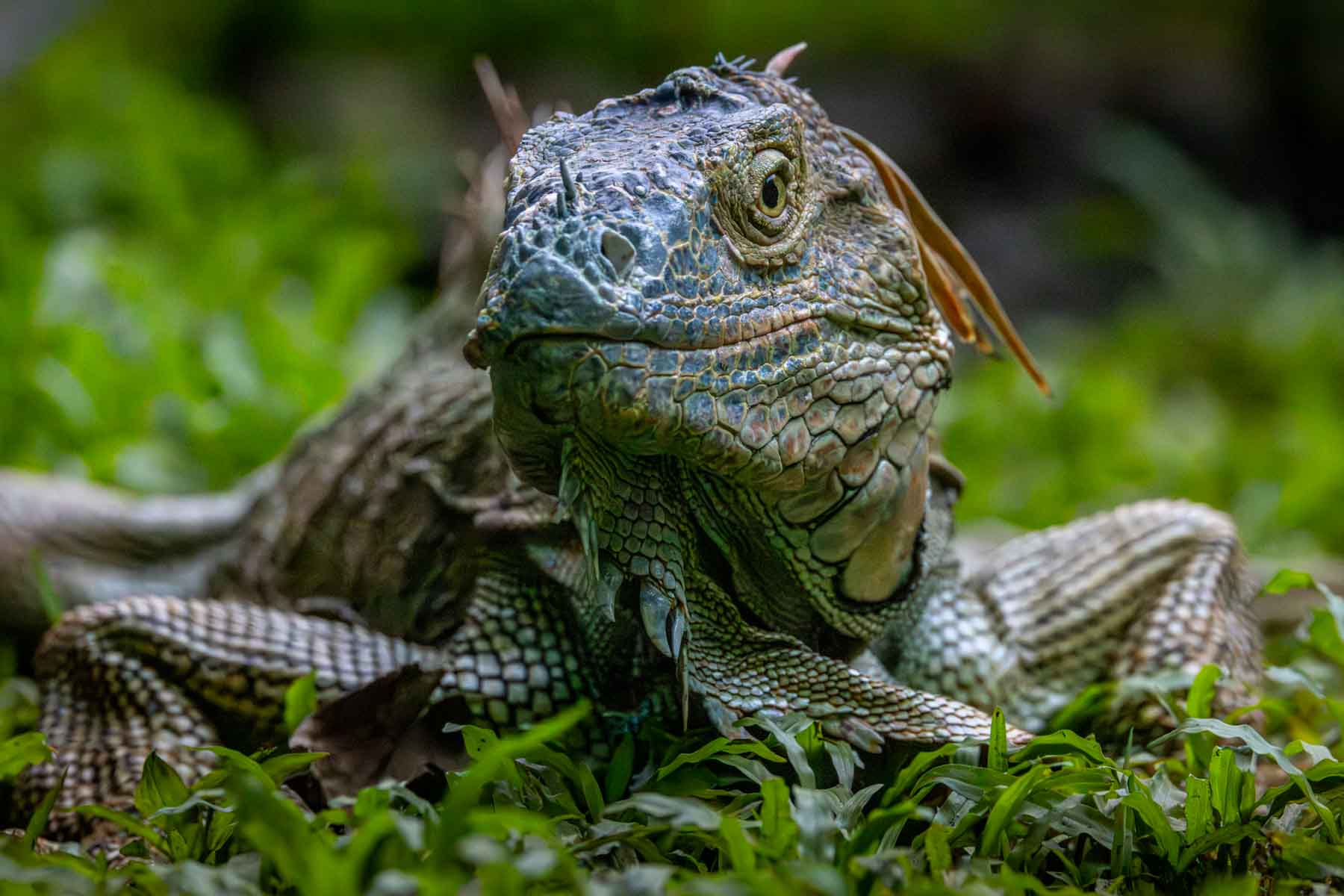
And the wildlife has responded, they’ve come out to enjoy the warmth. We see more howler monkeys and another snake, another sloth, a great Kuda, a tiger heron, an aguti following a tiger heron and a Jesus Christ Lizard on a branch hanging over the water.
Our shopping list of wildlife has well and truly been ticked off in Tortuguero.
We travelled in 2025
We stayed at Laguna Lodge and travelled with Destination Services Costa Rica.
We were in Tortuguero for two nights.
Was it long enough? It was plenty of time to see everything but if we had our time again we would stay in the nearby village for a couple of days to soak up life there.
Read more about our adventures in Central America here.
Join @AllabroadAU on Instagram, Facebook and YouTube for more travel inspiration.