Blah blah

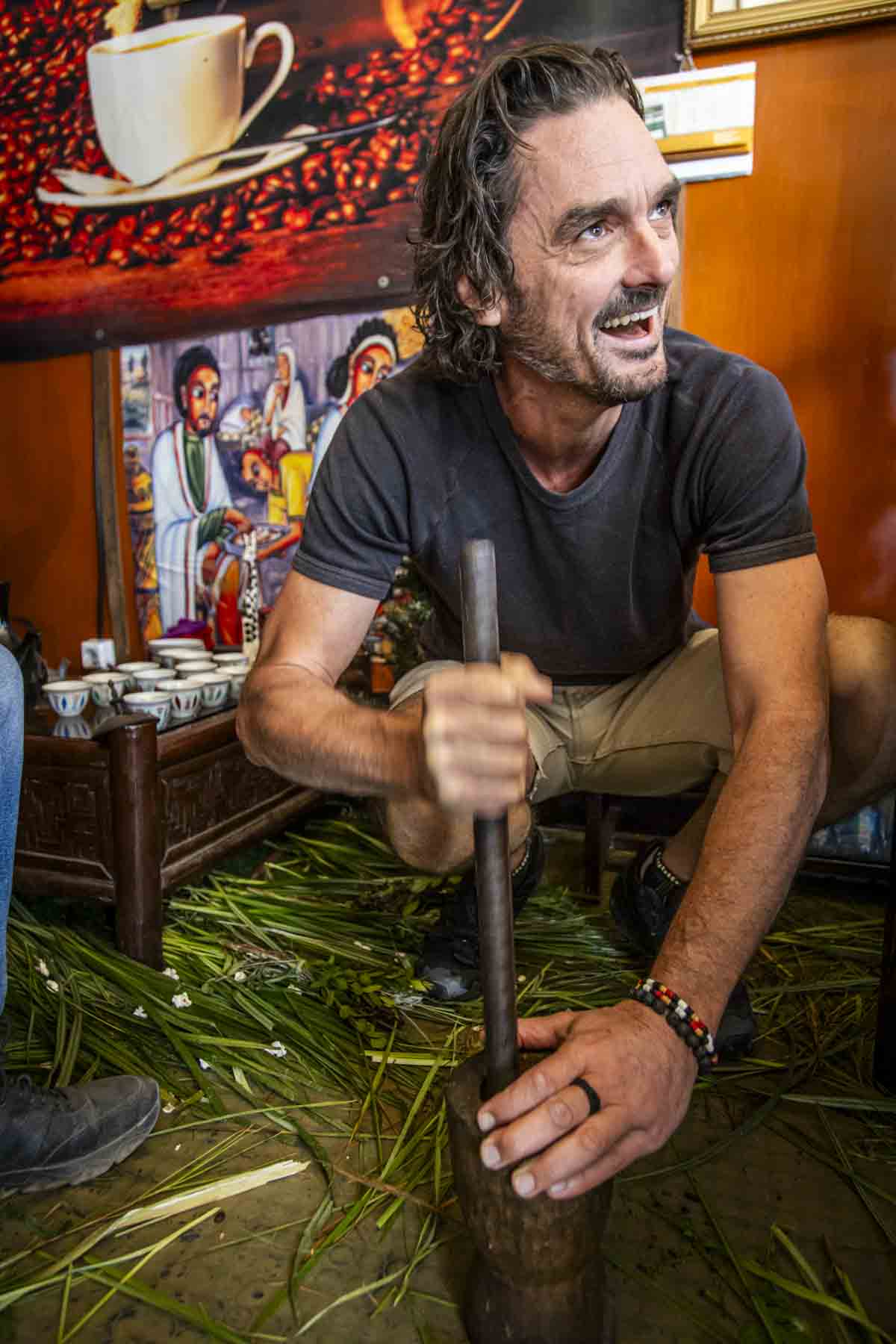
The entrance is low and the space small, but the comforting aroma of coffee draws us in. It seeps out into the street, signalling the magic that awaits us inside the non-descript street facade.

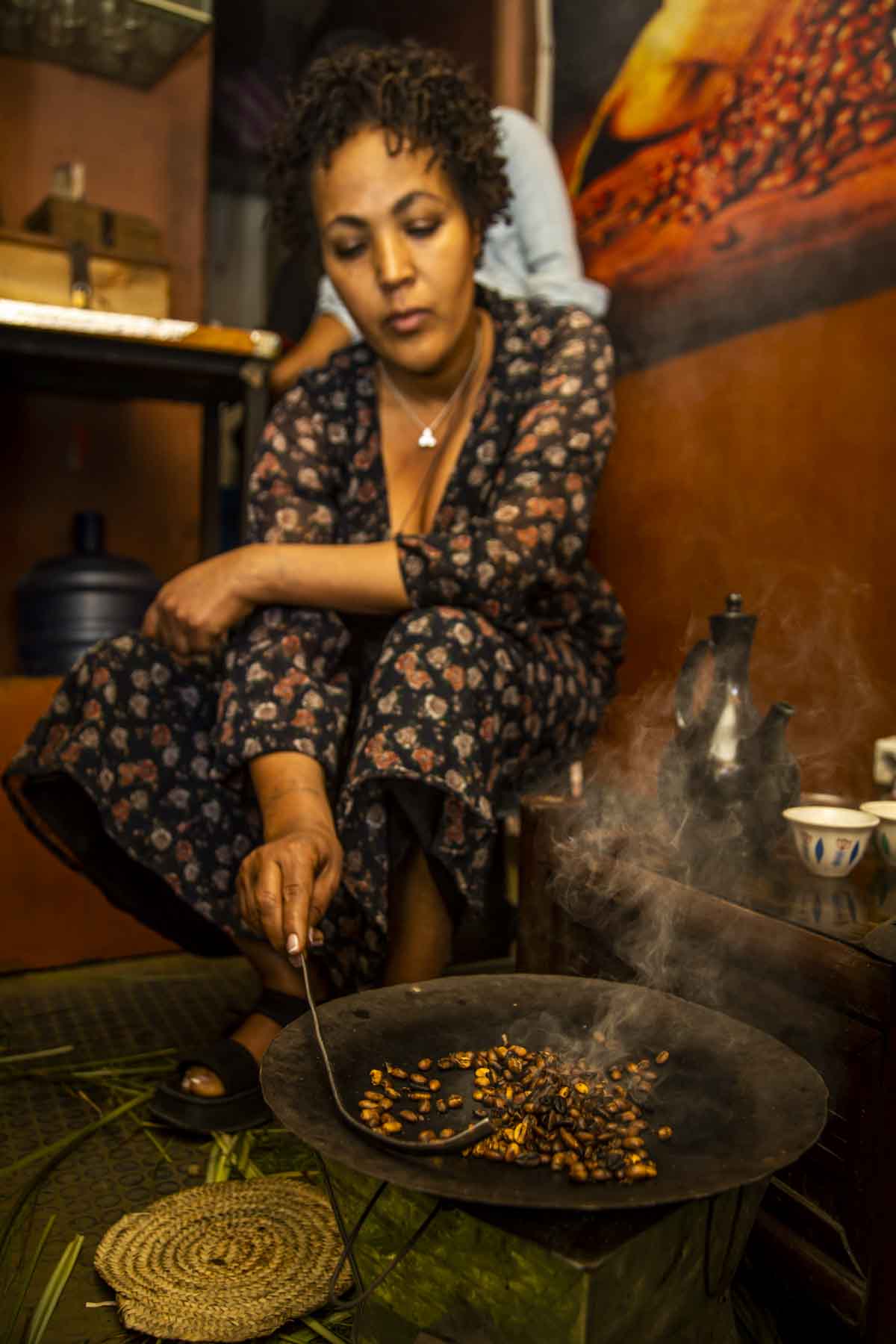
A blanket of green grass, picked earlier in the day, forms a welcome mat in the entrance and in the corner, a woman sits over an open flame. 

We’re here for a coffee ceremony. And while coffee is an important part of the morning ritual for billions of people around the world, no one takes it quite as seriously as the Ethiopians.

It’s no surprise that coffee, or buna as it is called in this part of the world, is a big deal here. After all, Ethiopia is the birthplace of coffee. 

According to legend a young goat herder, Kaldi, discovered coffee beans in the ninth century in the Kafa region of Ethiopia when he noticed his goats acting unusually after eating red berries. Kaldi tried the berries himself and soon felt an energy boost unlike anything he had felt before. 

And so began the history of one of the most popular drinks in the world.

Today, Ethiopia accounts for 3% for the world’s coffee creation not bad for a country that makes up only 1.57% of the world’s population. Around 35 percent of Ethiopia’s export revenue comes from coffee while around 15 million people in Ethiopia make their living from coffee production. 

In 2010, the Kafa zone was included in the UNESCO World Network of Biosphere Reserves. According to UNESCO, the Kafa Biosphere Reserve contains almost 5000 wild varieties of coffee in this ‘biodiversity hotspot’.

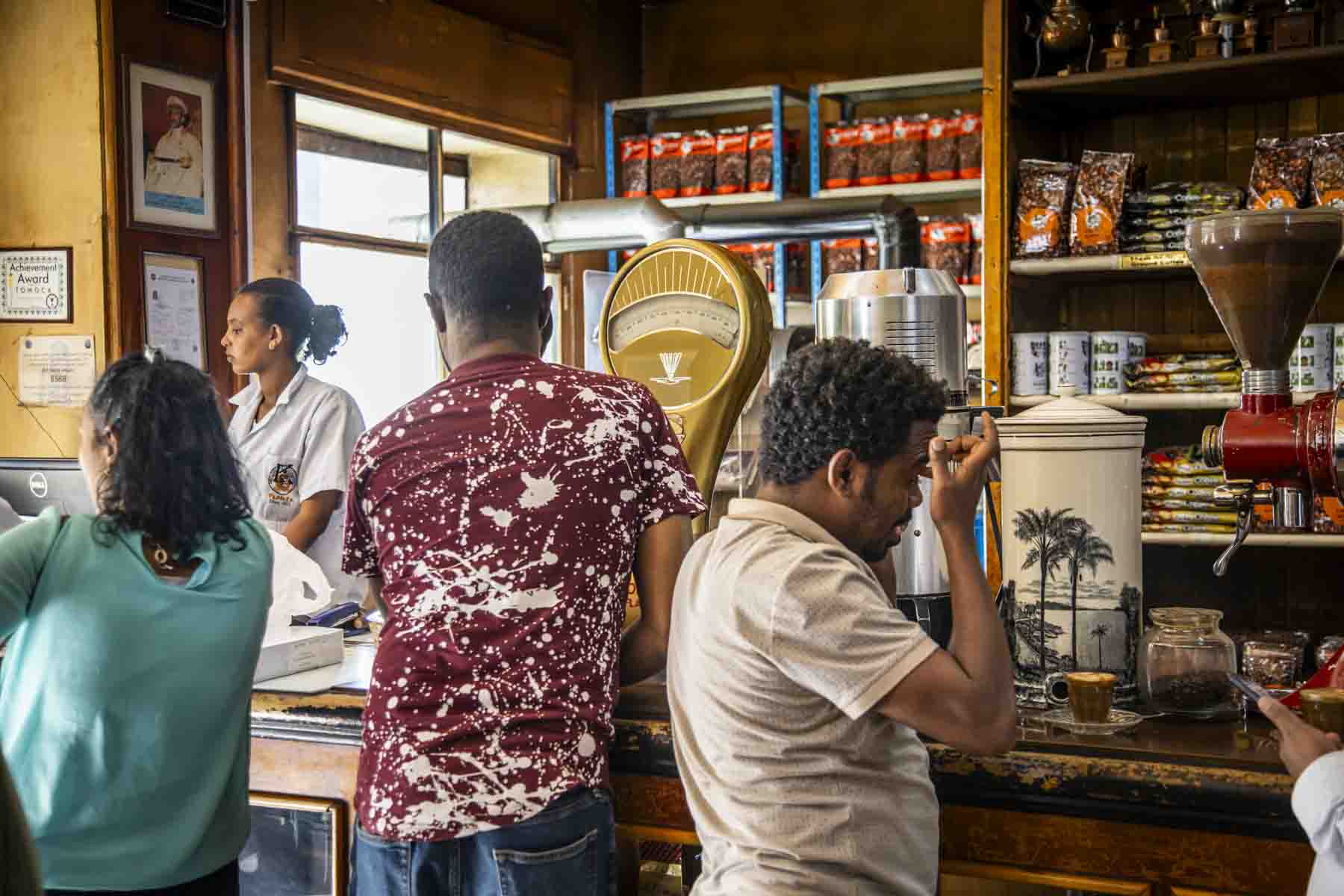
Ethiopia is now the world’s fifth largest exporter of Arabica coffee and the largest in Africa creating more than 8.3 million 60-kilogram bags a year. About half of that coffee is said to be consumed by Ethiopians, so don’t be surprised if you’re repeatedly offered coffee while travelling through this fascinating country.

You can’t spend time in Ethiopia without attending a coffee ceremony. And before you think this is just something that is done for the tourists, far from it.

The coffee ceremony is a way of life for Ethiopians.

A true coffee ceremony starts with the long grass strewn across the floor as a kind of welcome – it’s like laying down a red carpet or a welcome mat for family and friends.

But it’s inside where the magic really begins.

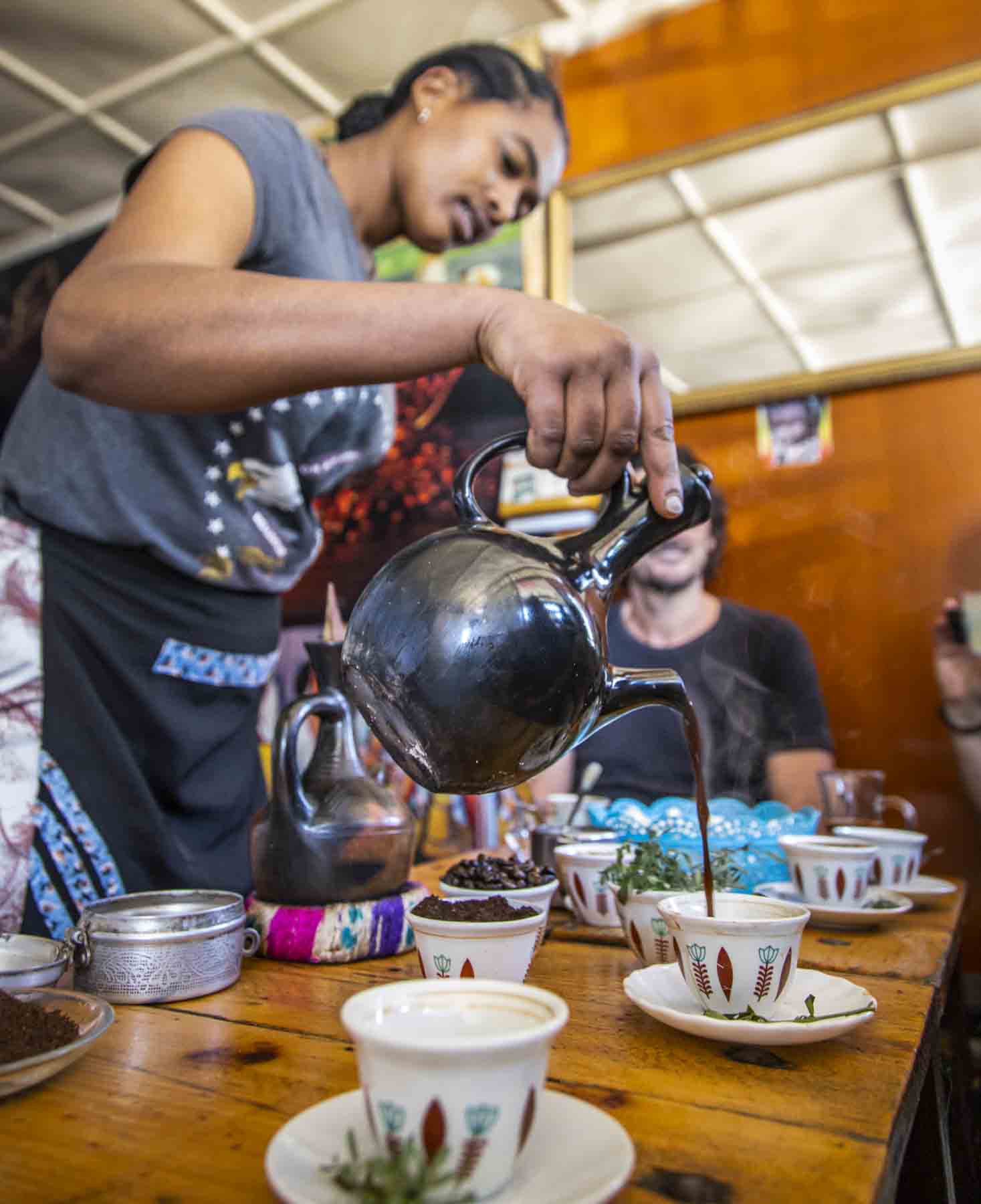
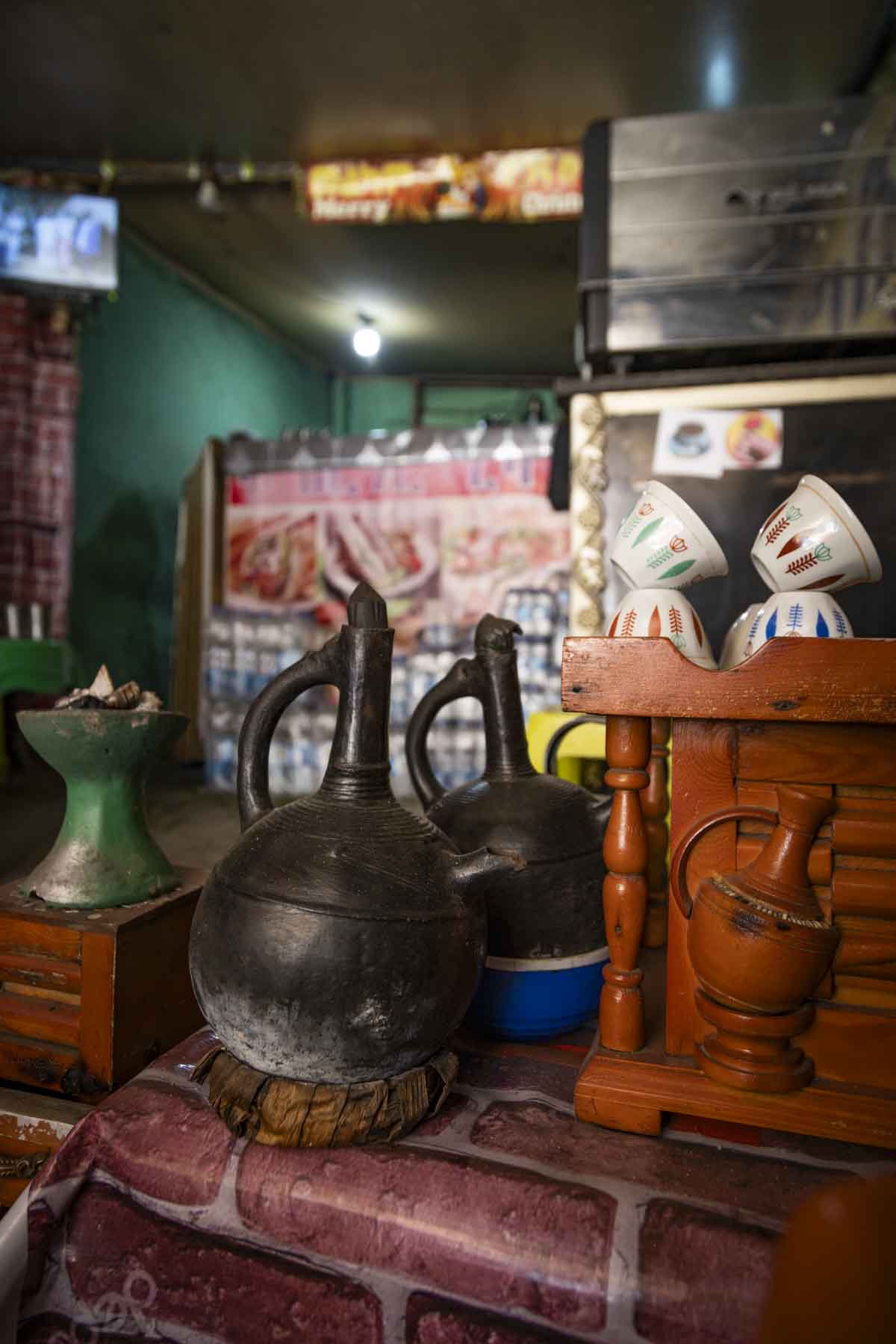
At our first coffee ceremony in Addis Ababa a table is laid out with sprigs of rue (tena adam) and bowls of popcorn. The lady sitting over the flame is roasting coffee beans in a small pan.

As the scent fills the room, she brings the pan over to us and wafts it under our noses. As if we needed a hint of what is to come. As if we needed further enticement of the delights that await the coffee buffs among our group.

The lady takes the pan away, drops them into a bowl and delicately but determinedly crushes them into a powder. As we watch on, nibbling on popcorn and anticipating the taste of the coffee, she tips the powder into a large ceramic pot of water and returns it to the flame for brewing.

Our RAW Africa Eco-Tours guide, Birhanu, tells us that only the women perform this task.

“It’s too important to be left to the men,” he says with a grin. Reading his audience of mostly women well.

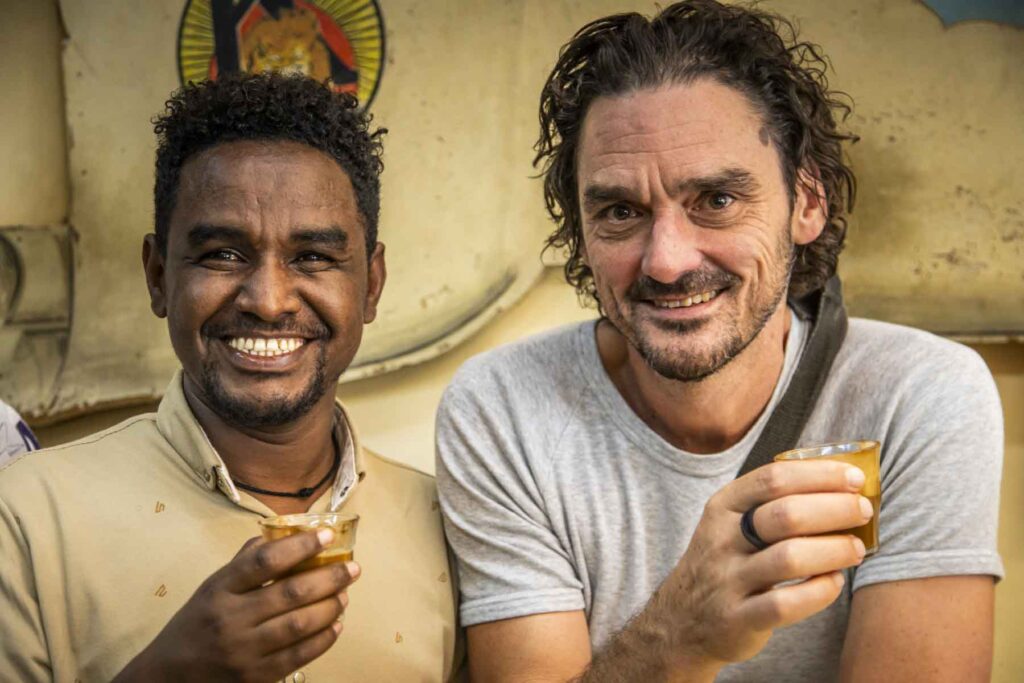
When the temperature is just right the coffee is poured from a jebena – a traditional Ethiopian coffee pot – into our cups and delivered to us with that bright Ethiopian smile.

The coffee is black, and while sugar can be added for those that need it, rarely do we find milk in Ethiopia.

Coffee here is generally consumed black and strong.

Most Ethiopians attend coffee ceremonies every day. 

It’s a time to chat, to chill out, and to savour the taste of coffee while enjoying the company around you.

“We chat about coffee, but really it’s a time to gossip, it’s a time for the community to come together,” Birhanu says.

“If something has happened, it provides a time for people to talk it over – to try and settle whatever issue has come up. Or if someone has something on their mind, something they need to talk over, they’ll bring it up here.

“The coffee ceremony is the main social event in Ethiopia. It brings the entire community – family and friends – together.”

In Ethiopia there’s no such thing as a ‘quick cuppa’, coffee is meant to be enjoyed and for us, this moment provides a welcome pause to busy lives.

We soon discover this moment; this coffee ceremony is just the first of many coffee experiences we’ll enjoy throughout our tour of Ethiopia.

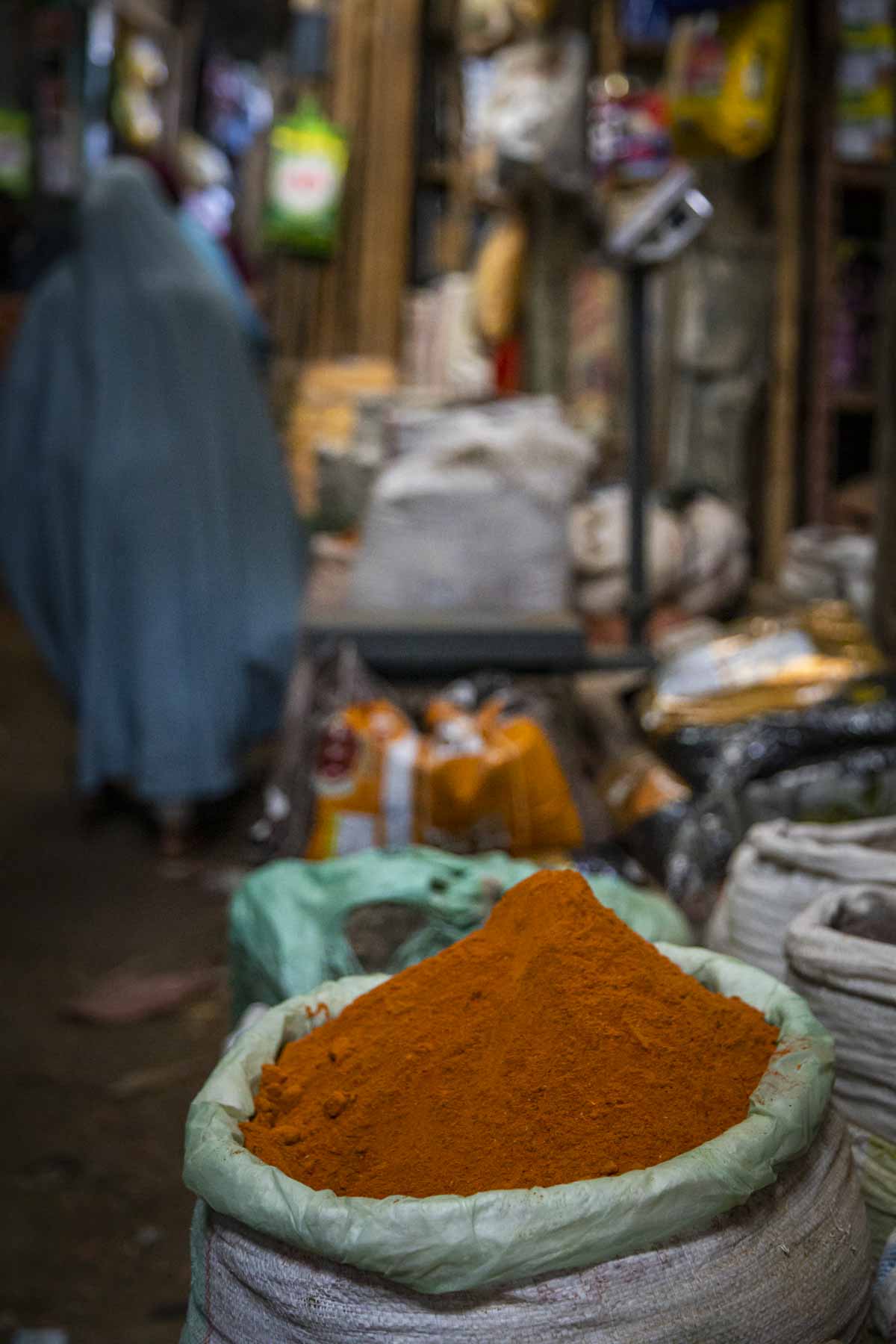
We’ll stop in roadside cafes, in the middle of markets, even in a local hut in the middle of the Simien Mountains where we’ll enjoy coffee with the owner and his wife.

And every time we stop, the coffee beans will be roasted and crushed, before being brewed fresh before our eyes. The scent from the hot pan of roasted beans will be wafted under our noses. And we’ll all sit quietly, enjoying the aroma, the taste, but most of all the company around us.

Fast Facts

We travelled to Ethiopia in 2023.

We travelled with  RAW Africa Eco-Tours

We were in Ethiopia for three weeks.

Highlights: I’m a non-coffee drinker normally, but I highly recommend the coffee ceremonies. Ethiopia is a vibrant country with a fascinating history.

Read: The Kebra Nagast, written in the 14th Century, it provides an interesting overview of the religious and cultural history of Ethiopia. Beneath the Lion’s Gaze, provides a more contemporary view of Ethiopia’s history. 

Join @AllabroadAU on  Instagram,  Facebook, X and  YouTube  for more travel chatter. 

Latest posts

Embracing the chaos on a drive in Sikkim

Hairpin turns and landslides, majestic mountains faded by smog. Drivers constantly on their phones...

Chasing waterfalls in Iceland

The first time we pass a waterfall on our tour of Iceland we're driving through Snaefellsnes...

Delving into speakeasys and history in Estonia

Castles, cocktails, an intriguing history what more could you want in an adventure? It’s fair to say...

Finding the charm of days gone by in Penang

Malaysia Finding the charm of days gone by in Penang Menu Home About Us Destinations Gallery Travel...

Wander with us

Never miss an adventure. Subscribe to AllAbroad for more travel inspiration