Blah blah

It’s quiet in the van.

There’s a feeling of anticipation of what’s to come and a little trepidation too as we wind our way through the mountains near Kisoro in Uganda.

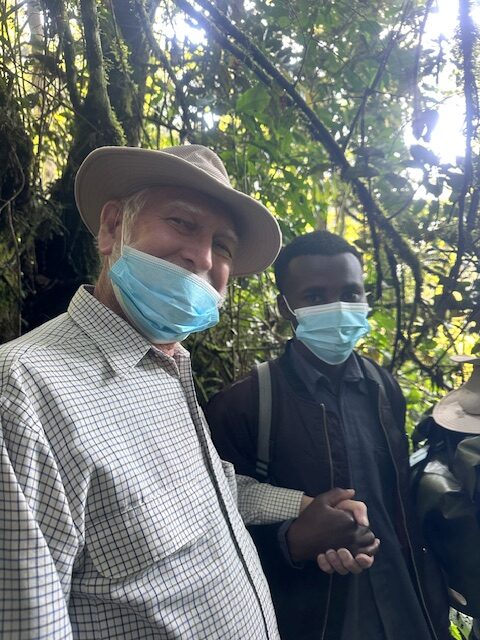
I’m nervous and excited for my 80-year-old father. So far on this trip, we’ve been surrounded by elephants while on safari, slept the night at a local school and trekked for chimpanzees, but this will be the toughest part of our four-week trip in Africa.

It was his idea to come. But that was before a massive infection put him in hospital for a month, before diabetic highs and lows messed with his energy levels.

And now he is about to trek through a dense jungle in search of gorillas. It could be a short walk, or a long walk, it will almost certainly involve steep hills. But we won’t know until we get to the gate and find out which family of gorillas we have been allocated.

For now, we watch the changing landscape through the windows of our van and hope for an easy walk.

We rattle our way through the mountains racing against the clock to get to Rushaga Gate in Bwindi Impenetrable Forest – the gate we will use to start our gorilla trek.

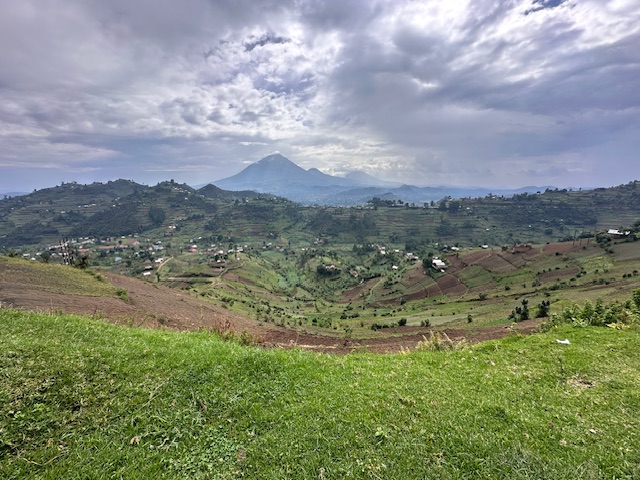
Looking our over the mountains and a green valley in Kisoro.

Kids in bright red school jumpers walk dusty roads.

Pink tipped clouds reflect the sunlight just making its presence felt for the day, while banana palms compete with camellia – tea – bushes, eucalyptus trees and food crops.

Along the way we pass villages and lakes, lodges and shops as we climb higher and higher.

Wisps of cloud gather in the spaces between the mountains.

“This must be where ‘gorillas in the mist’ comes from’,” says Dad, as we drive through thick clouds resting across the road in front of us and in the gully to our right.

At Rushaga Gate we stop for a briefing. Hundreds of eager trekkers pile into tiered seating.

A band of women sing local songs and dance for us, It’s different this time to the last time I was here, back in 2019, before Covid stopped the world. Maybe the gate was different, maybe the entertainment has increased along with the number of visiting tourists.

We clap along to the music and sing the few words we know – ‘Hakuna Ma-ta-ta’.

One of the guides gives us an overview of what to expect for the day. Gorillas are never guaranteed, he says, follow your guide’s instructions and know that they will always find the best route for you to take through the dense forest. 

There is more. More instruction, more guidance. But most importantly we are put into groups and trust that our guides and our porters will fill in the information for us along the way.

We find our guide, Herbert, and drive from the briefing point to our entry point into the forest. It is at the base of a hotel and I am fooled into thinking we will have an easy walk in.

We don’t.

Our first challenge is to balance on a log across a small river. 

I watch my Dad nervously, thankful for the porters who all reach out to lend a hand. But I snap a photo too, to capture this moment not just in my mind but to share with my siblings, my nieces and nephews.

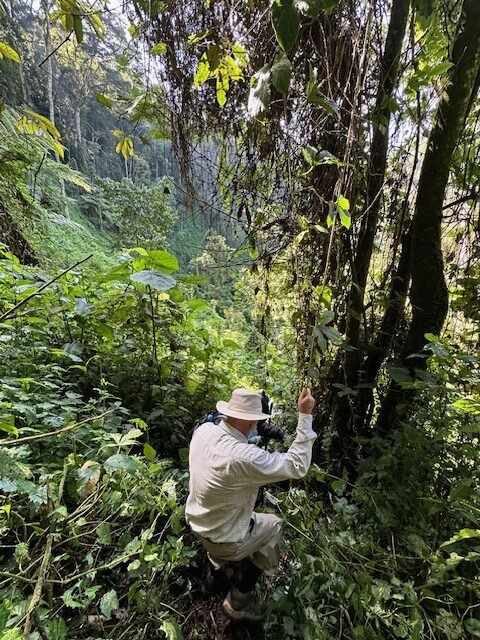
And then we climb. It feels like our path is taking us straight up the side of the mountain. There is no zigzag, no meandering path. Our guide slashes through branches finding the best way for us to go. He talks to the trekkers who stay with the family of gorillas, keeping an eye on them and giving us direction on how to get to them.

Along the way Herbert tells us about the forest but we stop infrequently, we are following a band of gorillas on the move and they move a lot faster than we can. 

Just before 9.30 Herbert stops to give us our final briefing. The gorillas are close, he says.

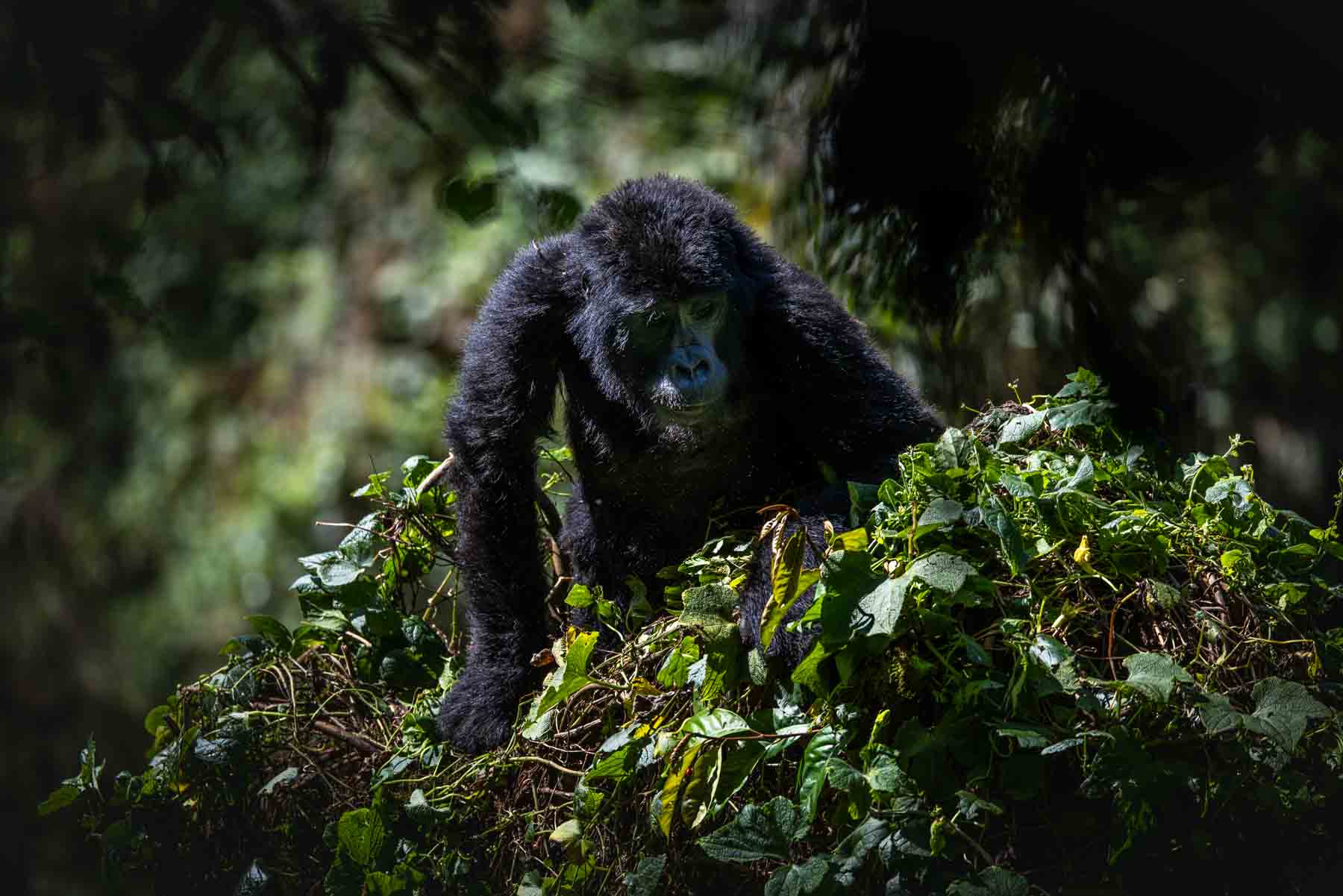
There are 10 members in this group of gorillas. Most of the babies are boys. There is no silverback but there is a black back, ‘Kuta’, who will one day soon become a silverback and who is tough, Herbert says.

So tough, he has fought off various silverbacks to remain the dominant male in this group.  

Herbert tells us that of roughly 22 national parks in Uganda, only eight are open to tourists but the funding and tourist dollar is used to support all the parks and surrounding local communities.

Around 70 percent of people in this area benefit directly from tourism, he says. In that way, they have managed to minimise poaching.

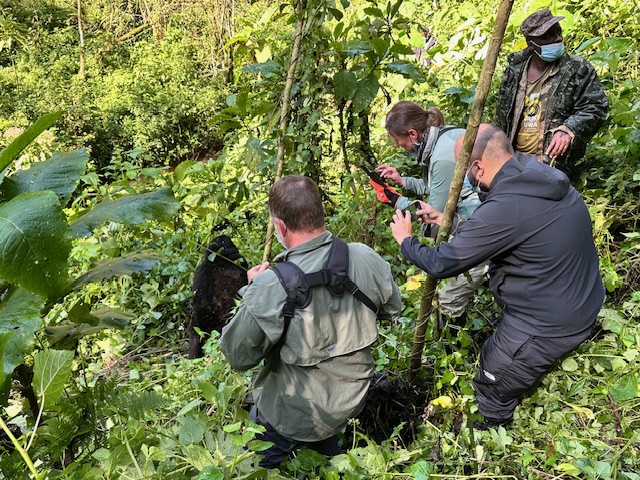
When the briefing is over we hand our backpacks and our walking sticks to our porters. Excitement builds. There are about 10 of us in this group. We move silently forward, straining our necks, trying to catch sight of the gorillas.

We climb over the mountain ridge and start to move down a steep slippery slope and there, just ahead of us, resting among the trees is the family we’ve come to see. 

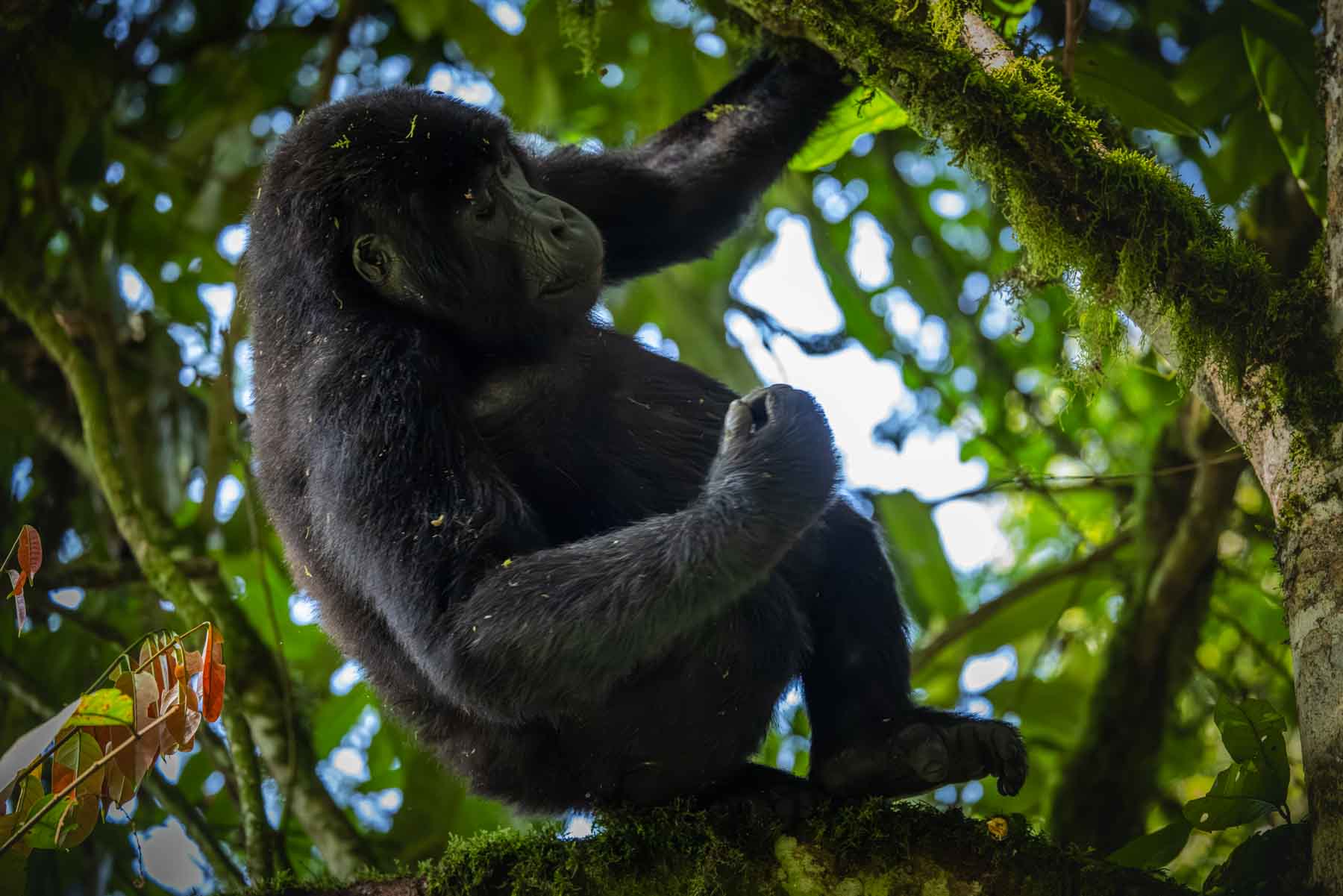
One gorilla, then another, slowly our eyes adjust to peering into the trees and more gorillas become visible.

Our guide, the two porters that have come with us and the rangers all manoeuvre us around, moving branches, giving us a better view where they can, making sure we have clear sight for a photo, pointing out different members of the family. 

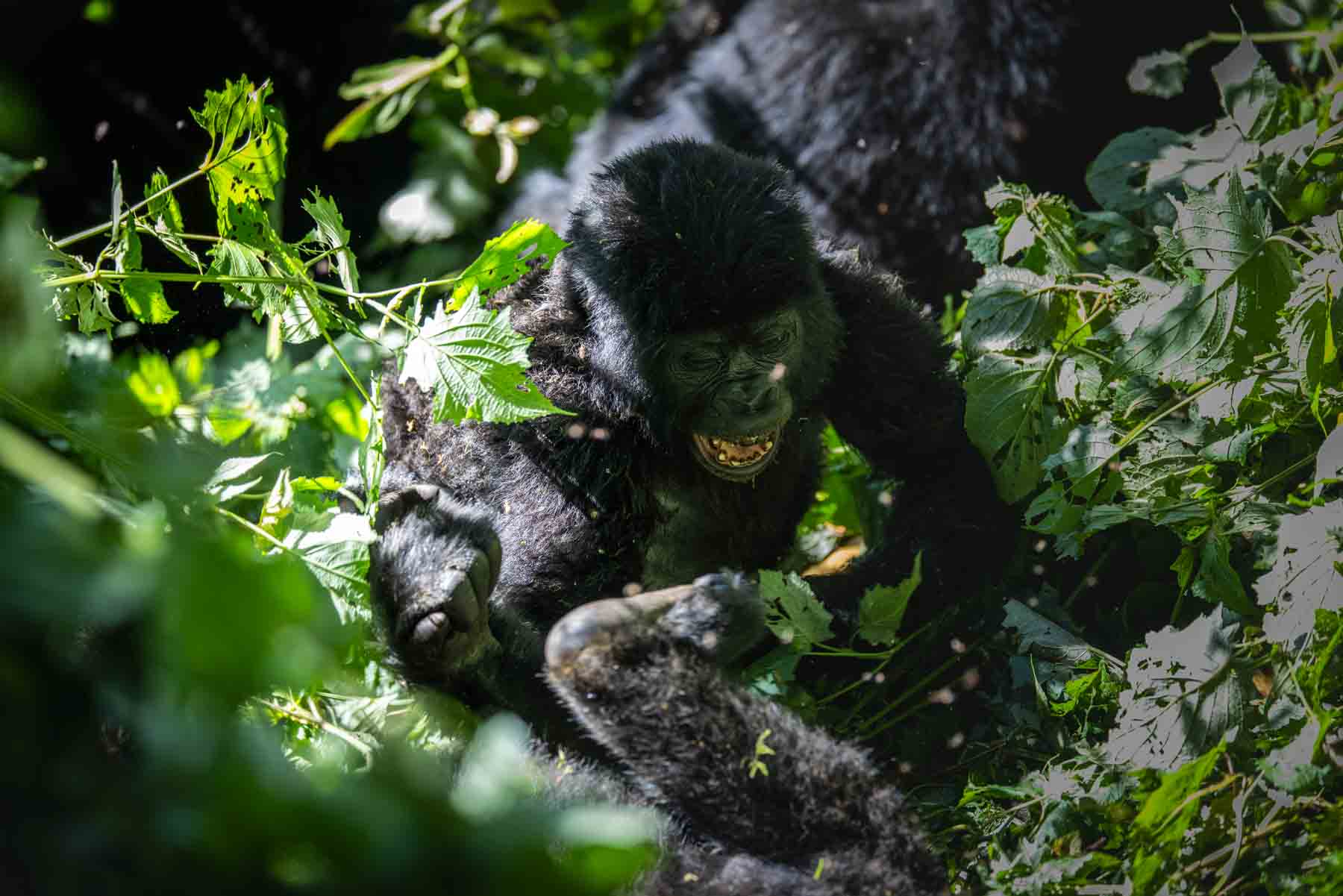
Two babies climb up a tree. Three gorillas fight and fall down a slope. A mum protects her baby.
Kuta sits off in the distance, watching us and keeping an eye on his family.

I watch Dad, keep my eye on where he is, whether a porter is with him, whether he is still on his feet. 

A smile creeps across his face.

This, this is what he travelled halfway across the world to see. 

One by one the gorillas begin to move. And so do we.

This time they are heading down the side of the mountain. Over mud covered with ivy and tree roots. We inch our way forward, slowly over the slippery track. We crawl under a fallen tree trunk but one of our party loses his footing and begins slipping down the side of the mountain, face first. A quick-thinking trekker reaches out and grabs his foot. He is ok, just shaken.

It’s like this all the way down, trekkers move branches out of the way for each other, grab hands to provide balance and point out rocks and thorny branches.

We work together to make it down the steep slope, keeping one eye on the ground and one eye out for gorillas.

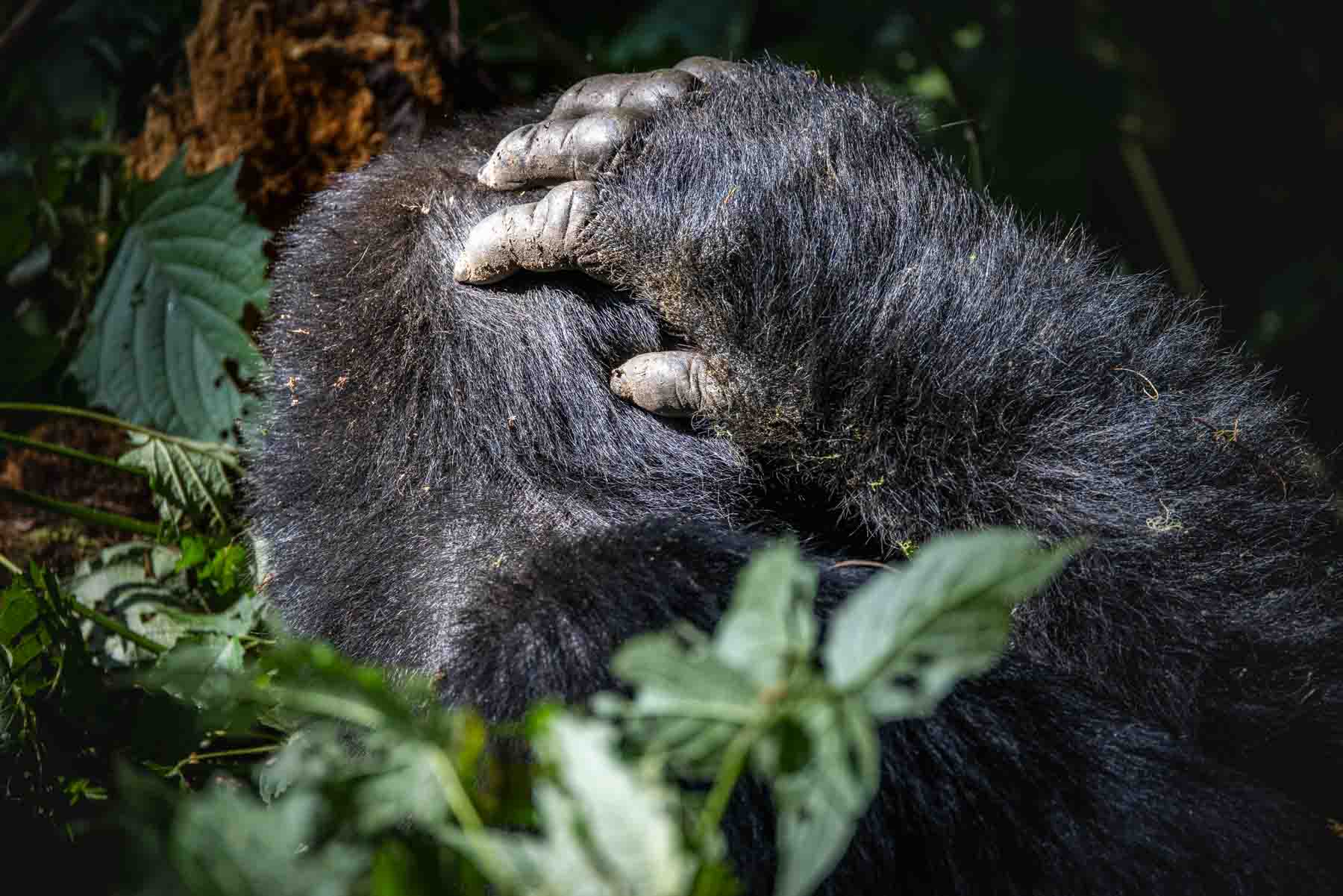
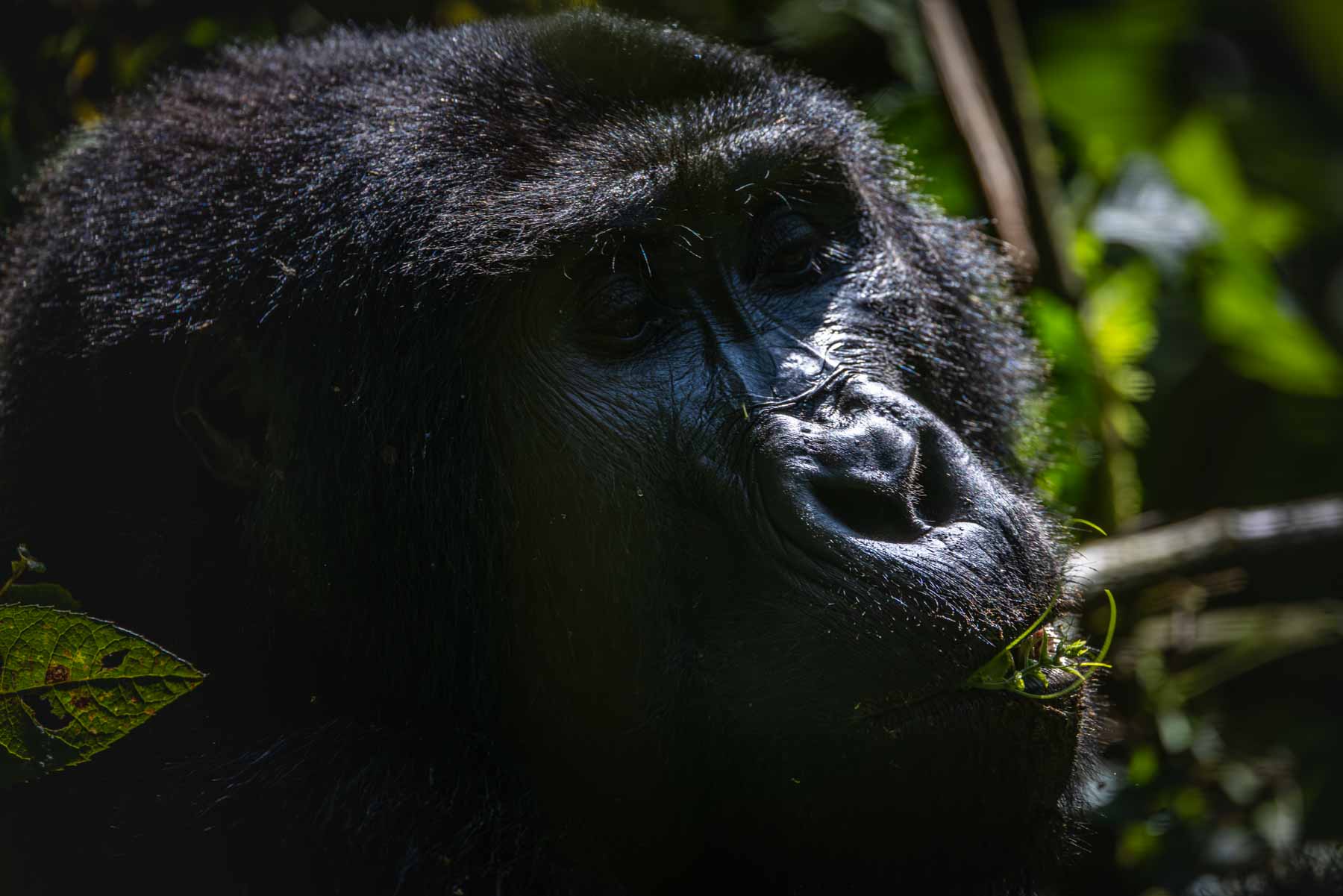
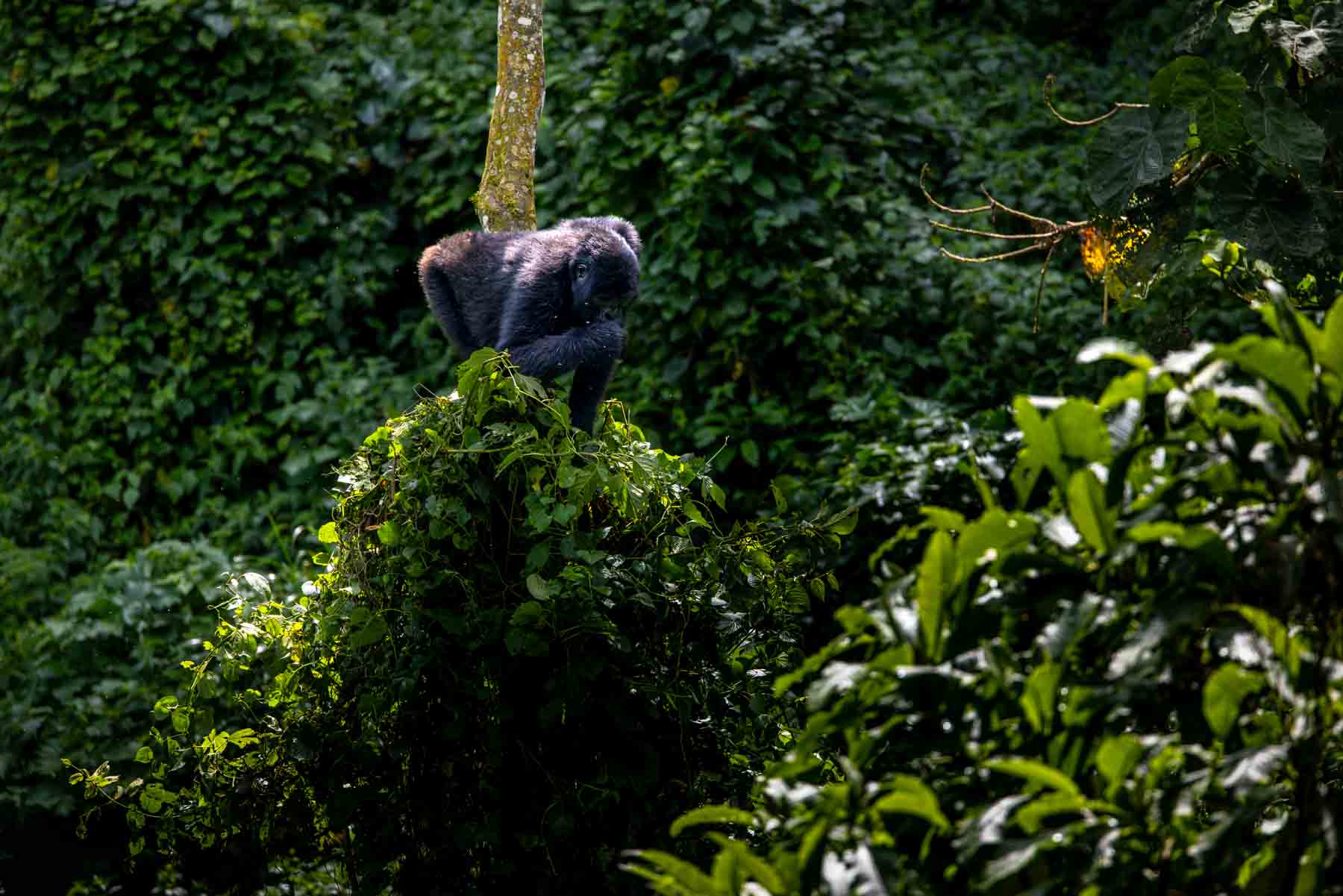
We find the gorillas again, sitting in the tops of trees, sitting on the forest floor under thick tree canopies. We watch them eat and play, we watch them sleep. After 20 minutes or so they get up and move on again.

And our guide tells us our time with the gorillas is up. On any gorilla trek, you can only spend one hour with the gorillas and we have had just over an hour.

But we are now at the bottom of the mountain, closer to our vehicles, and the gorillas are headed toward the road. So we follow the gorillas along the river, craning our necks to get one last look. We follow them through the river and back toward the main road where they disappear into the trees. 

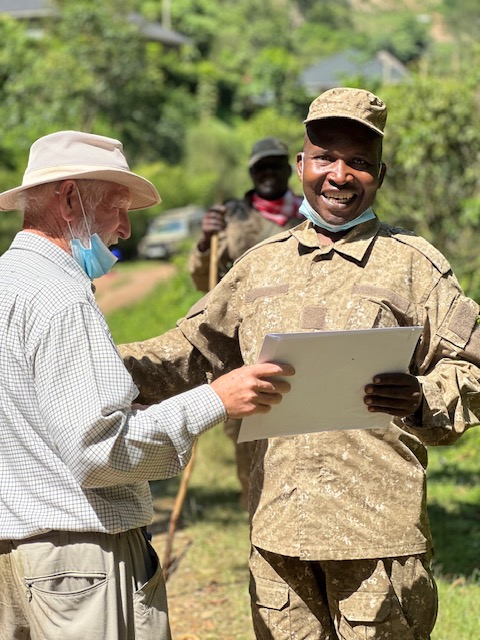
Back at the cars our guide hands us all a certificate, congratulating us for making the trek to see the gorillas.

We all smile and congratulate each other, but there is no smile wider than the smile on my Dad’s face. At 80 years of age he did what few people would even contemplate. 

On the way home from the gorilla trek there is a lightness in the van. A sense of accomplishment, but also of relief. We did it. 

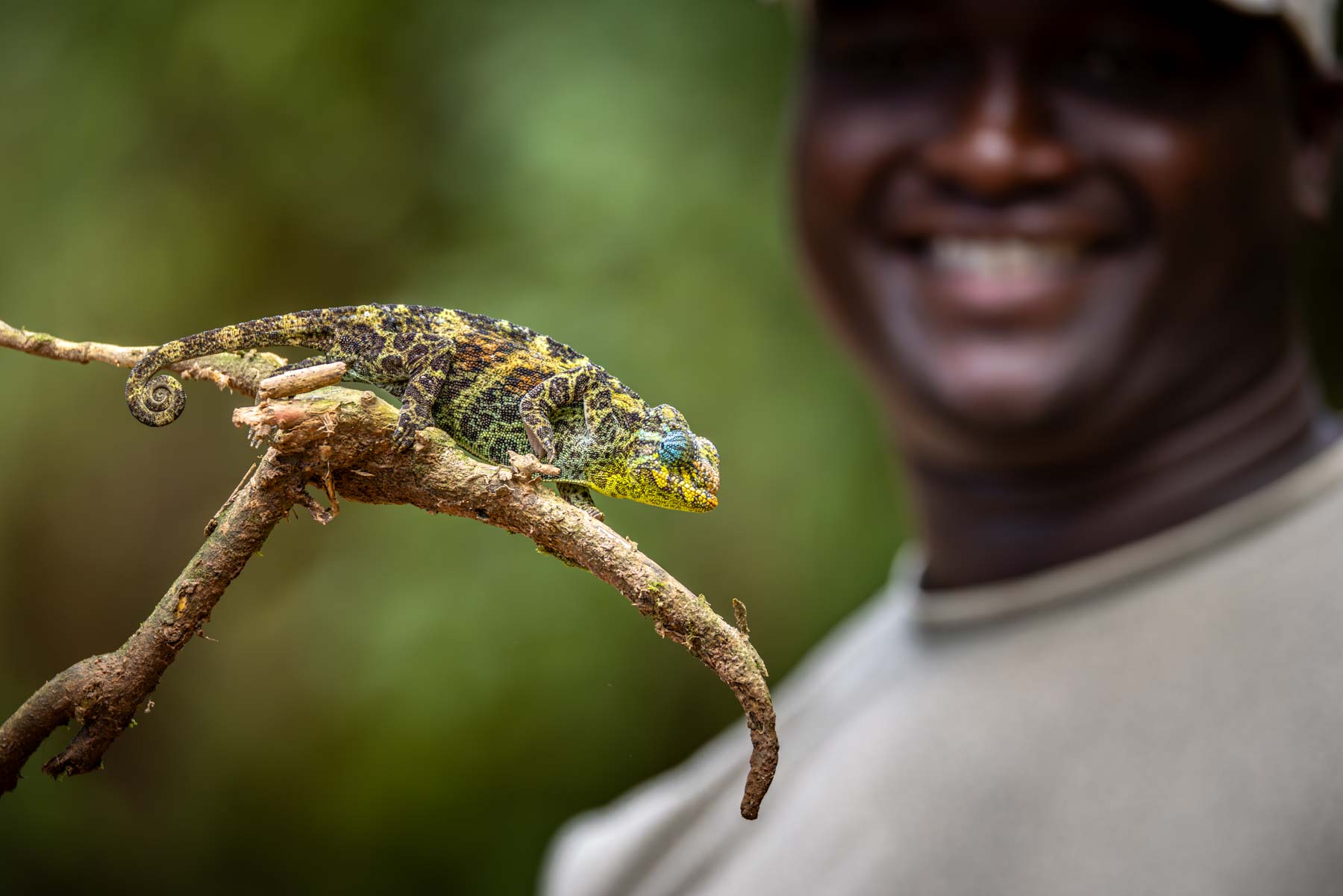
And just when we think we’ve had our fill of wildlife for the day, our driver pulls over, the guide jumps out and rescues a flat necked chameleon wandering across the middle of the road.

This is Africa, after all, and you just never know what might happen next.

Read more about our adventures in Africa here.

Fast Facts

We travelled to Uganda on this trip in 2026 (we have also been in 2016 and 2019.

We were in Kisoro for three nights.

We stayed at Traveller’s Rest, the same hotel Dian Fossey stayed at when she was researching the gorillas.

Was it long enough? It was mine and Adrian’s third time trekking for gorillas in Uganda and each time we’re stunned by the beauty of the mountains. Three nights was a good amount of time to enjoy the trek, visit a local village and take a canoe ride on Lake Mutanda.

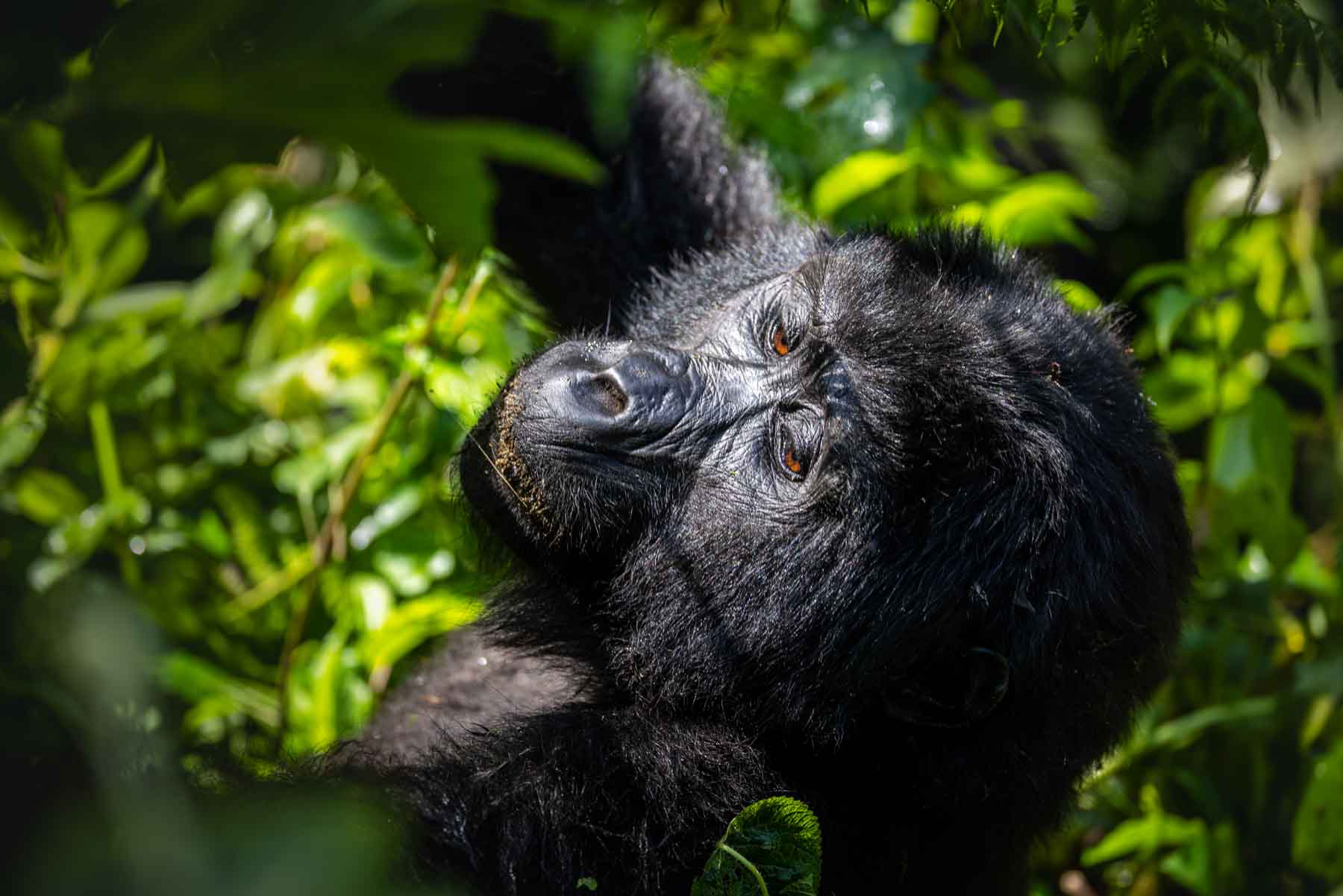
Highlights: There are few things in life that can compare with watching baby gorillas play or looking into the eyes of a gorilla high in the mountains in Uganda. 

Join @AllabroadAU on  Instagram,  Facebook, X and  YouTube  for more travel inspiration.

Latest Posts

Celebrating Easter in a sea of purple in Quito

We felt the anticipation the day before. It was a Thursday. The Thursday before Easter. The streets...

Embracing the chaos on a drive in Sikkim

Hairpin turns and landslides, majestic mountains faded by smog. Drivers constantly on their phones...

Chasing waterfalls in Iceland

The first time we pass a waterfall on our tour of Iceland we're driving through Snaefellsnes...

Delving into speakeasys and history in Estonia

Castles, cocktails, an intriguing history what more could you want in an adventure? It’s fair to say...

Wander with us

Never miss an adventure. Subscribe to AllAbroad for more travel inspiration