Blah blah

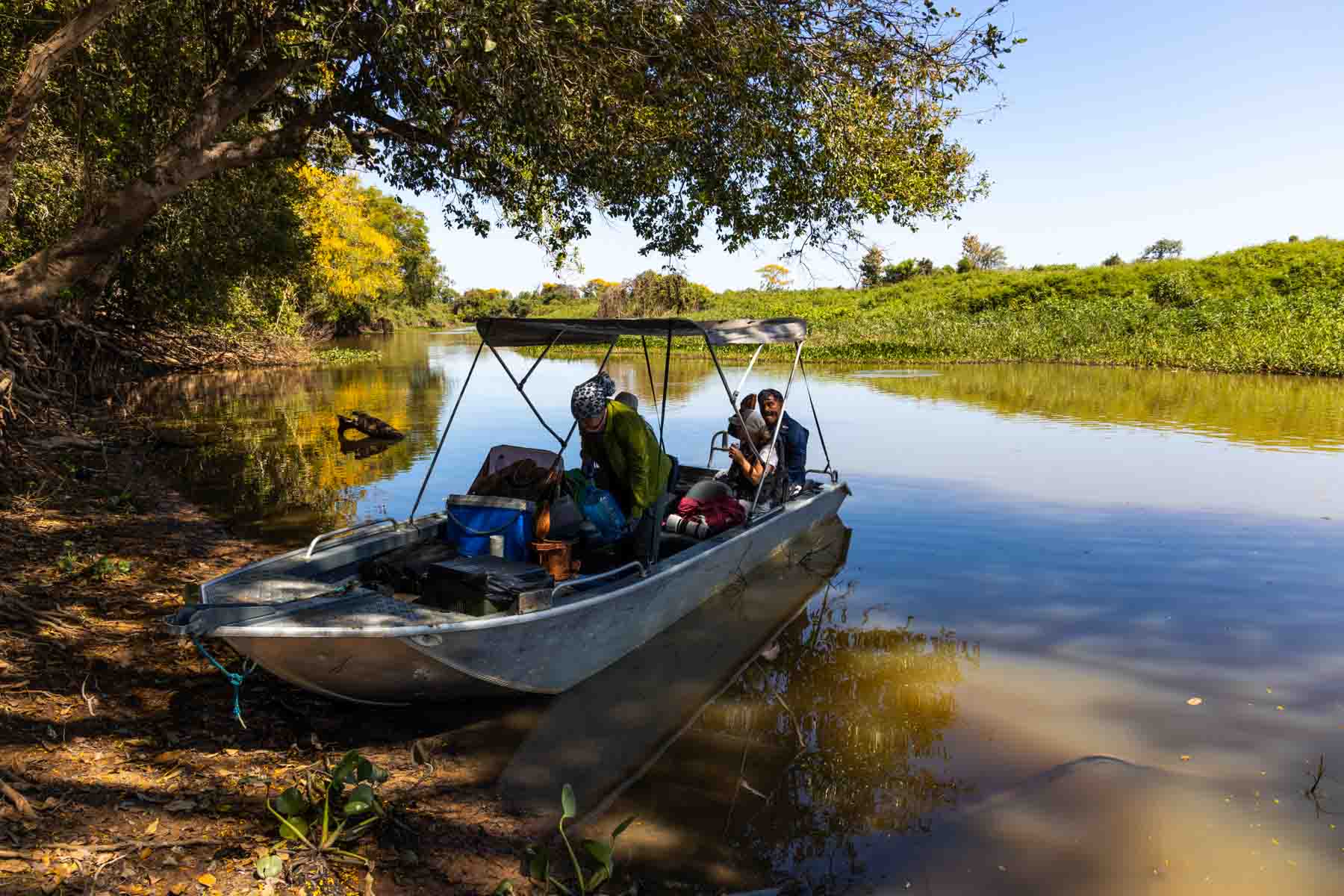
The boats are small, eight-seater at most, all lined up along the edge of the water.

And it’s dark, just a glimpse of sunlight edges its way into the day.

It’s bedlam on the dock as people crowd around boats, looking for their guides. Boat drivers load boxes, yelling out to one another. But there’s excitement too.

Anticipation of what’s to come, of what we might see. An eagerness to get out on the water, to see our first jaguar. 

One by one the boats move out as drivers edge their way into the river to begin their safaris.

Mist rises out of the water. It’s calm, despite the moving boats, despite the eagerness to get into the solitude of the jungle where the wildlife is most likely to be. Everyone wants to be the first to see a jaguar.

And so begins our adventure on the Cuiaba River in the Pantanal, Brazil.

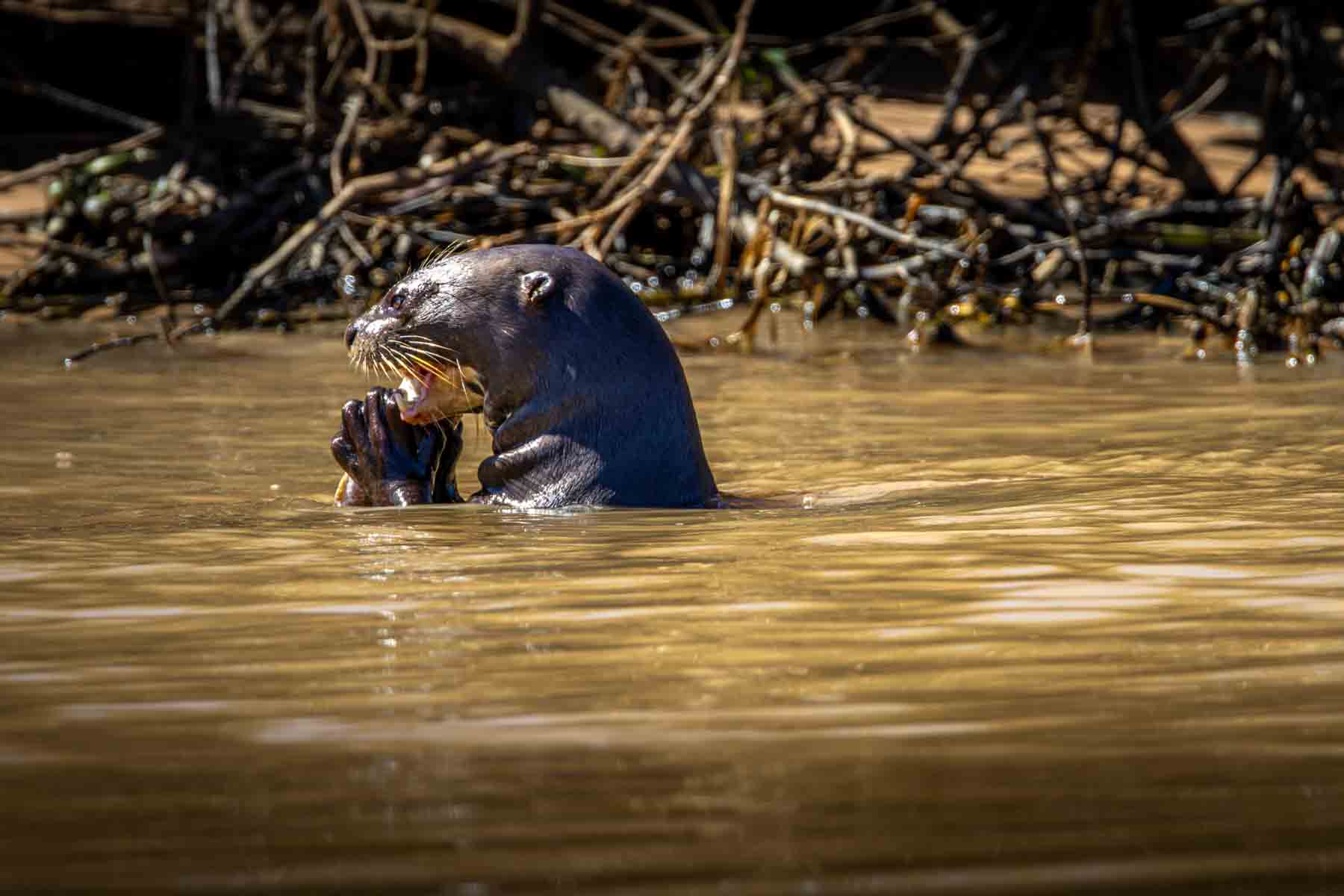
As we glide through the water we see three otters and stop to watch them eating fish for breakfast on the edge of the water. 

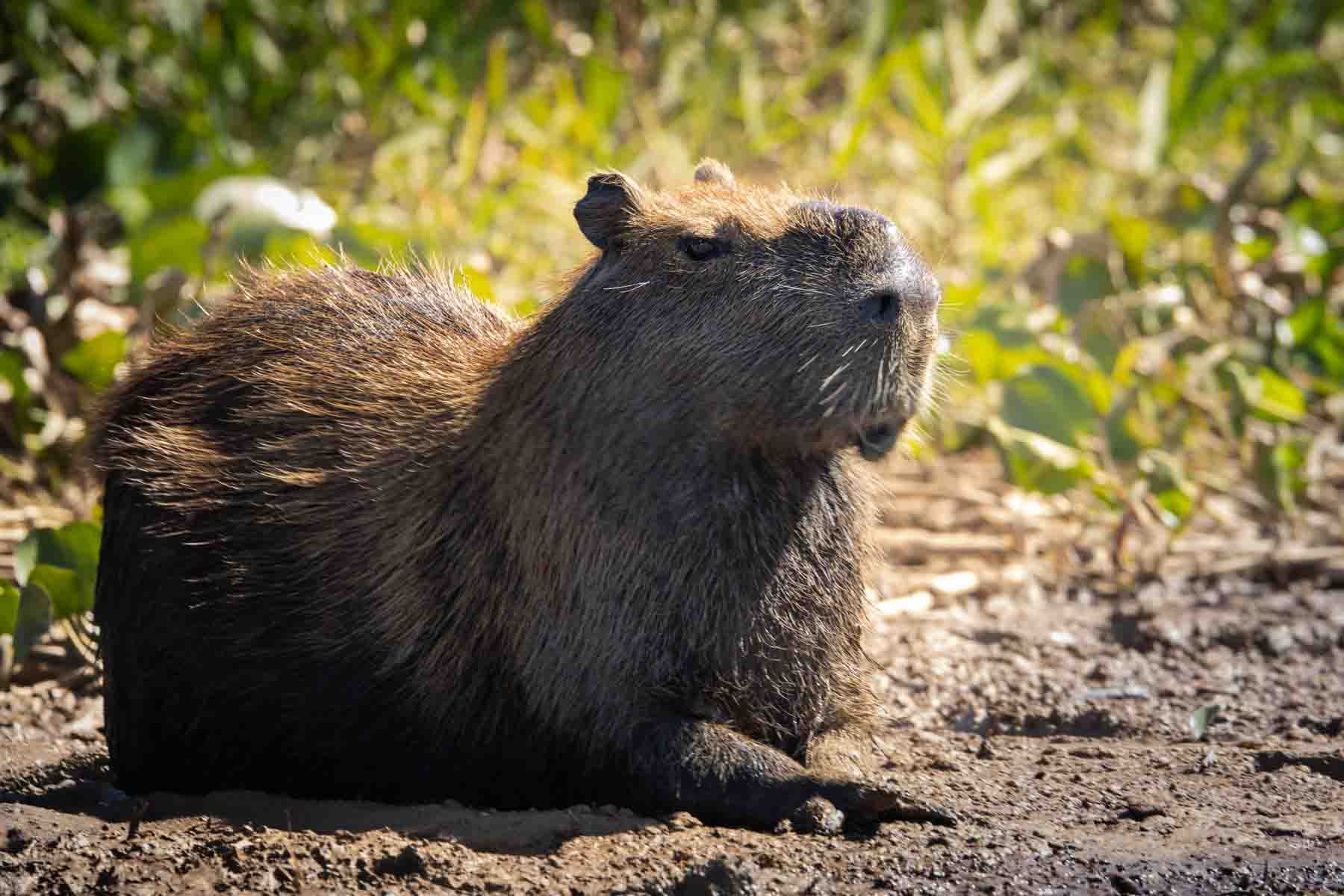
To our right a family of capybaras swim along the riverbank and a kingfisher sits on the end of a branch poking up out of the river. It too is looking for fish for its breakfast.

We take in the setting, the scenery, look for any signs of wildlife. We think it’s too early to see a jaguar, plus, all the boats have overtaken us – wouldn’t they have stopped if there were any nearby?

Our guide, Lorenzo, gives me a 100 per cent guarantee we will see a jaguar during our two days in the Pantanal. He shows me a video of a young girl who had travelled on one of his tours recently: “We saw 13 jaguars!” she says with excitement. 

I look at Lorenzo sceptically. 

This is wildlife, rare wildlife, how can he possibly guarantee a sighting?

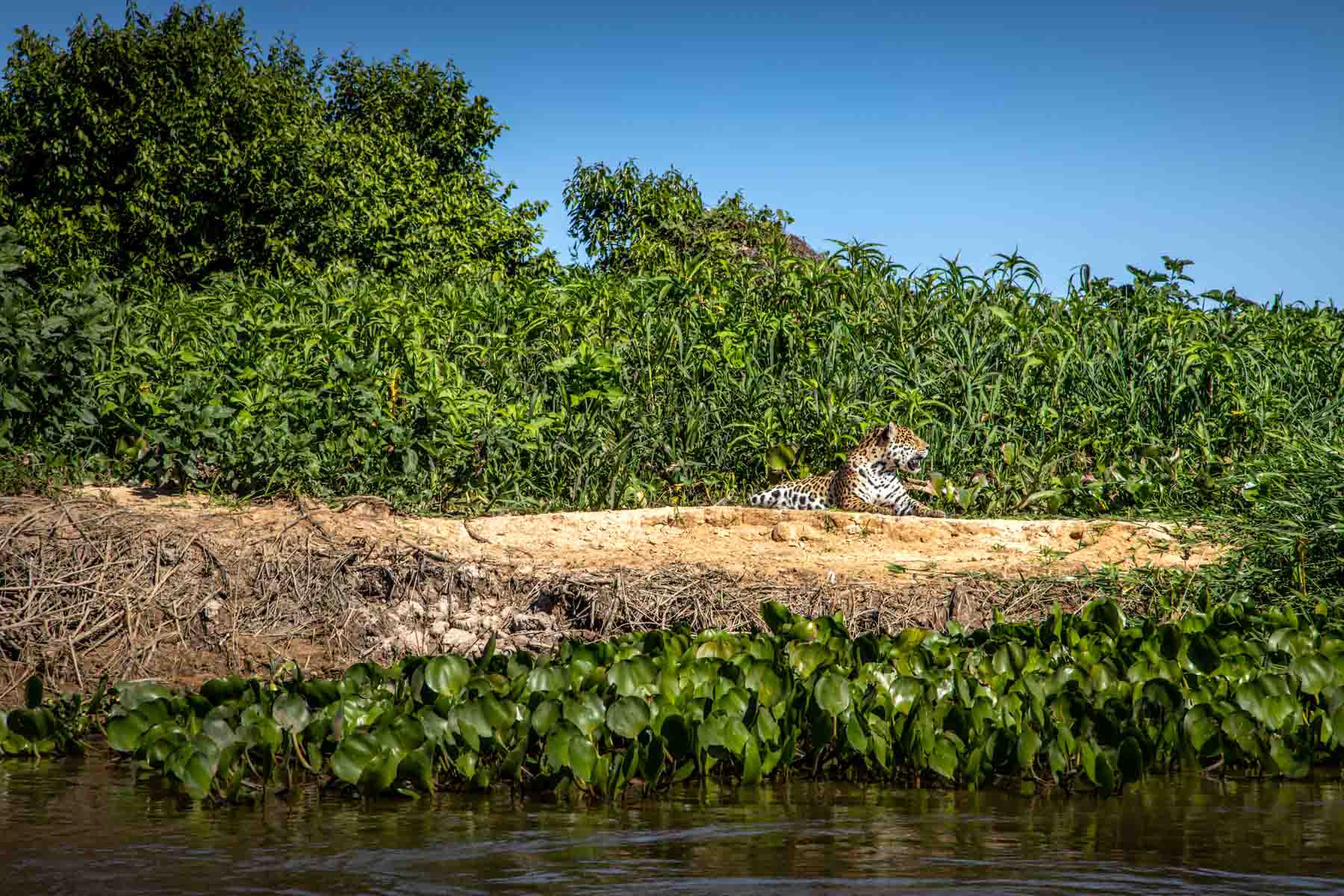
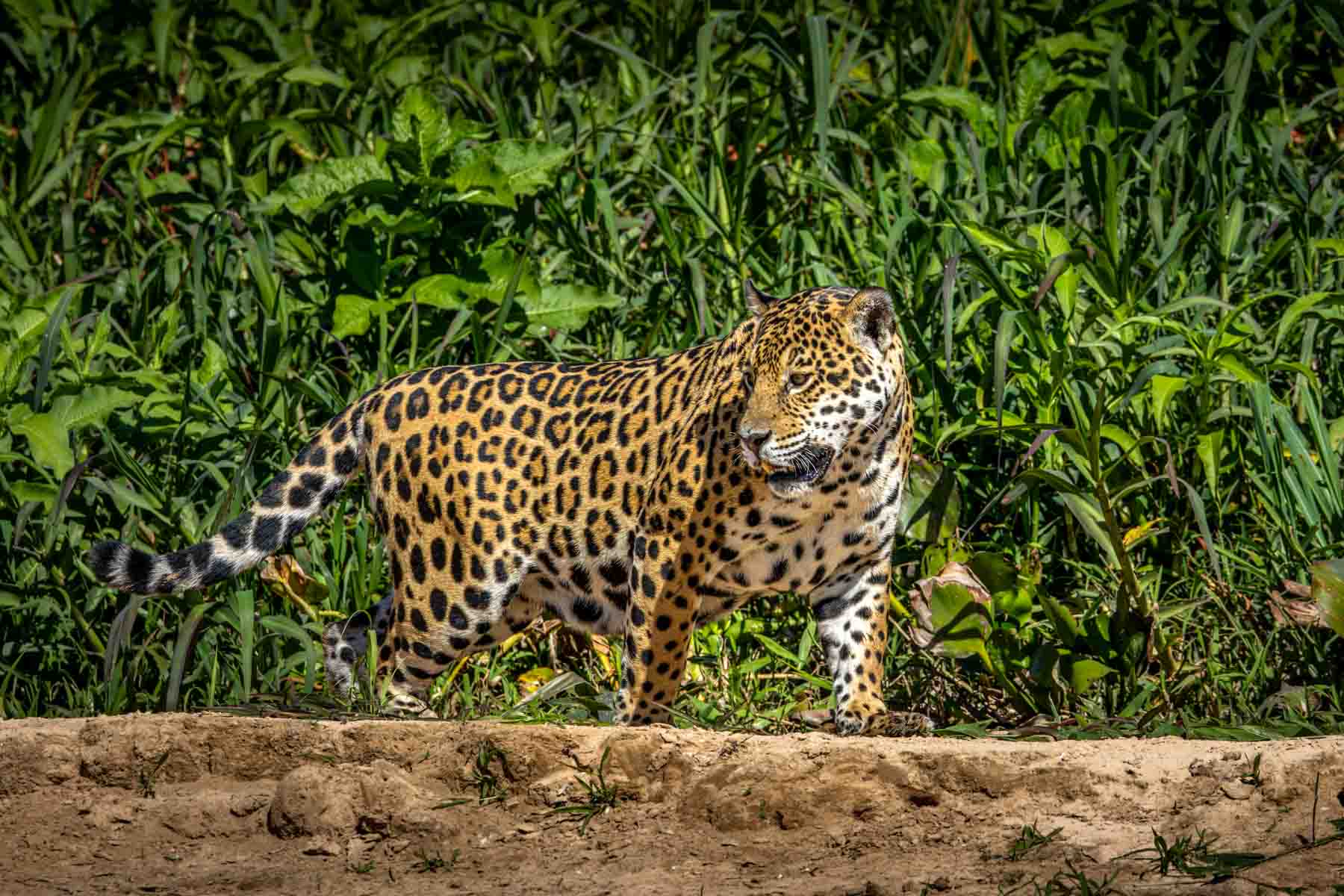
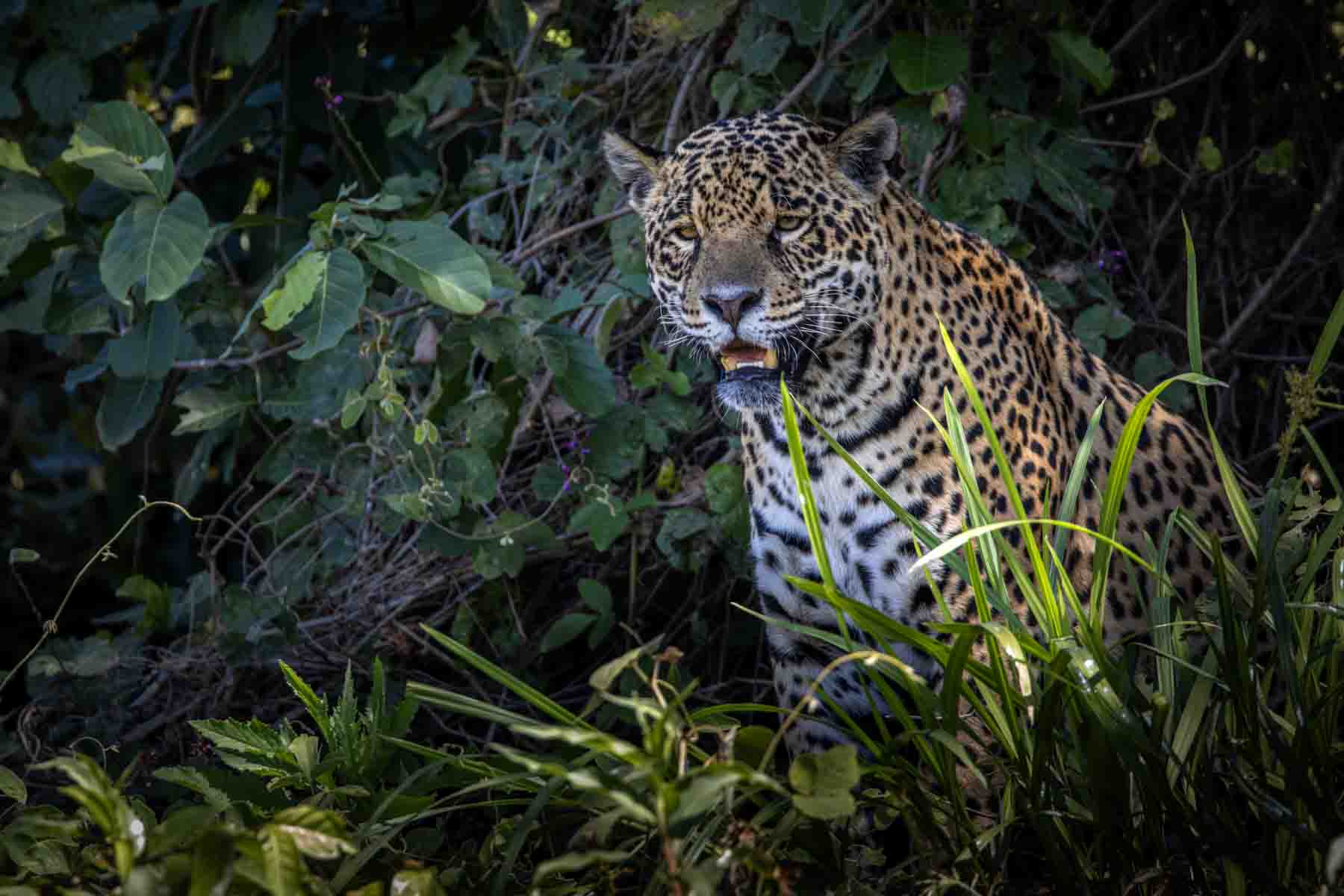
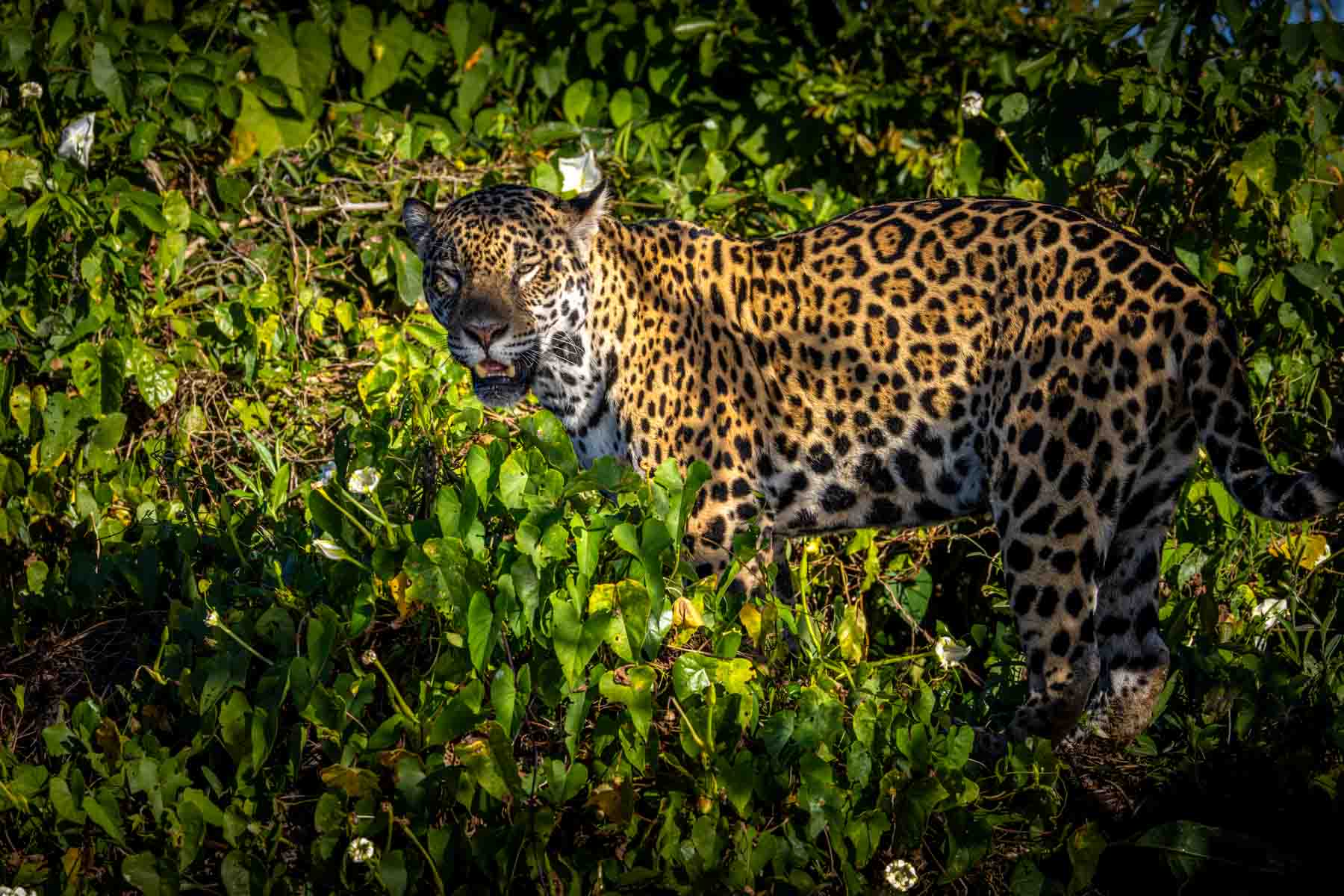
But then, at 6.57am, we see our first jaguar lying on a small open beach area on the bank of the river. 

This is what we are here to see. 

The jaguar. 

An animal so elusive that Ade’s guide almost jumped out of the boat when he saw one in the Amazon in Peru, an animal that despite two trips to the Amazon, I have never seen.

The jaguar is the third largest cat in the world, behind the lion and the tiger. We’ve seen lions and tigers in the wild, but never a jaguar and so it is that we find ourselves in the middle of the jungle in Brazil in search of jaguars. The best place to see a jaguar, apparently, is in the Pantanal, which borders Brazil, Bolivia and Paraguay.

The national park is the largest tropical wetland in the world and is home to the highest concentration of wildlife in South America, including the largest number of jaguars. 

According to the Jaguar ID project there are believed to be somewhere between 4000 and 7000 jaguars in the Pantanal. 

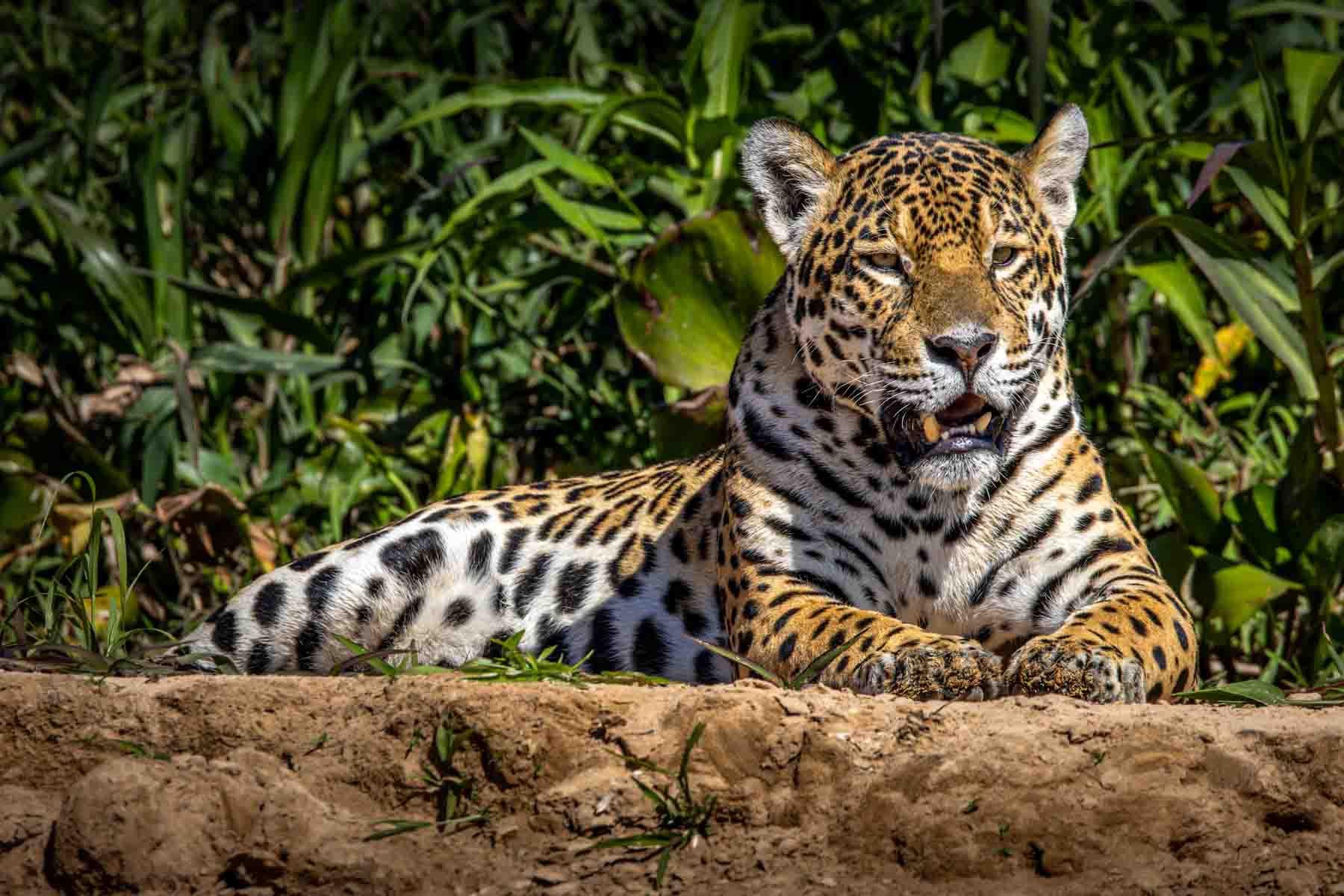
And here we are with a clear view of one of those jaguars. We stop to observe, to take in every detail of this amazing cat. 

Every other boat we saw when we boarded our little boat has sped past this Jaguar. Every other boat expects the magic to start closer to the national park. But sometimes, like this morning, wildlife sightings – magic – happens on the edges.

Lorenzo tells us it normally takes about three or four hours before the first sighting. 

We see ours within 20 minutes.

When the jaguar retreats into the bushes, we move on.

We continue our search for jaguars, more confident now and determined to see how many more we can find. 

But the wildlife is so abundant here in the Pantanal that we are constantly distracted. A flock of yellow billed terns fish in the shallow waters while a troupe of Capuchin monkeys play hide and seek with us from the tops of the trees. 

“They are eating,” says Lorenzo. “Picking fruits and food off the branches.”

We glide into Inquentro da las Aguas National Park at a confluence of two rivers and turn right into Three Brothers River. 

“There are toucans here,” Lorenzo tells us. “Please be on the lookout.”

But suddenly our driver takes off, two boats speed past us.

There must be a jaguar somewhere.

We look for movement in the trees, all hoping to be the first to see it. And then, there it is, on the riverbank, looking out into the water. A sea of boats in front. He turns, walks into the bushes and hides.

We wait, watching, peering into the trees. All jostling for a good position, cameras at the ready.

A face peers out.

Fingers point, cameras are raised, poised. Beside me Ade snaps repeatedly.

The jaguar looks into the water.

Anticipation builds, will he jump? I search the water, looking for the caiman he might be hunting.

A look, a movement and suddenly he jumps into a swamp of waterlilies lining the river. But the caiman is too quick, this time.

The jaguar climbs out of the water and returns to shrub.

We lose him in the bush, once again, and move on to a capybara swimming along the river’s edge.

But within minutes we see another jaguar, or is it the same one we’ve just seen? This one is relaxing on a thick tree branch.

As we debate the speed in which a jaguar could move along the river, climb a tree, lay down and look so chilled, our guide assures us it is a different jaguar, our third.

We sit and watch, along with 20 other boats. Suddenly she stands, stretches and saunters along the branch back to ground level and into the trees.

But there is so much more to see.

The abundance of wildlife is evident everywhere we look. 

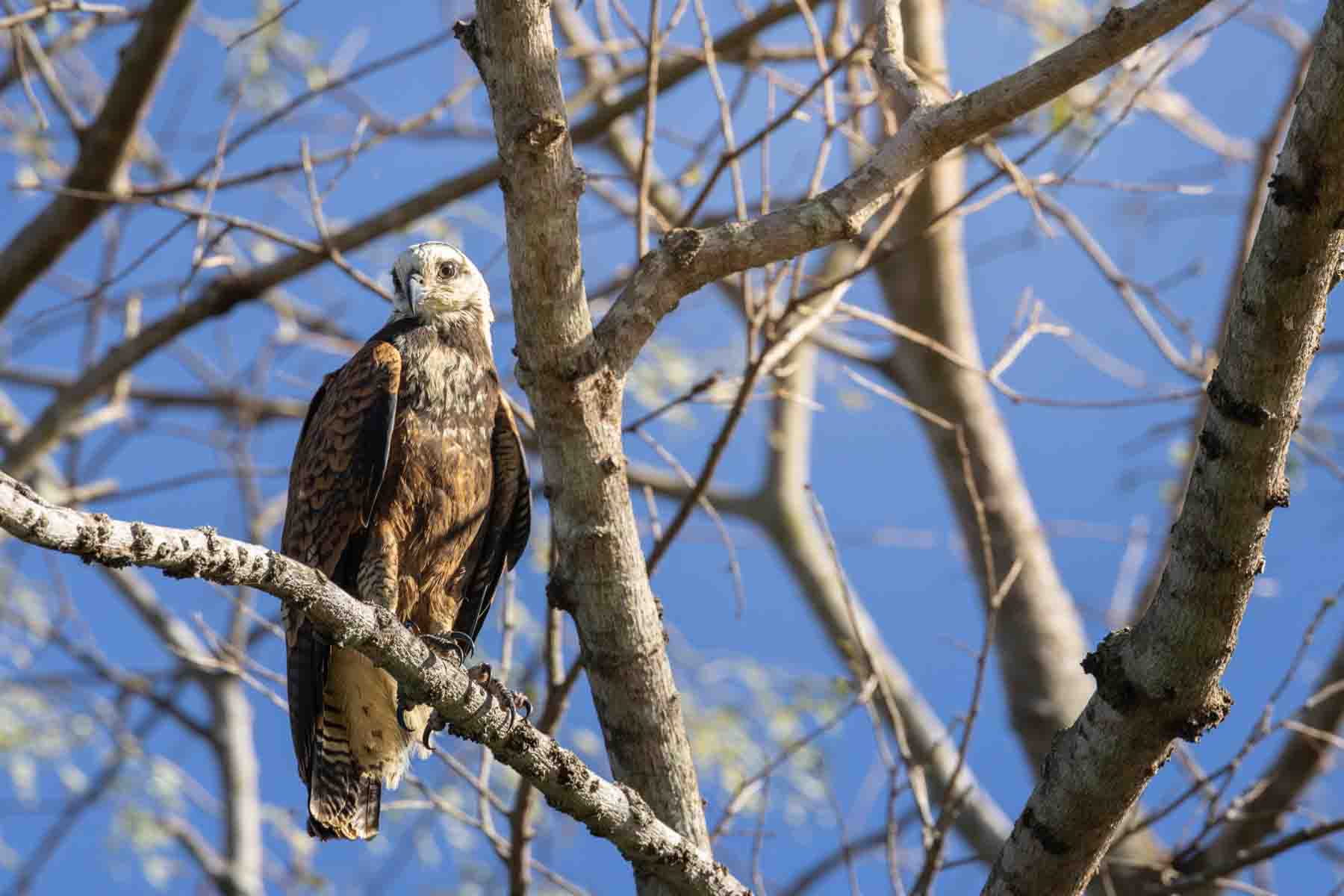
We stop to photograph a capybara eating on the side of the river and a black collared hawk who lands on a branch close to our boat in a tree that already houses a kingfisher and an egret.

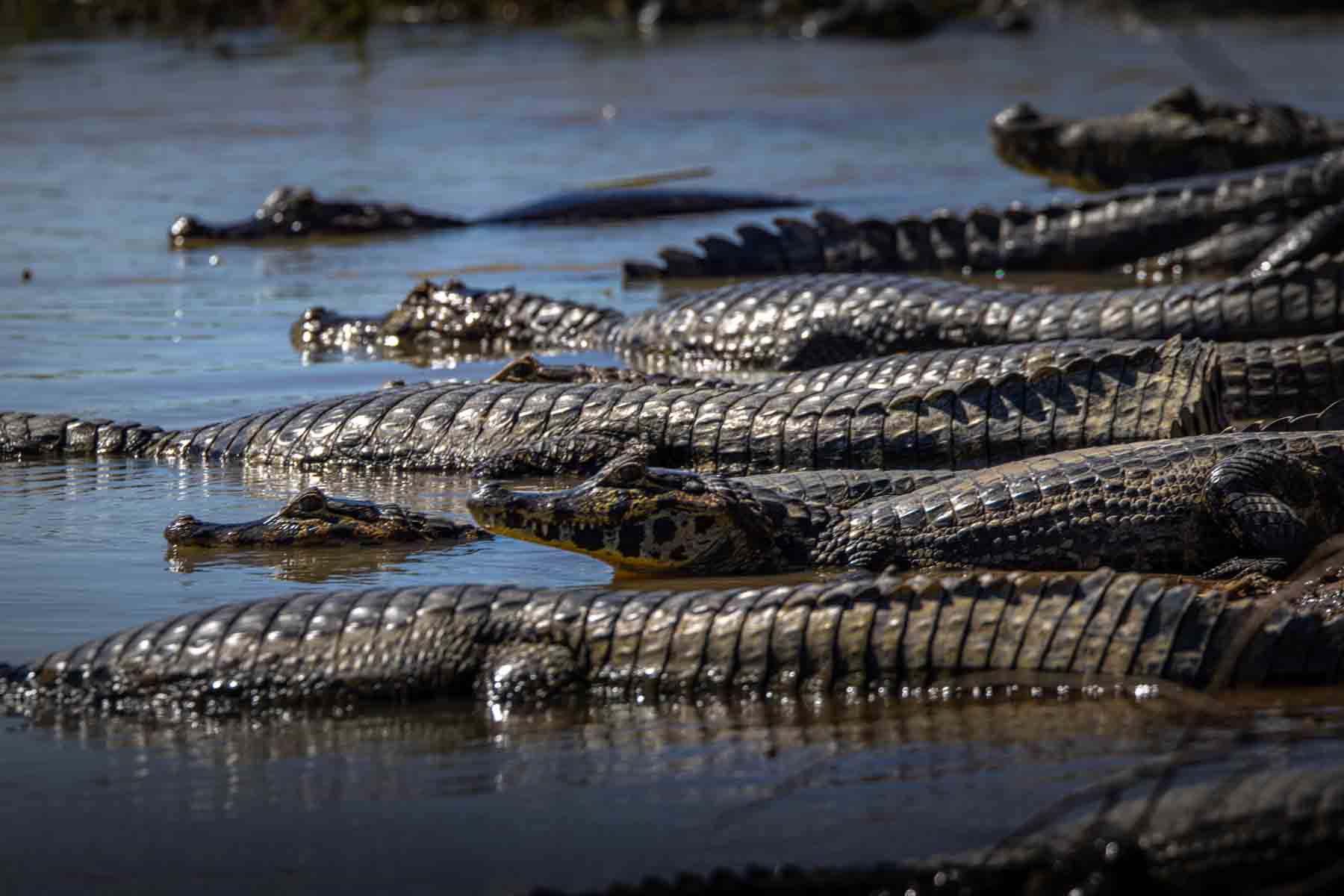
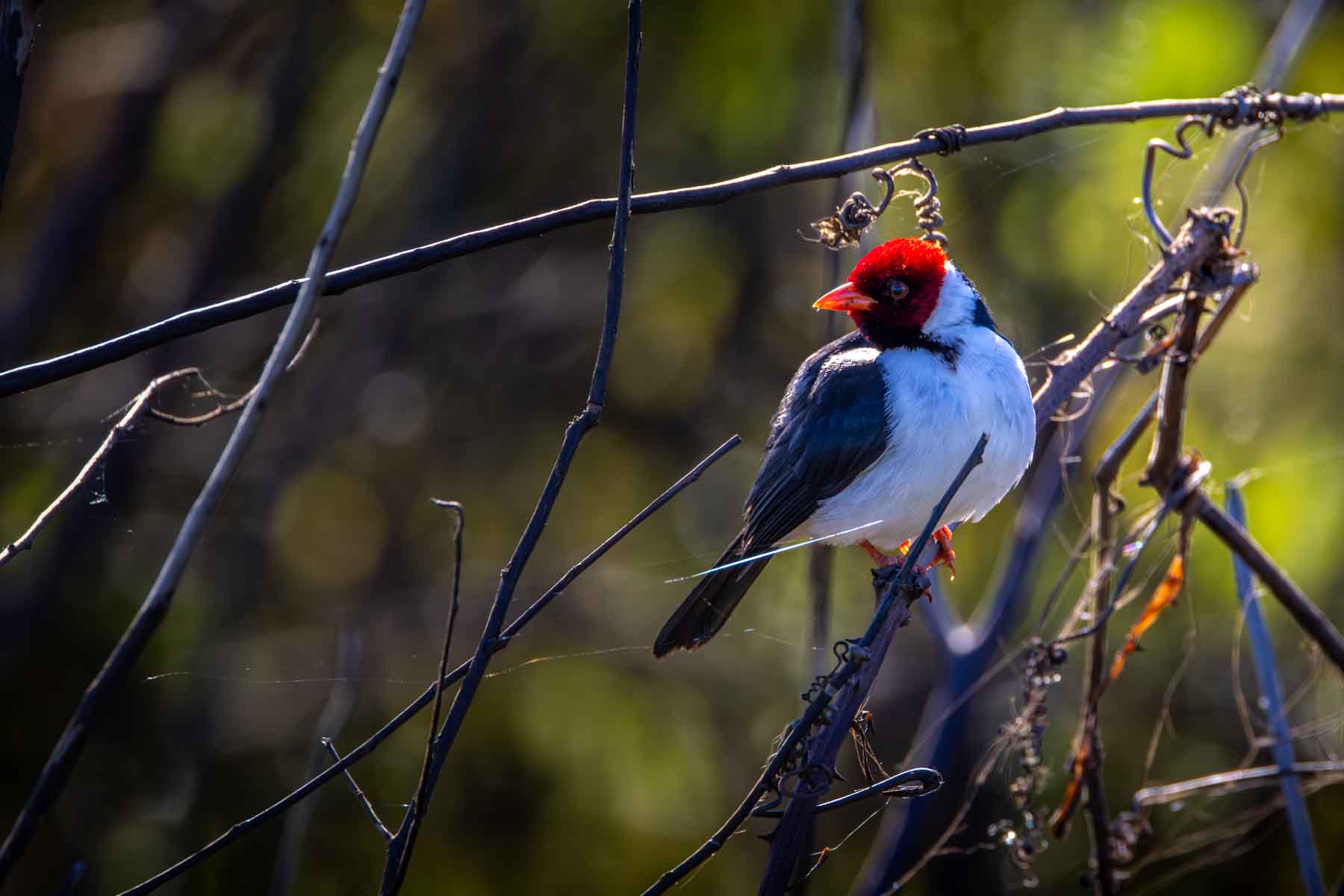
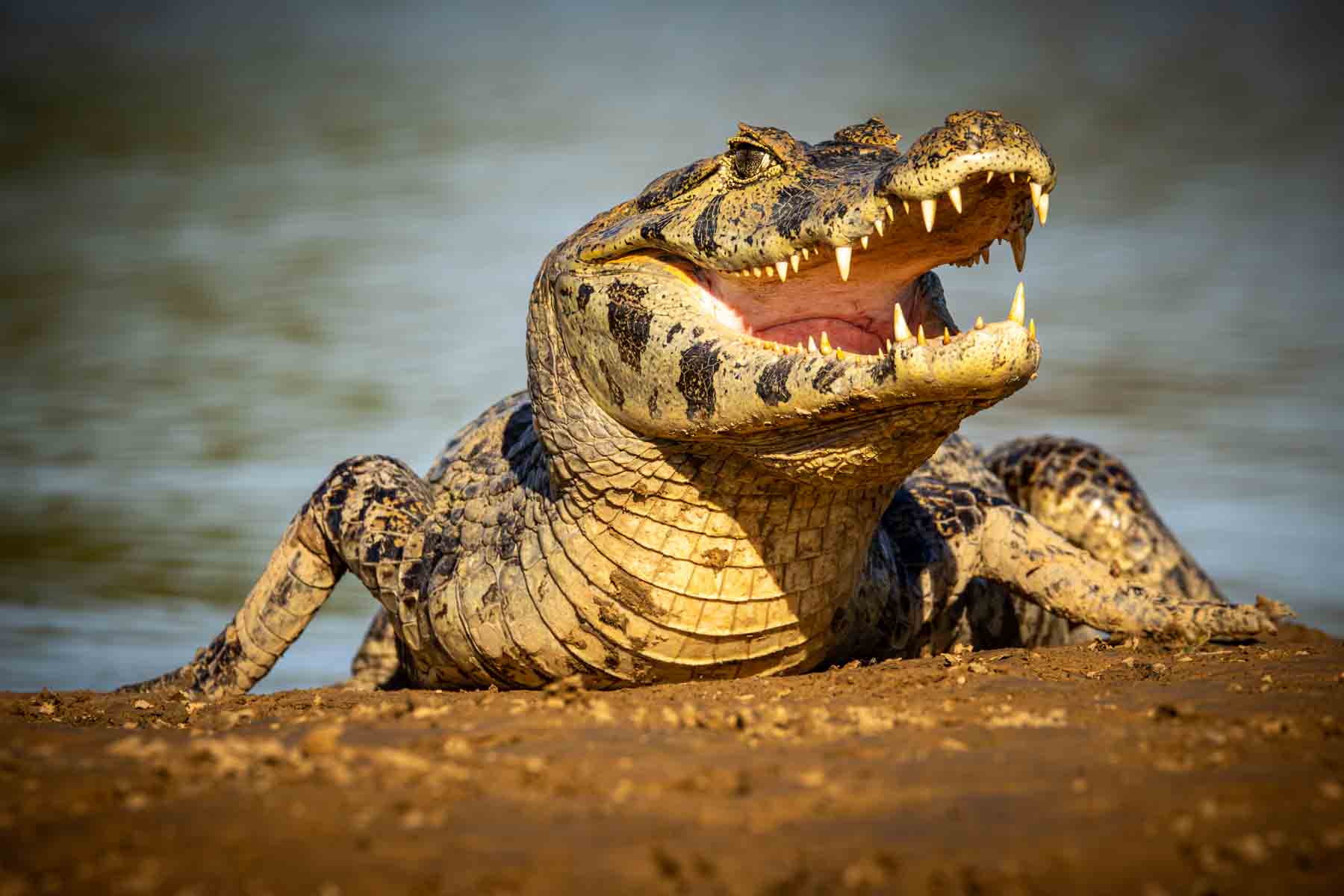
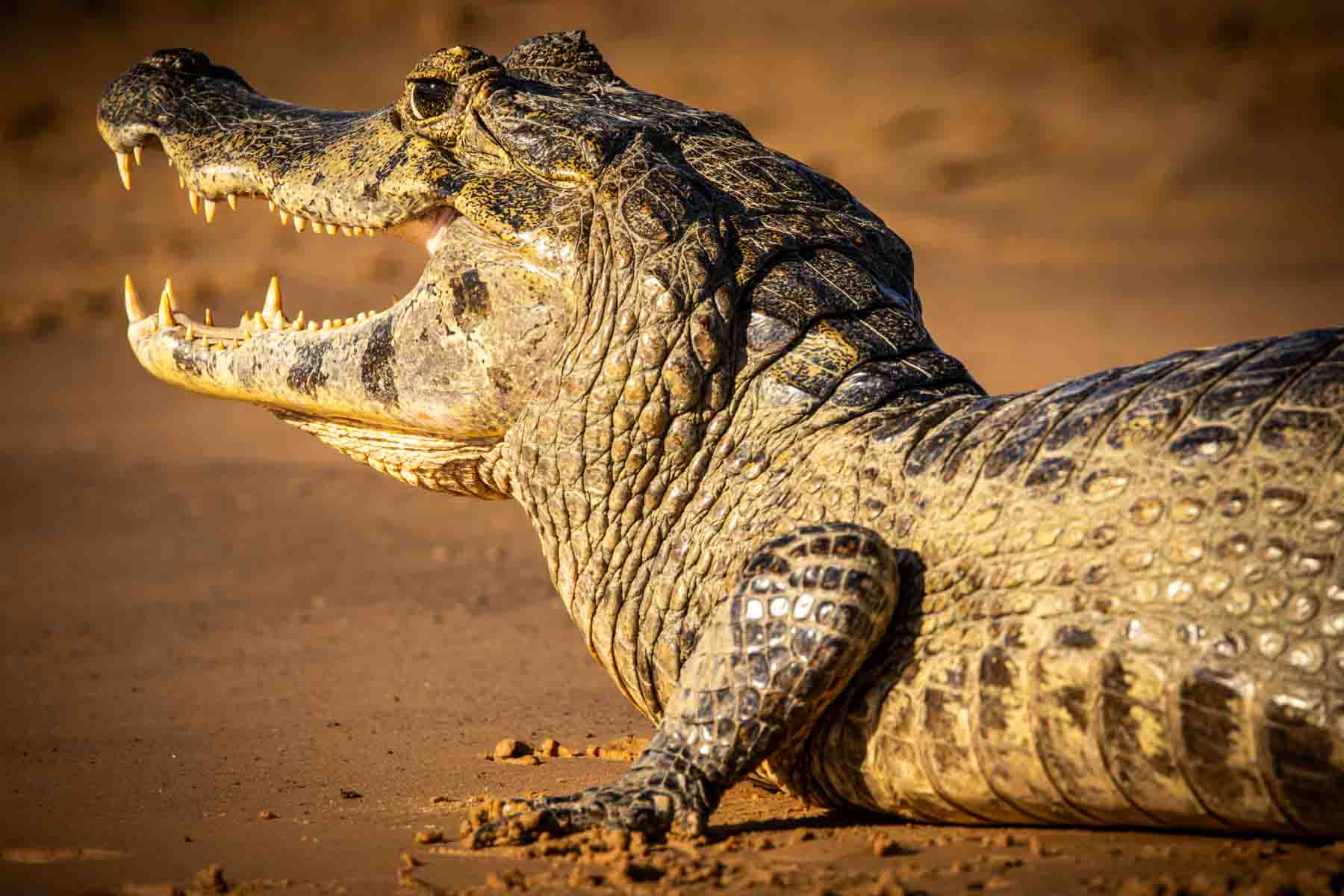
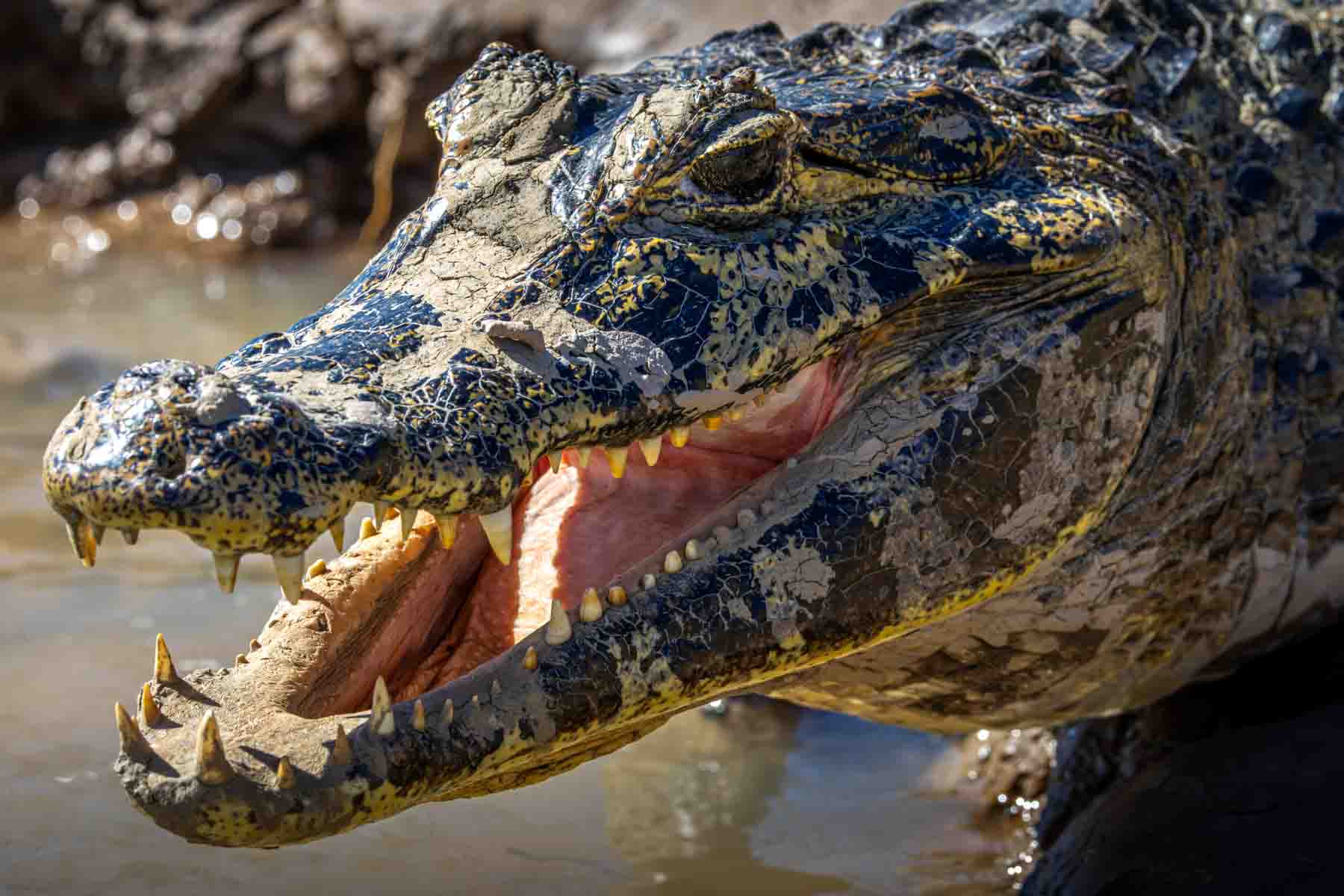
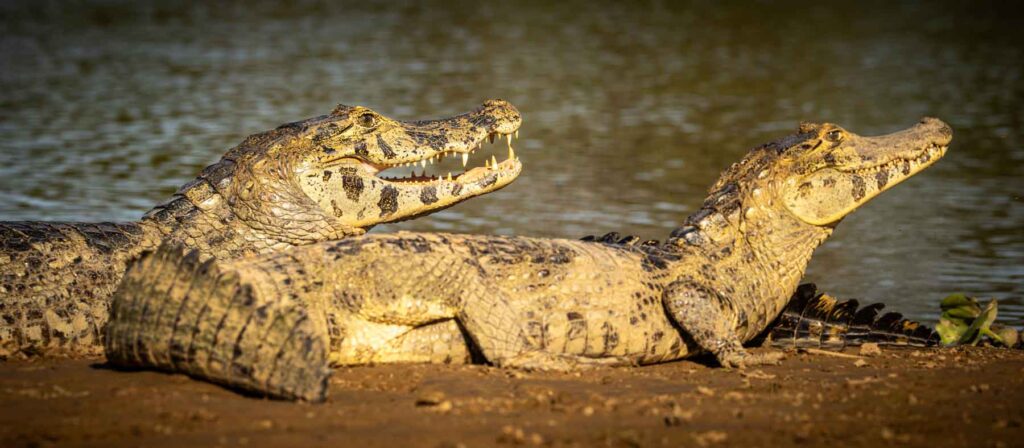
The bright red body of a Vermillion flycatcher sitting on the branch of a leafless tree catches our eye, while around us dozens of caimans (South America’s version of a crocodile) rest in the water. One of them lies with its head up, a fish in its mouth.

There are so many caimans here that at one point I try and count all the bodies resting along the edge of the river, I give up at 400.

We pass a capped heron, three species of cormorants in a single tree and a tiger heron.

And with every animal or bird sighting we stop, take yet more photos, soak in the atmosphere of the Pantanal and marvel at the sheer volume of wildlife.
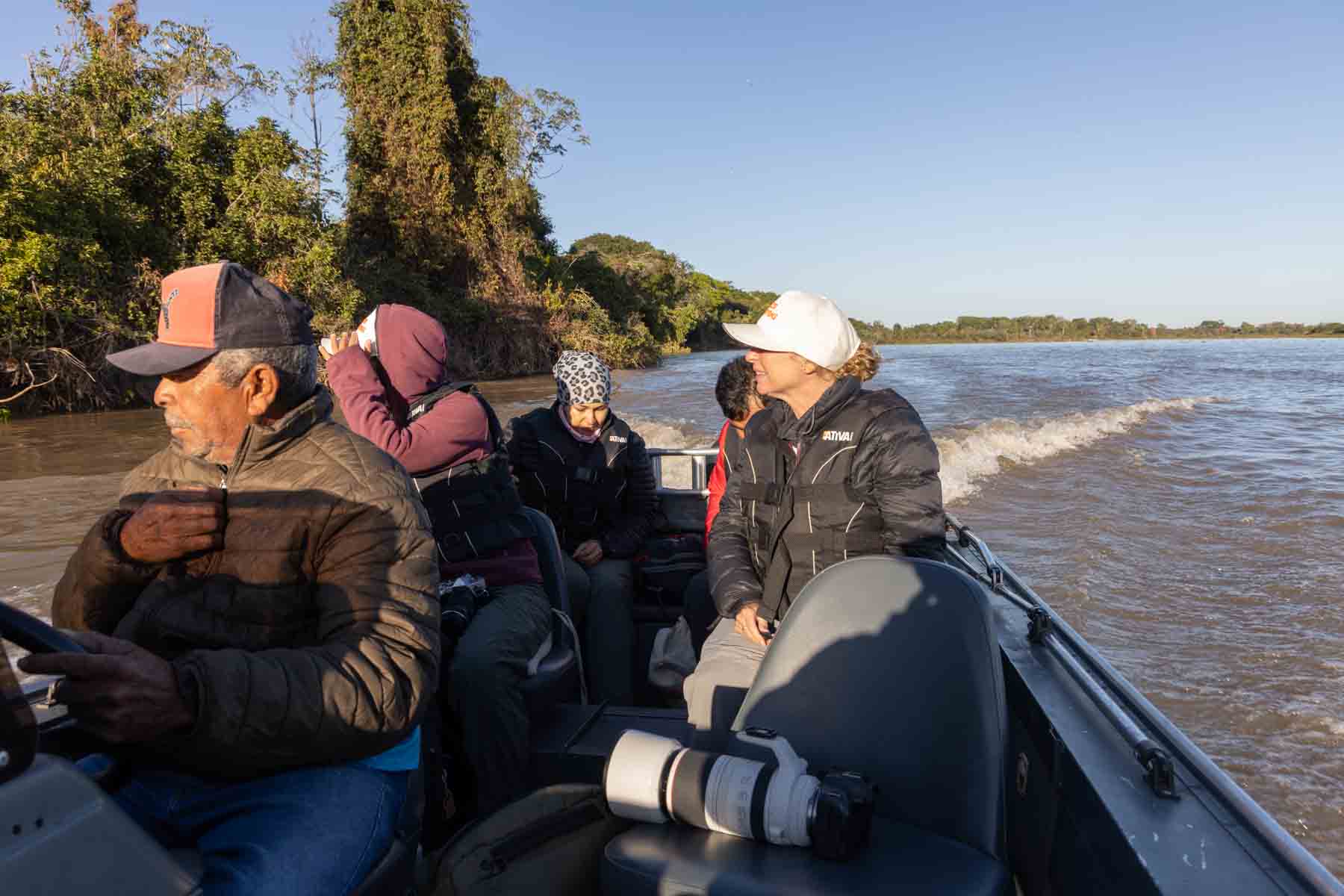
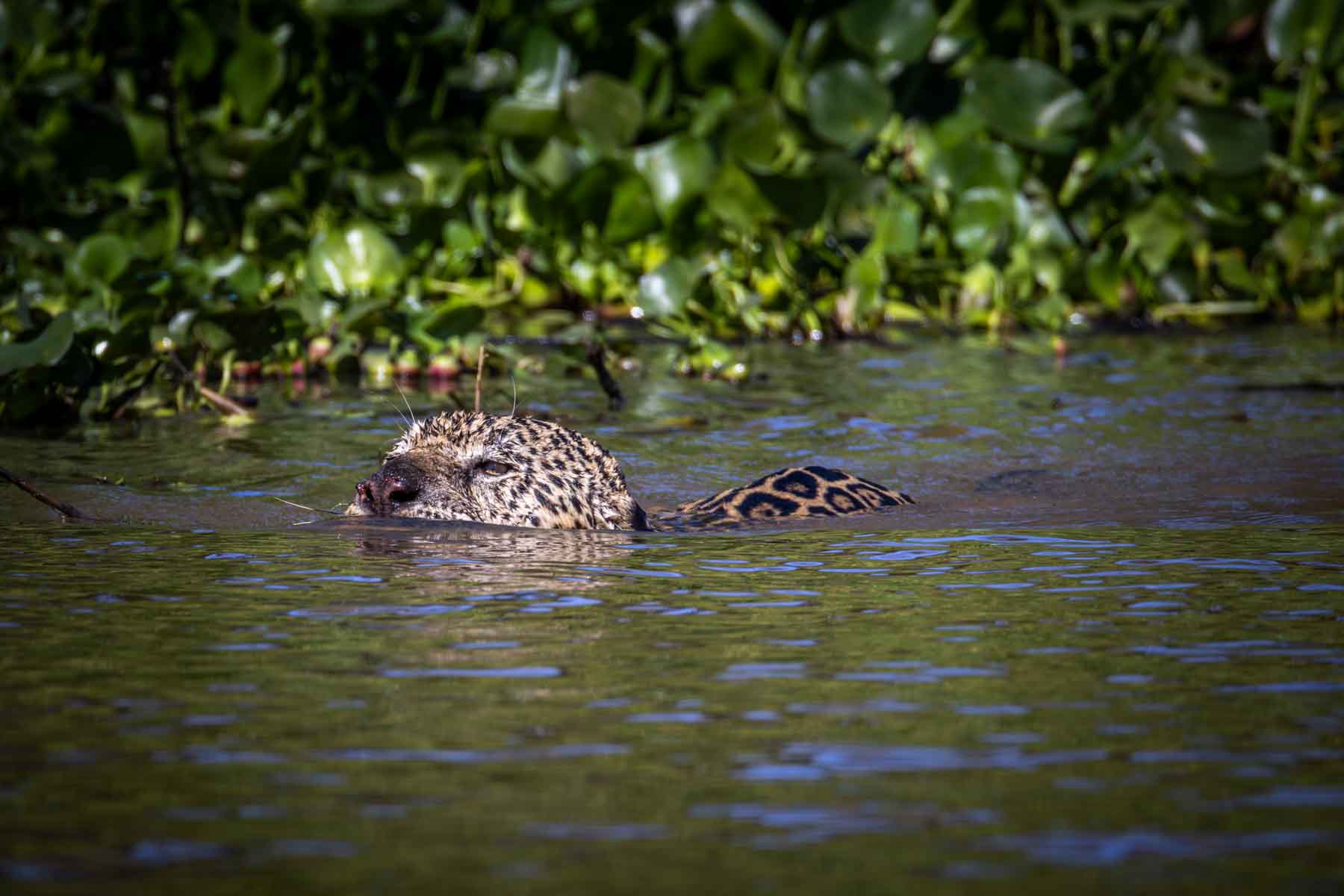
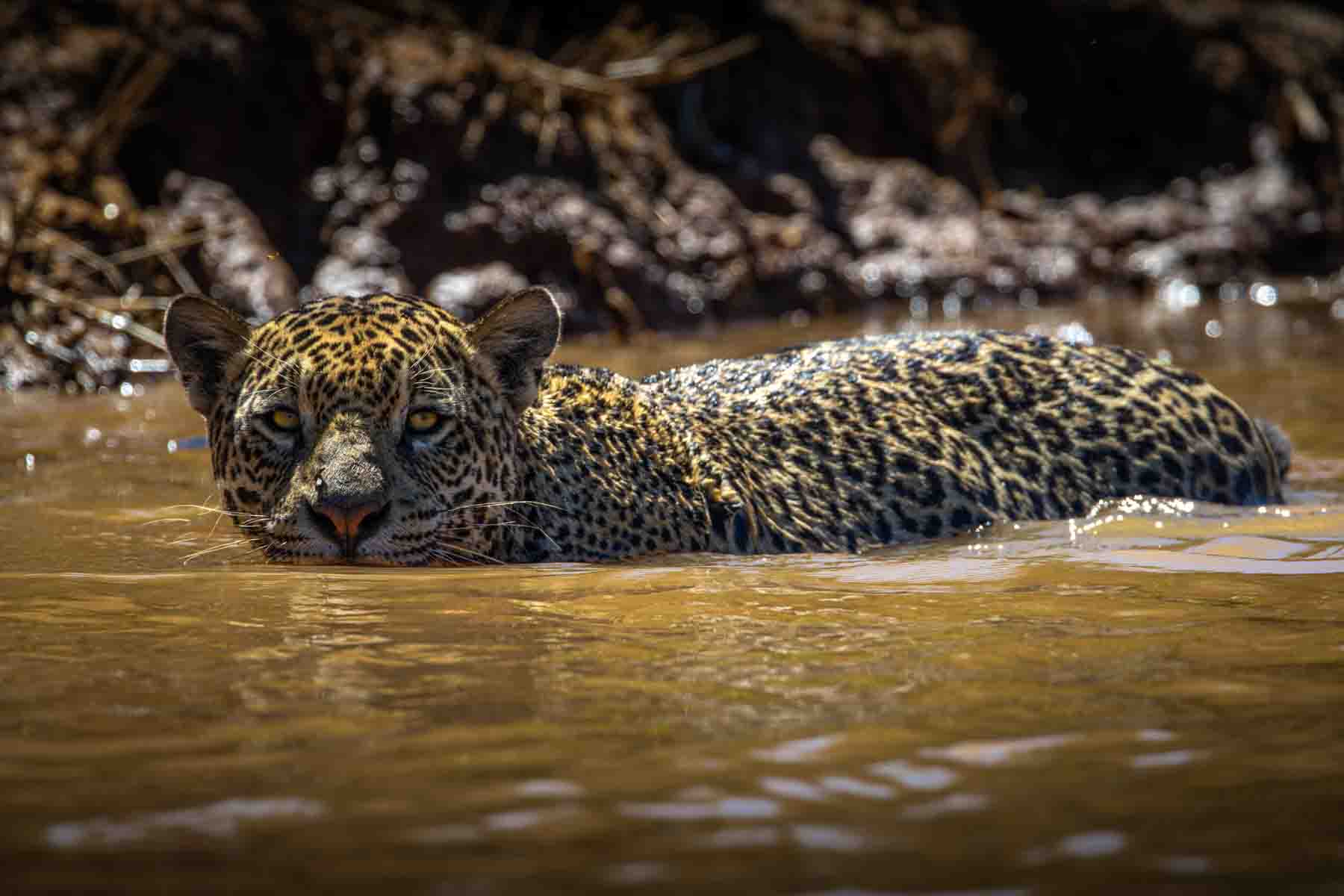
Midmorning we see a Jaguar swimming along the edge of the river. We watch as she gets out of the water and walks along the riverbank. 

We hold our breath, will she jump?

We follow her along the water’s edge. Where just minutes earlier we had seen rows of caimans, suddenly there are none.

That’s four jaguars. 

And it’s not yet midday.

By now we’ve travelled upstream north of Puerta Joffre. Far north.

Lorenzo tells us few boats come here, it’s too far and there is so much wildlife to see further south without travelling the extra distance.

But the serenity here is calming. 

Black and brown Howler monkeys play in the trees and a red Cardinal bird sits on the edge of our boat while we stop for lunch.

After lunch, we’ve barely left the shore when we see three iguanas and three caimans on the riverbank.

On a sandbank we see another 25 or so caimans all lined up, so still they look like a museum display.

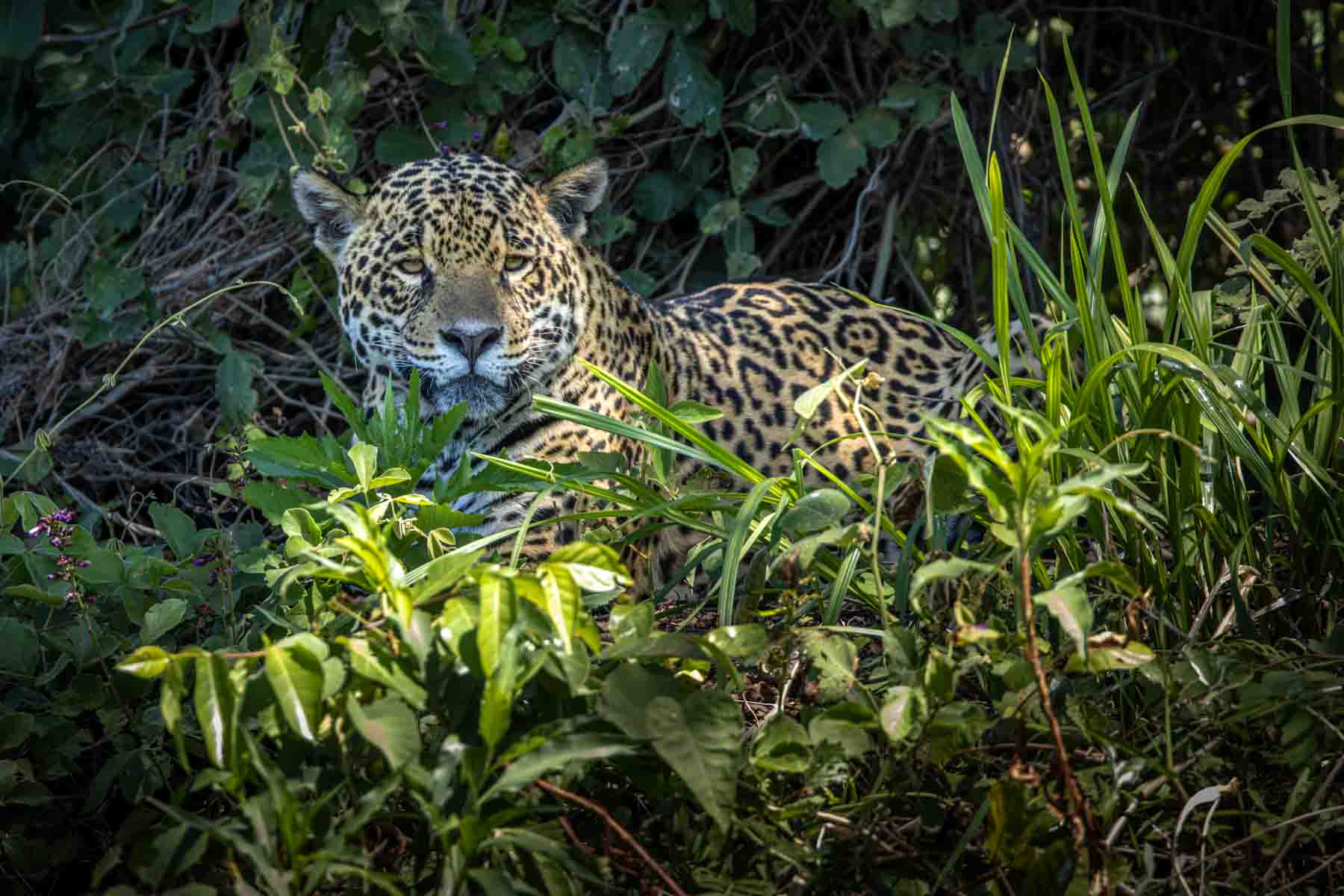
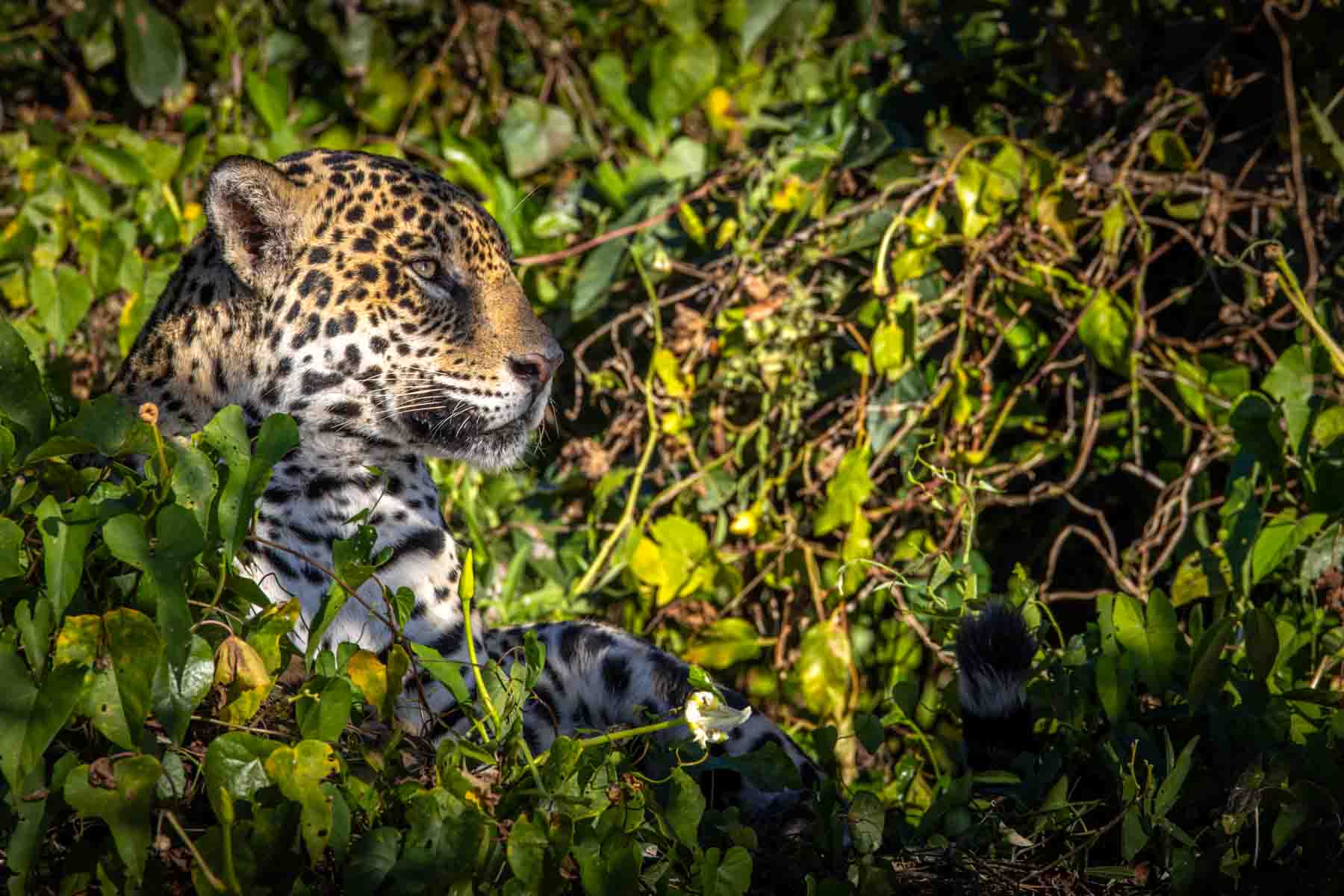
We move on and within half an hour see a jaguar resting in a gully at the waters’ edge.

We have her all to ourselves.

She moves out of the gully, up higher on the bank and lays in the shrubbery.

Two more capybaras pass by our boat.

We stop for the coffee that our guide has thoughtfully packed for us, and just as we’re discussing where the best coffee comes from Erica, our trainee guide, yells ‘jaguar’, four boats are lined up watching the jaguar hiding in the shrubs. 

Jaguar number six.

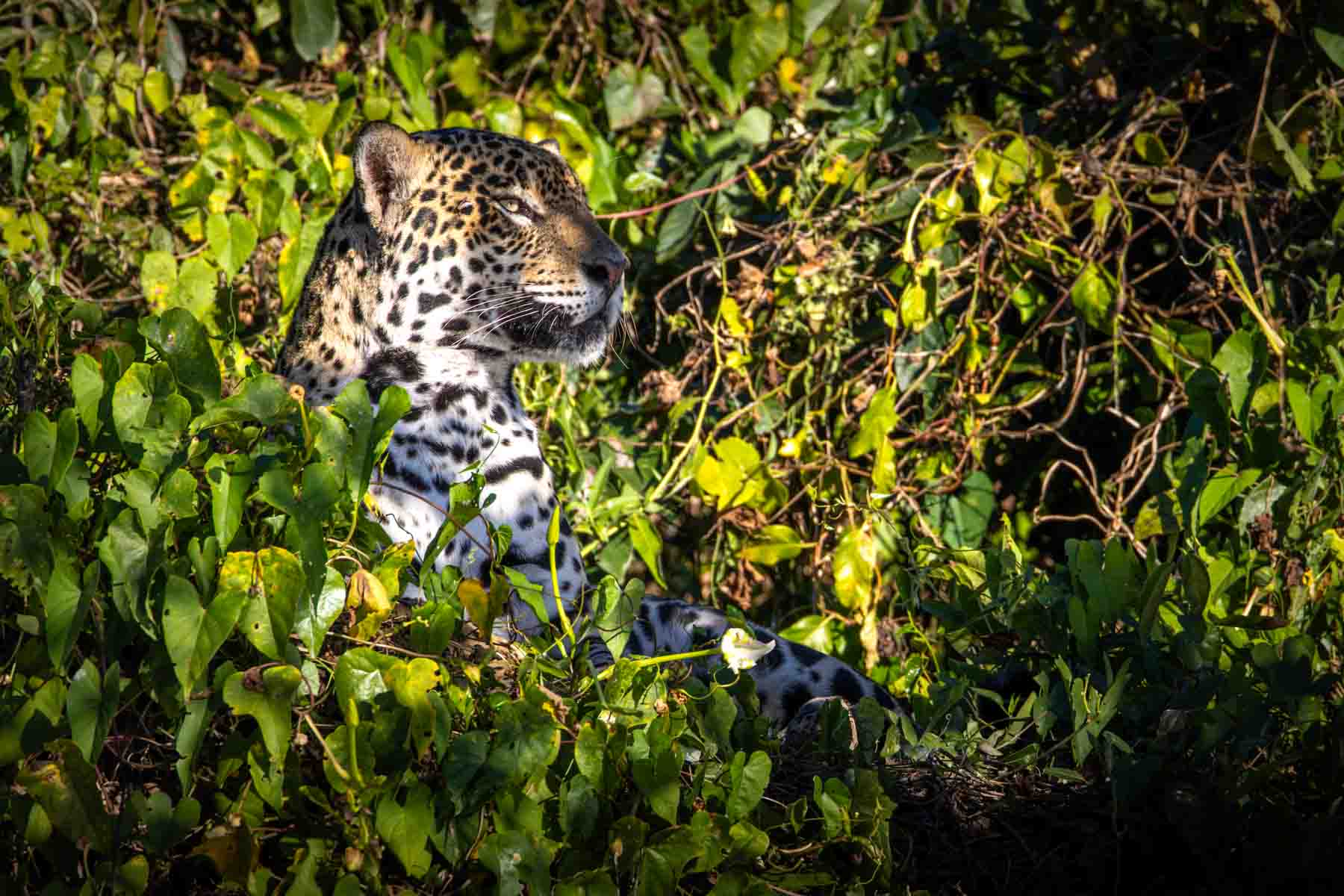
On our way back to the lodge, we’re cruising through the water, content with our successful day of jaguar and wildlife viewing. Content that we’ve had our fill for the day, when we see three boats in a row. Jaguar number seven is relaxing behind a tree. Only her rear end is visible. But it’s unmistakably a Jaguar.

We sit and watch, two more boats arrive. The Jaguar barely flinches.

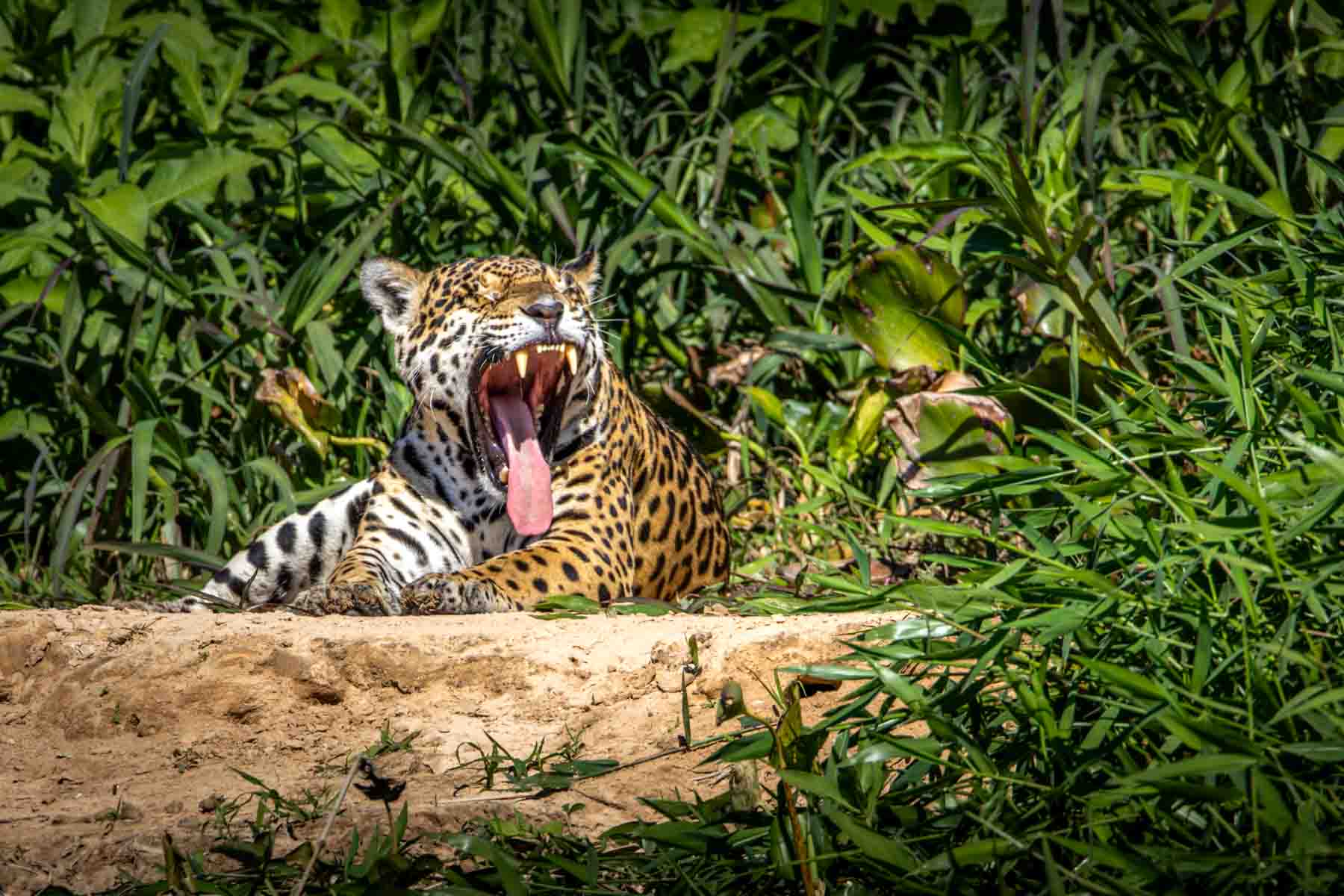
But then up comes her head. A scratch of the back, a look at the boats, a lick of a paw.

A yawn.

The sun starts to set, camera cards are full and batteries are low, so we head back to land for the night.

On Day two we see our first Jaguar at 7.30am.

It starts with a word on the radio, the boat speeds up.

We pass capybaras but don’t stop. And then a row of boats. As many as 15.

Our first Jaguar for the day is hidden in the grass. We stand in the boat, peer over the blades, trying to see an ear, a head, a tail. Evidence of the Jaguar we know is there.

It’s always the same on safari. You feel like you’re the only vehicle in the park. Until the driver gets word of a rare animal sighting – a leopard in Kenya, a tiger in India, a jaguar in Brazil, a lion anywhere – suddenly it’s peak hour as vehicles come from all directions.

We can’t complain, we’re in the middle of that scrum jostling for the best position, angling ourselves for the best view, the best photos.

It sounds distressing and it can be but the rise in tourism also means it’s harder for poachers to take valuable wildlife. Local communities know they can usually get a good income from tourists but to do so they need to help protect the surrounding wildlife.
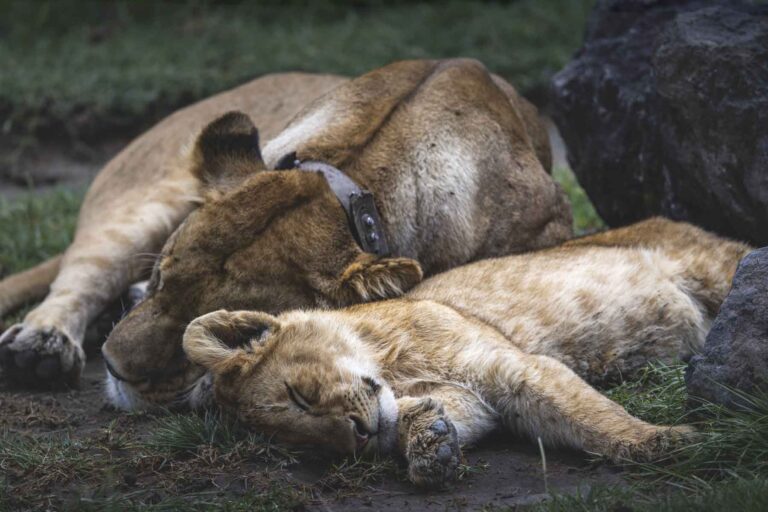
Global interest helps protect these beautiful creatures.

And sometimes, you’re lucky enough to have those sightings to yourself. We’ve been surrounded by lions in Kenya, sat alone with cheetahs in Tanzania and been the first to see a leopard in Botswana. 

We move on and see a Cardinal flycatcher and a Green kingfisher.

At 9am, we see our second jaguar for the day, resting on the edge of the river.

He is wearing a black collar and is surrounded by boats jostling to get the best view. Lorenzo tells us this jaguar is a legend here in the Pantanal. 

“He is very famous,” he says. “His name is Ousado (which means fierce or bold in Portuguese).”

Ousado hunts by going under water. He’s the only jaguar in the Pantanal that hunts this way.

In 2020 Ousado’s paws were severely burned in a bushfire. He was taken to the Federal University Mato Grosso vet hospital, where they cared for his wounds and put the collar on so they could keep track of him. 

He survived and continues to thrive.

We watch Ousado glide through the water, searching for caiman. We join dozens of boats, all trying to get the best look at this legend of the jungle.

In the end we don’t get to see his famous dive, and we move on.

Our third Jaguar for the day shows up just before 11am. 

We are looking for a mum and her two cubs, but find a solitary Jaguar hidden by shrubbery instead. 

Just as we arrive and settle into position he gets up and moves through the trees.

Every now and then we see a tail flicking, a movement in the jungle. But he’s seeking solitude so we move on.

Jaguar number 10 comes soon after.

We’ve just finished photographing a giant caiman when we see another boat. They’ve seen a Jaguar around the corner.

We stop for a photograph or two, but the jaguar is relaxing on the bank, barely moving. 

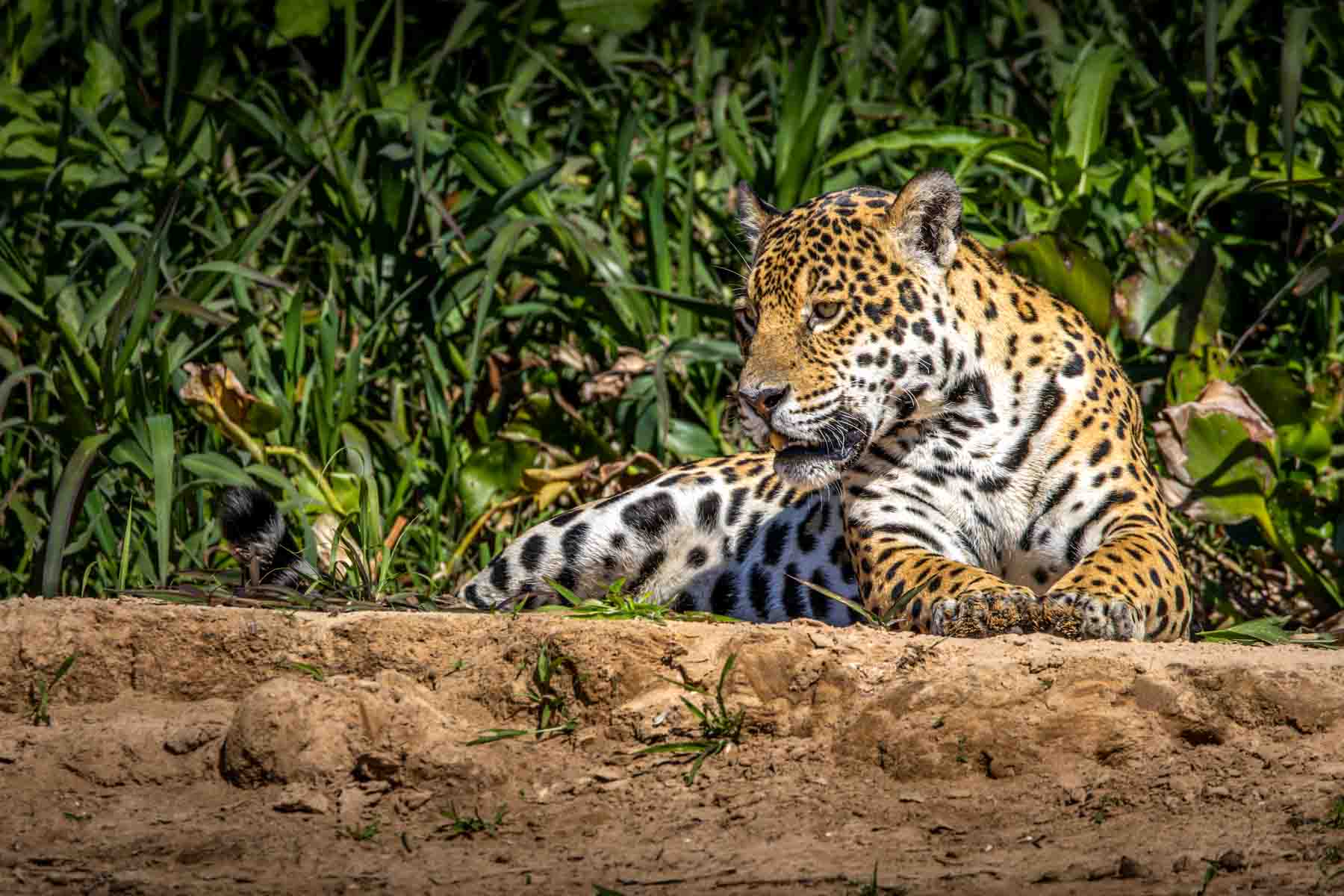
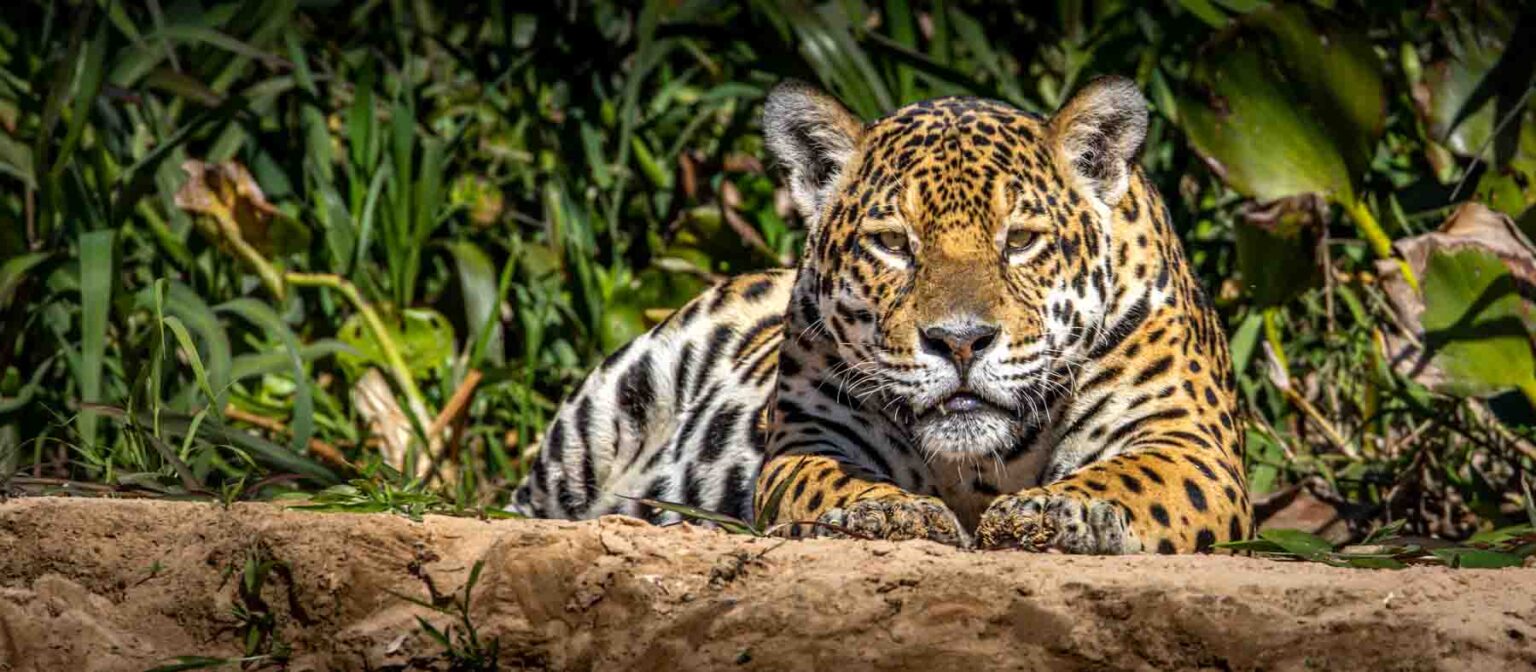
Jaguar number 11 is lying on the riverbank, enjoying the sunshine. 

We are the only boat.

She moves behind some small bushes but comes out the other side into a clearing. 

She moves along the river’s edge, first this way, then that. She jumps into the bushes, playing or hunting, we’re not sure which, and eventually lies in a clearing overlooking the river.

Eleven jaguars in two days. 

Far more than we had ever imagined we would see. And countless caiman, capybaras, otters and birds.

But the wildlife viewing isn’t quite over.

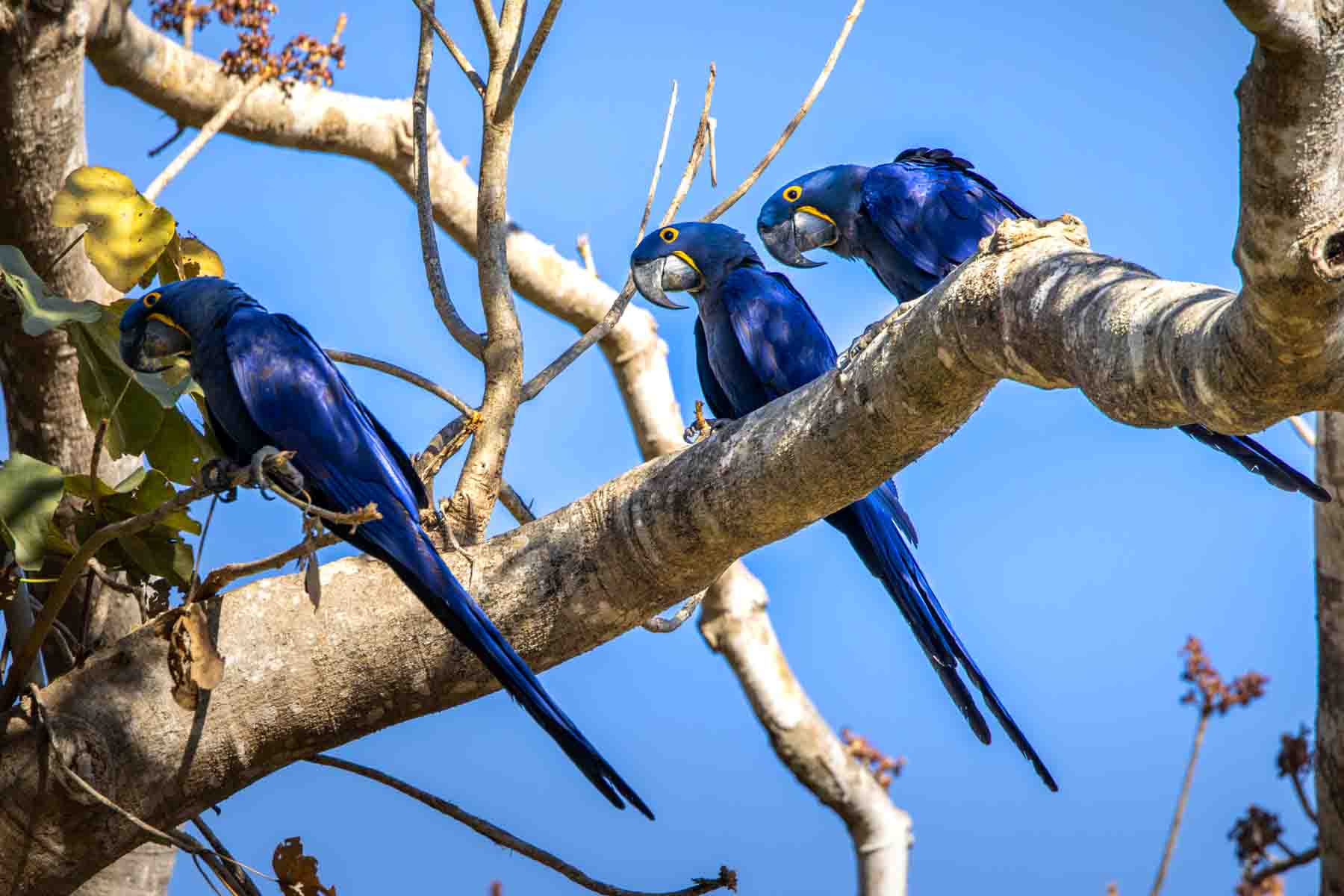
On our way out of the Pantanal, as we drive back toward Cuiaba, we see roseate spoonbills sitting on a lake and two hyacinth macaws flying overhead.

And then, just as we think we’ve had our fill, we see four more hyacinth macaws sitting in a tree, guarding a nest in a hole in the tree trunk.

The hyacinths flit in and out and move between branches.

It is a colourful end to an amazing wildlife adventure.

Fast Facts

We travelled to Brazil in 2025.

We travelled with Lorenzo Expeditions.

We stayed for three nights.

Was it long enough? We saw so much wildlife, including 11 jaguars and countless caiman. You could stay longer and see more, but three nights was definitely long enough.

Highlights: Watching a jaguar jump into the bushes, swim, rest, play and floating past caiman lined up along the edge of the river like stepping stones. 

Join @AllabroadAU on Instagram, Facebook, X and YouTube for more travel inspiration

Latest Posts

An uncomfortable drive to Cairo

The car is fancy, the kind of car that feels part limousine. Two seats in the back, like aeroplane...

From ruins to fungi on the Inca trek

Ever wondered what it's like to walk the Inca Trek? And whether all that effort is actually worth...

Trekking gorillas with my 80-year-old Dad

It's quiet in the van. There's a feeling of anticipation of what's to come and a little trepidation...

Celebrating Easter in a sea of purple in Quito

We felt the anticipation the day before. It was a Thursday. The Thursday before Easter. The streets...

Wander with us

Never miss an adventure. Subscribe to AllAbroad for more travel inspiration