Blah blah

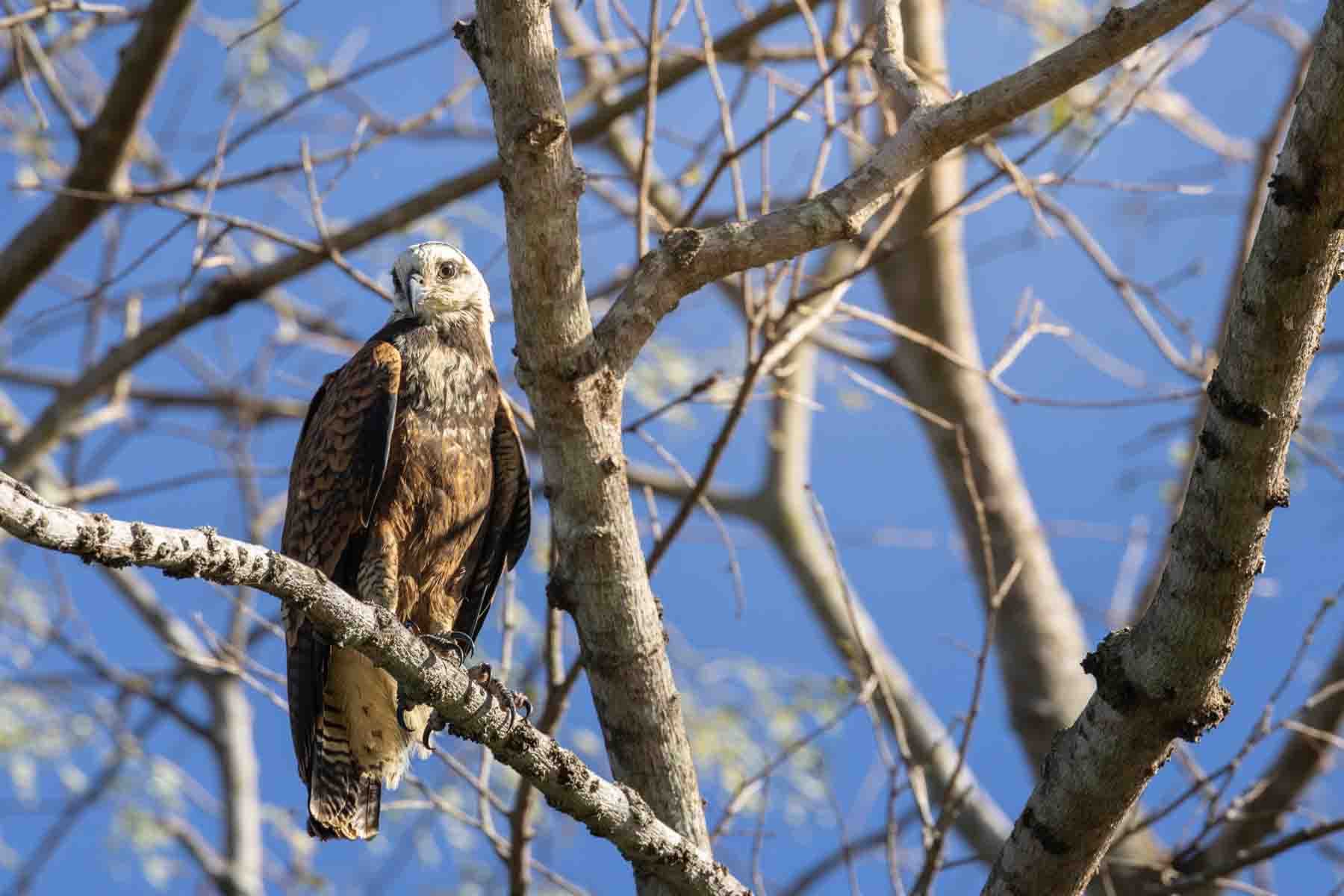
On our way into the Pantanal, as we pass through the outer zone, our guide spots a Savannah hawk sitting on a branch. 

We stop, of course, so that Ade and Shirley, our travel companion on this tour, can photograph it.

Unlike Australian eagles, this eagle sits relaxed on the branch unperturbed despite the constant clicking of two cameras. 

And we know, suddenly, that we are in for something special here. 

We’ve already seen toucans and capybaras and a snail kite bird sitting on top of a power pole.

We’ve passed by a series of small hills that our guide, Lorenzo, pointed to explaining that they were gold tailings.

The landscape and the wildlife hold us captive.

We’re here to see jaguars. The Pantanal, in Brazil, is the largest tropical wetland in the world and the best place to see jaguars in the wild, apparently.

But we haven’t even made it into the national park yet and we’re stopping every hundred metres or so to take in the wildlife and the scenery.

We pass through a field of termite mounds.

“It’s not a cemetery,” says Lorenzo, with a mischievous glint in his eyes.

“Don’t get confused.”

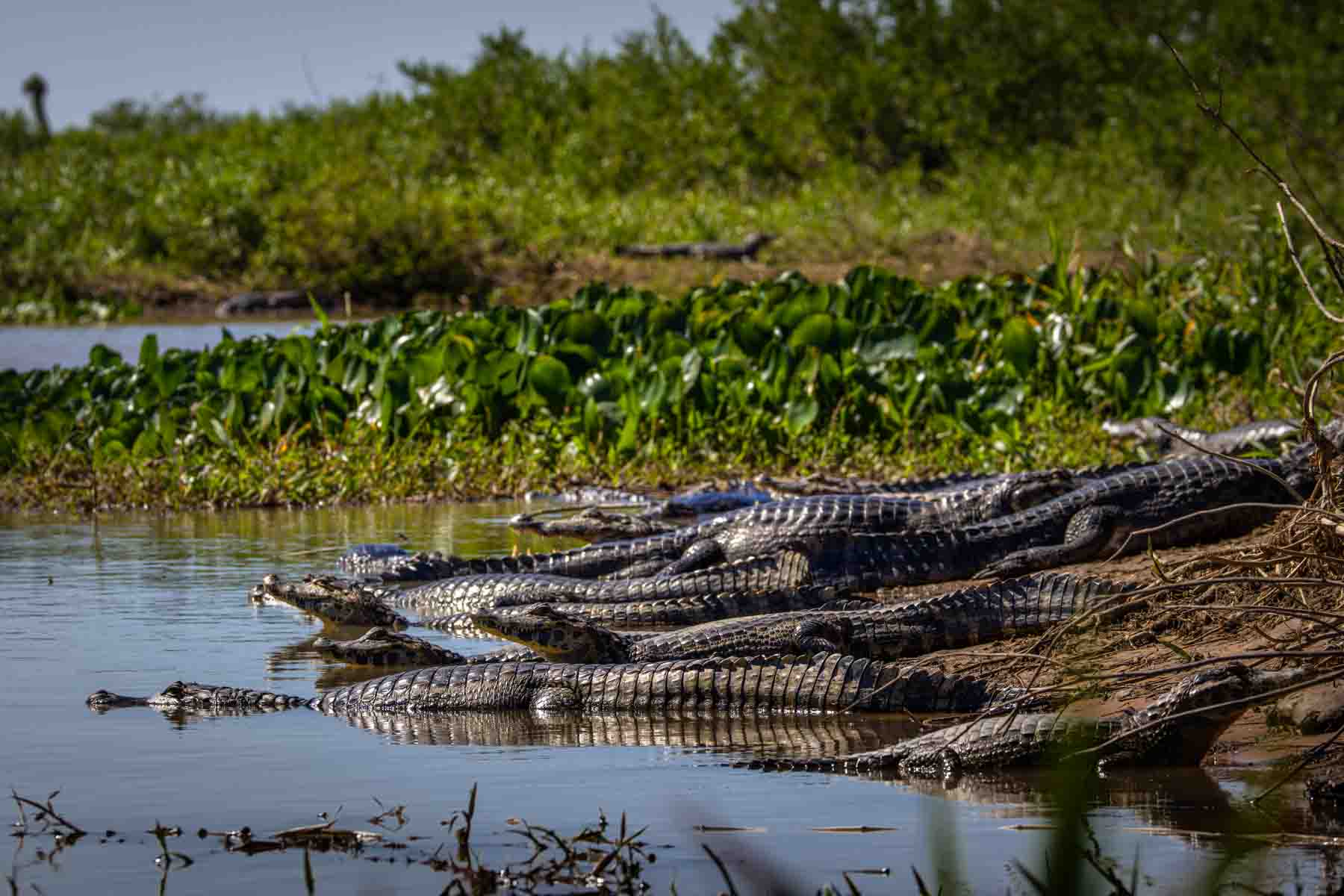
We stop to photograph the trans Pantanal sign and see a southern crested caracara high in the tree and a family of baby caimans (South America’s version of the crocodile) in the river.

I count at least 12 sitting in the shallow water all only about 20cm long. But they will grow to more than three metres.

Lorenzo tells us they are about one-week old and I suddenly feel compelled to keep a nervous eye out for mum, certain she can’t be too far away.

It’s like this the whole drive in, every few metres there’s something else to draw in our attention, something else to stop for.

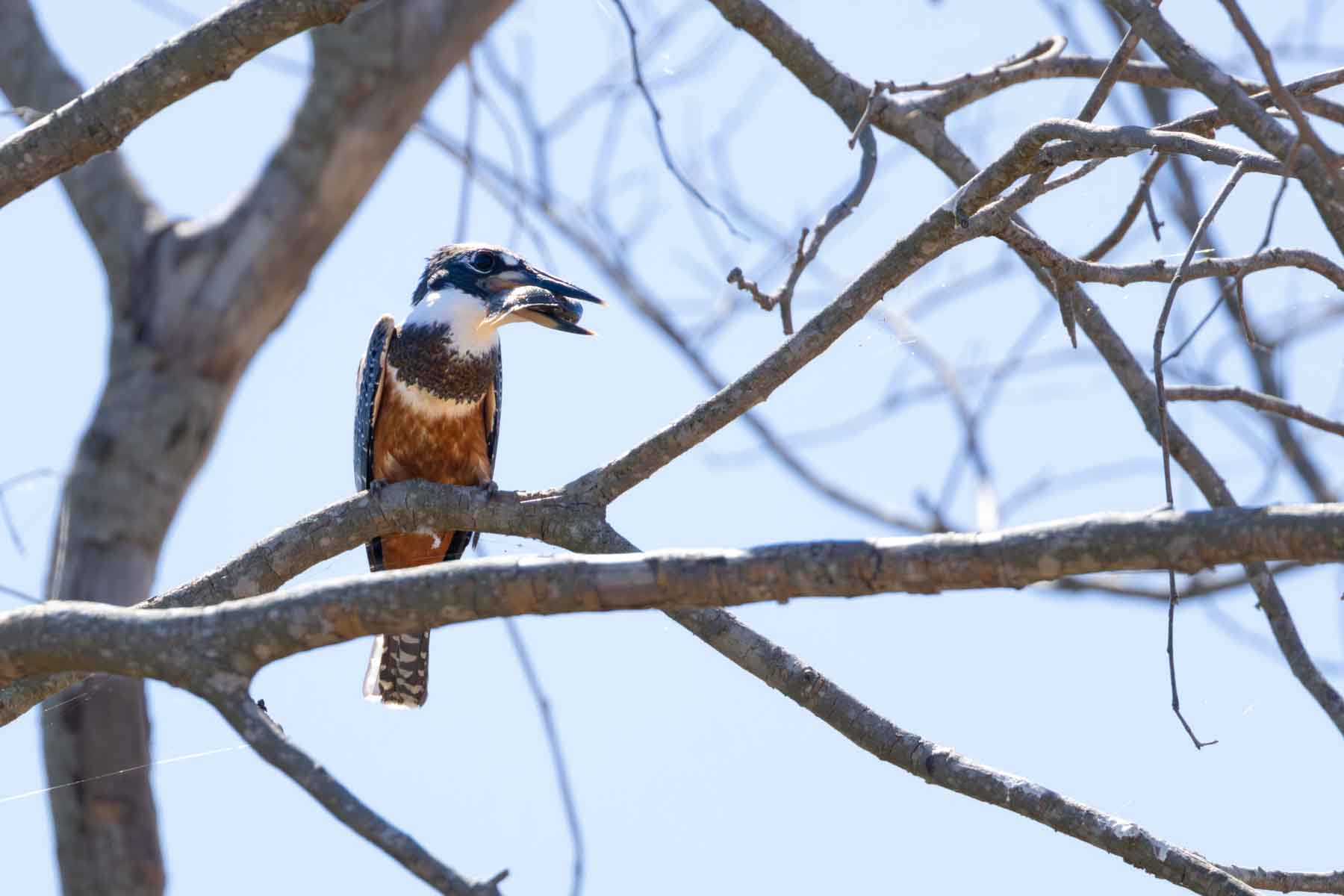
We see large caiman and a kingfisher resting on the overhead powerlines, two beautiful pink spoonbills fly overhead.

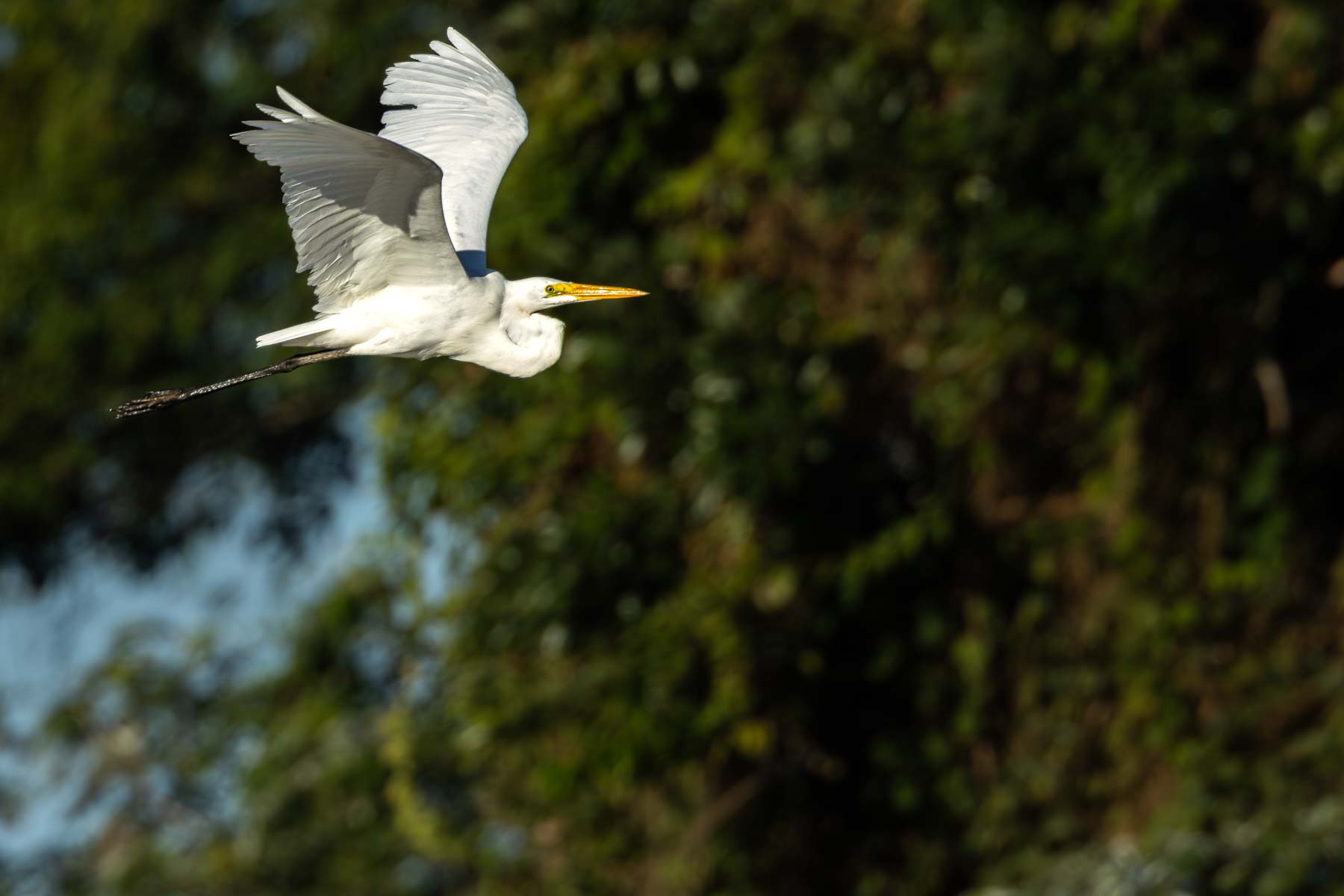
There are Egrets, horses stomping spiders in the river, cows crossing the river, a tiger heron and a baby black eagle. 

At one stop Caiman line the riverbanks, a coco heron sits in a tree and a herd of buffalo graze in an open field. We didn’t expect to see buffalo, not here in South America. But our guide explains they’ve been introduced into Brazil from Africa.

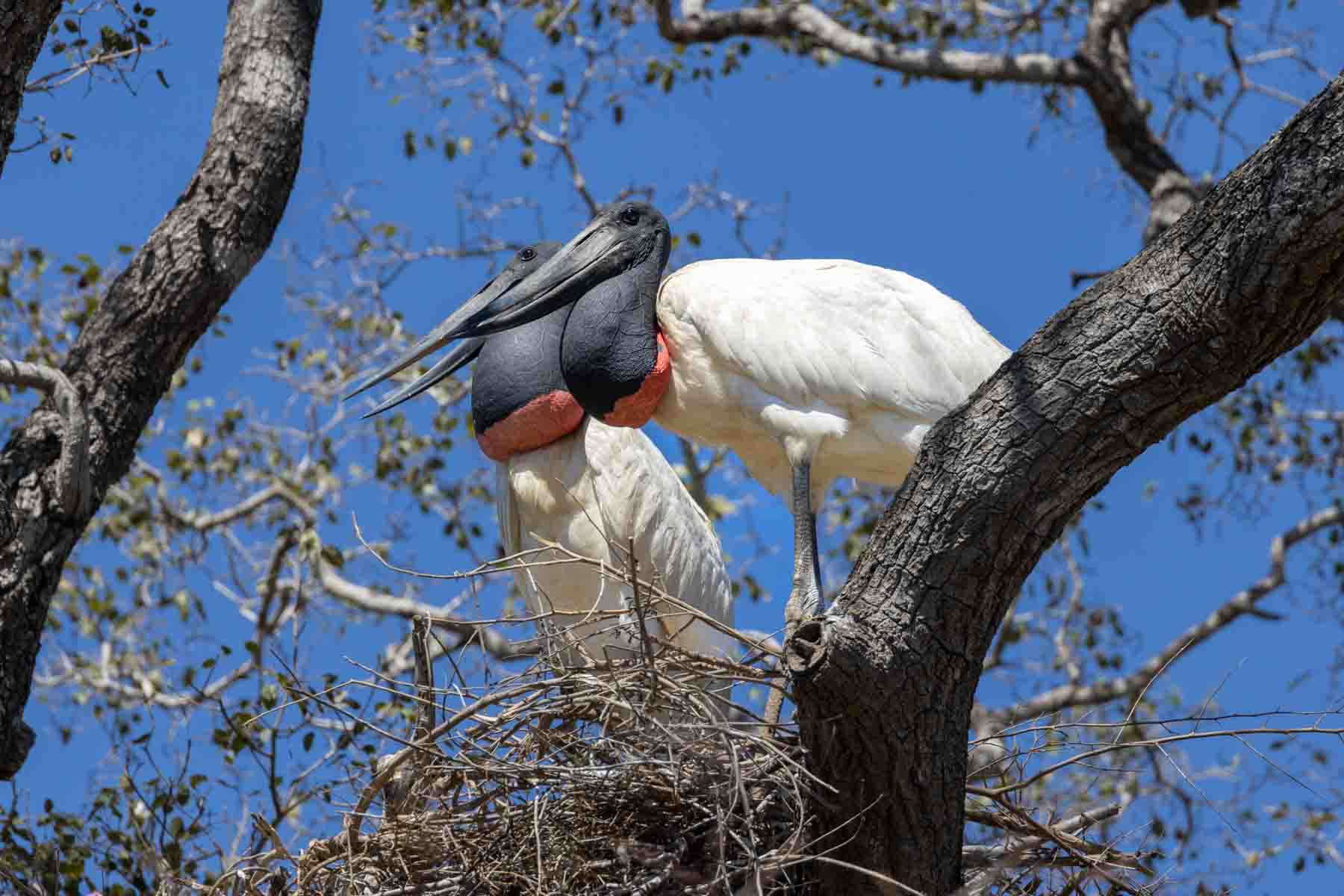
We drive on, there’s a black and white tegu, like an iguana but native to Brazil, a currajong eagle, a green ibis and two tuitui – stork, in Portuguese, the symbol of the Pantanal – in a nest protecting their eggs. 

The list of animals and birds goes on and we soon realise just how abundant the wildlife, particularly the bird life, is in the Pantanal.

And we haven’t even reached our destination yet, haven’t reached the park proper. This is just the entrée, a taste of what’s to come.

There are almost 2000 species of birds in Brazil, more than 200 of which are endemic to the country. 

And our list of sightings continues to grow as we edge closer to our home for the next three nights.
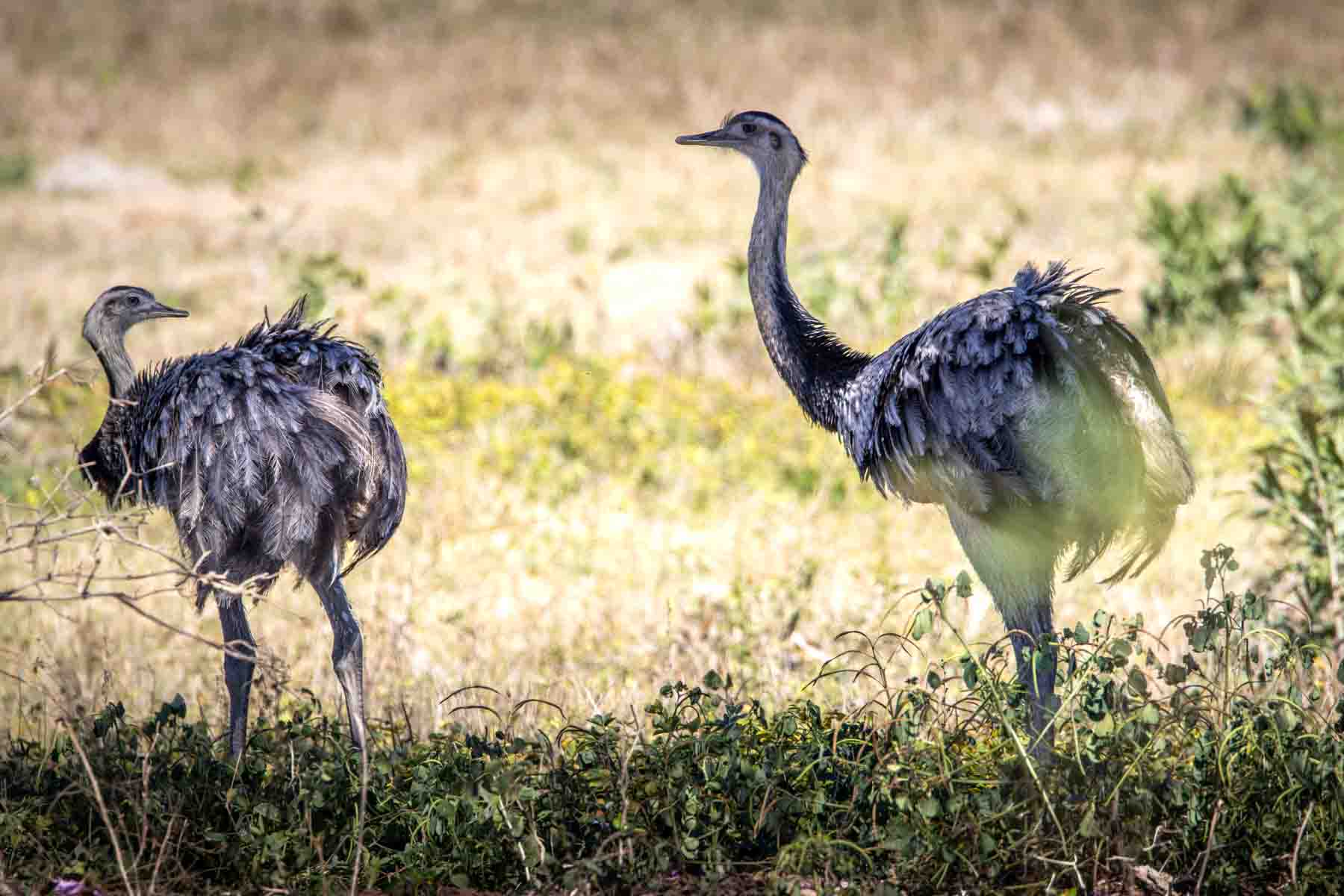
There’s a family of greater rhea – the largest bird in  South America – in the distance almost hidden in the long grass. They look almost like an emu, but a little smaller.

Lorenzo tells us there are more animals in the Pantanal than the Amazon.

“We don’t hunt our animals here,” he says. “They are protected so they don’t fear humans. They don’t move on like wildlife usually does when it sees humans.”

We see a black vulture, capuchin monkeys, buff-necked ibises, a vermilion flycatcher and a pied kingfisher

As well as the abundance of wildlife there is an abundance of bridges. We cross 122 on the way to Porte Jofre. The bridges add to the landscape, but during rainy season they provide a necessary route to help cars and animals move in and out of the area.

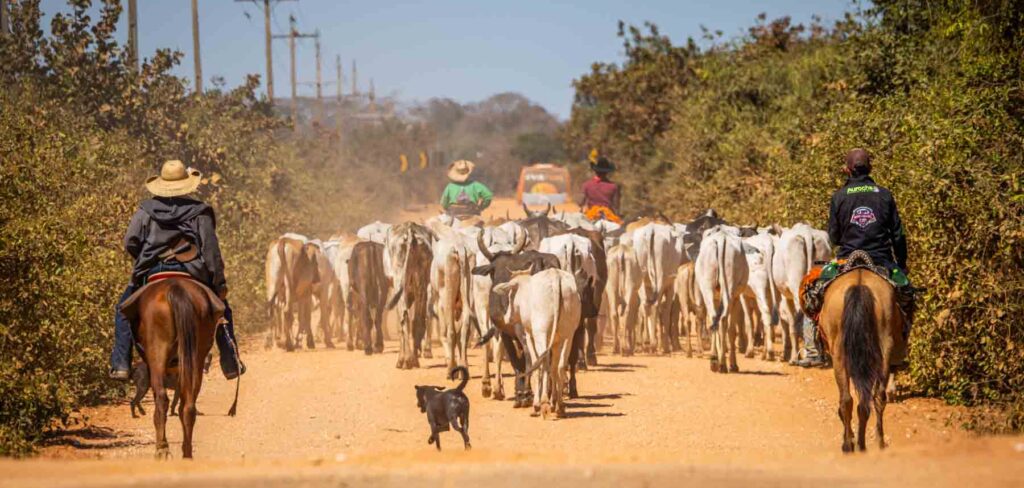
It’s not just about tourists here. At one point we crawl along behind a mass of cows as two cowboys herd them along the road. 

The farmers have learned to live alongside the wildlife reserve.

Suddenly our driver slows the vehicle, we know he has seen something interesting, something unique. 

“A Common potoo,” he says. But it’s too far off, and by the time we all get out of the car to take yet more photos it’s gone.

At one point we stop beside a bridge and see about 20 caimans within 100 metres of us. In the Amazon, the caiman we’ve seen are more timid. But here, they barely acknowledge our presence and make no attempt to move.

In the morning we will be focused on looking for jaguars, but for now, we arrive at our hotel for the night content with the abundance of wildlife we have already seen.

Read about our adventures  watching jaguars swimming in the Pantanal here.

Two cowboys on horses in front of a herd of cattle on a dirt road lined by trees.

Fast Facts

We travelled to Brazil in 2025.

We travelled with  Lorenzo Expeditions.

We stayed for three nights.

Was it long enough? We saw so much wildlife, including 11 jaguars and countless caiman. You could stay longer and see more, but three nights was definitely long enough.

Highlights: Seeing baby caiman in such large numbers, the rhea and watching the cattle meander up the centre of the road. 

Join @AllabroadAU on  Instagram,  Facebook  and  YouTube for more travel inspiration

Read more about our adventures in  South America here.

Latest Posts

Watching jaguars swim in Brazil

The boats are small, eight-seater at most, all lined up along the edge of the water. And it's dark...

An uncomfortable drive to Cairo

The car is fancy, the kind of car that feels part limousine. Two seats in the back, like aeroplane...

From ruins to fungi on the Inca trek

Ever wondered what it's like to walk the Inca Trek? And whether all that effort is actually worth...

Trekking gorillas with my 80-year-old Dad

It's quiet in the van. There's a feeling of anticipation of what's to come and a little trepidation...

Wander with us

Never miss an adventure. Subscribe to AllAbroad for more travel inspiration