Australia
Driving through the middle of Australia
We didn’t set out to drive through the middle of Australia.
But as so often happens in life, the best laid plans are subject to change, in our case it was a date with a whale shark that forced us to switch course and embark on a journey that took us on some of the most remote roads in the country.
When my husband, Adrian, and I started planning ‘the lap’ we thought we’d do the standard loop, skirting around the coast of Australia, flitting in to take in Uluru and the Red Centre before heading back out to the coast, or the ‘figure 8’. Both standard routes to take in as much of Australia as one could in a year.
But as our planning progressed, we realised that if we wanted to make it to Exmouth in time to swim with the whale sharks (which we definitely did want to do) we’d need to find the quickest route possible.
And that’s how we discovered the Gary Junction Road. A road that takes you straight through the centre of Australia, from Tjoritja West (the West MacDonnell Ranges) in the Northern Territory to Marble Bar in Western Australia.
The Gary Junction Road is 852 kilometres long (the distance from Alice Springs to Marble Bar is roughly 1700 km, so the Gary Junction Road is only half the journey. But it’s a significant half. The road was built by Len Beadell in the 1960s and was named after his only son, Gary. It runs from the Tanami Road turnoff in the West MacDonnell Ranges to the Gary Junction, just east of the Canning Stock Route and skirts across the top of the Great Sandy Desert
Use of the word ‘road’ makes it seem far more significant than it actually is, ‘track’ would probably be a more apt description. Part sand, part dirt, it is generally well-graded and wide enough but is really little more than a dirt track to those of us more use to driving city roads than four-wheel drive routes.
Before taking off on the track we tested and retested our Zoleo – a satellite device that would allow us to contact family and friends if we were in trouble – and filled up with extra fuel and water. This is outback Australia, after all, some of the most remote roads in the world.
In Alice Springs we stopped at the Central Land Council and the Ngaanyatjarra Council offices to get permits to enter the local Aboriginal communities along the Gary Junction Road. This is a must if you’re planning to travel this part of the world as you’re travelling through Aboriginal-held land.
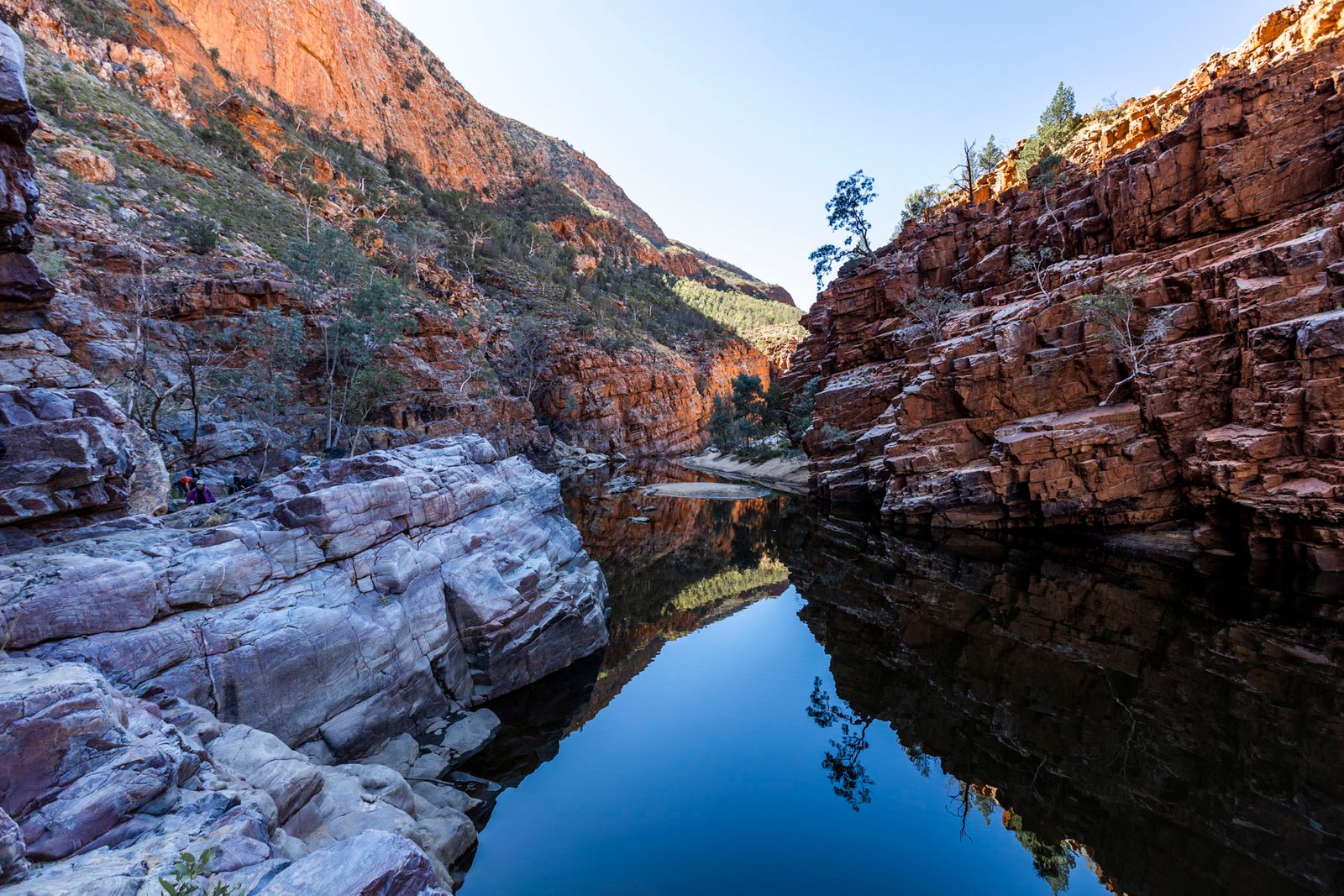
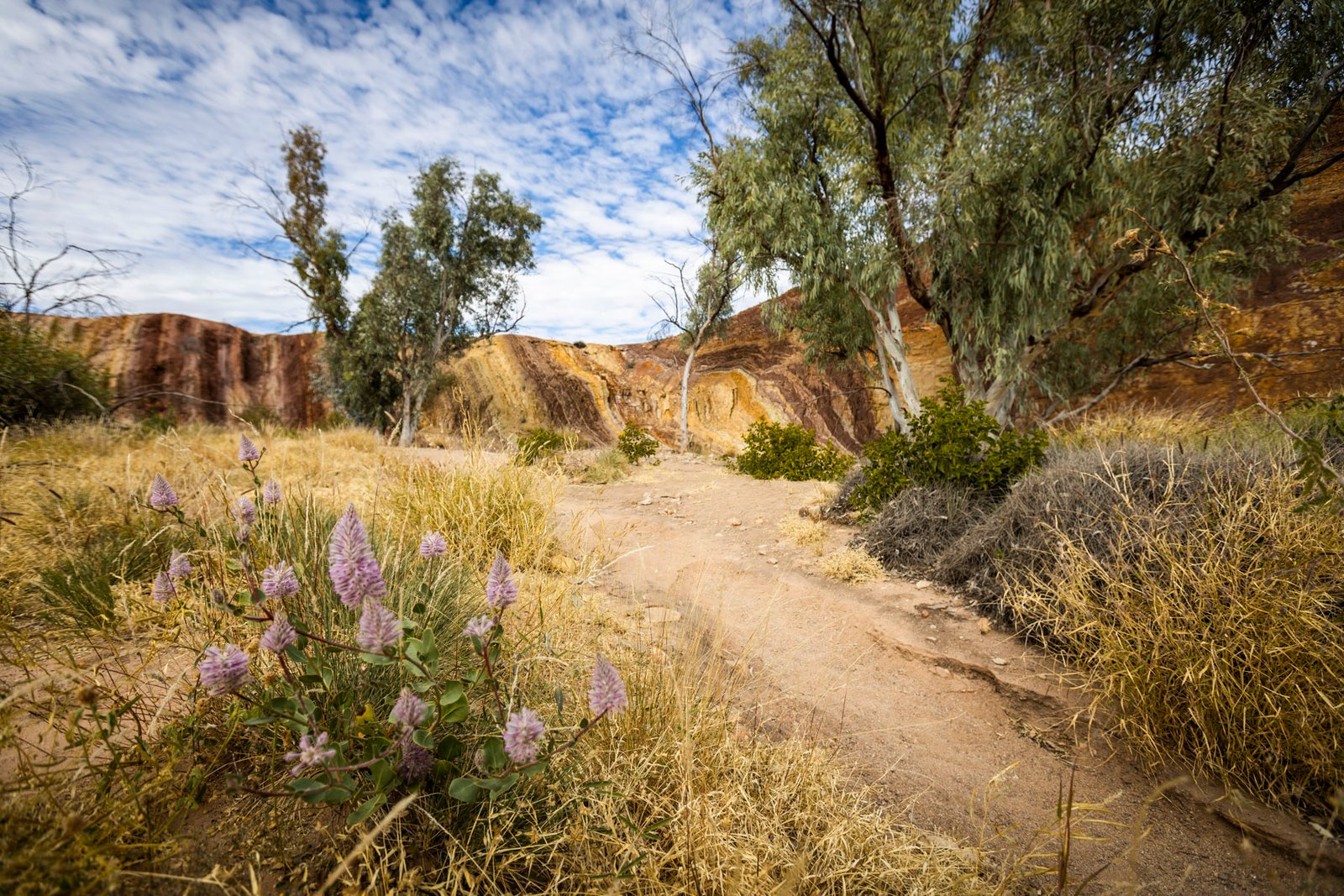
The West MacDonnell Ranges provided a picturesque stepping off point for our adventure within an adventure. We stopped at Ellery Creek Big Hole, Serpentine Gorge, the Ochre Pits, Ormiston Gorge – my personal favourite of all the Gorges in the West MacDonnell Ranges – and Redbank Gorge.
We saw a snake at Glen Helen Gorge and walked sections of the Larapinta Trail.
Every stop more beautiful than the one before it. Every stop leading us closer to the isolation of the Gary Junction Road.
At every campground we asked our fellow travellers where they were travelling to and what route they were taking to Western Australia, hoping someone would be heading in the same direction as us; hoping someone – anyone – would be willing to drive in convoy with us.
No one had even heard of the road, let alone had plans to travel on it.
And so, we were on our own.
Following our HEMA maps book and the printout of a blog post we’d found while researching the Gary Junction Road, we left the West MacDonnell Ranges and took off past Ikuntj (Haasts Bluff). Thick clouds swirled ominously overhead and a straight dirt track ahead of us looked anything but inviting.
But we pushed on as the sun came out and the scenery opened up before us providing a dramatic setting for the next part of our journey.
Our first stop was Papunya.
When I’d called to check that the local service station would be open for fuel before we left Alice Springs, the owner told me they’d be open between 10am and 2pm but we could get fuel 24/7 as long as no one had tampered with the aerial for the ATM, as had happened a couple of weeks prior.
At the time it had added to my apprehension, no one wants to be caught in the middle of Australia with no fuel. Fortunately, when we arrived the store was open, and no one had tampered with anything.
We filled up with fuel, were let into the back to use the bathroom facilities, bought a meat pie and sat out the front of the combined service station and local convenience store to watch the world go by.
We were still in Australia, but it was so different to the country we experience in Melbourne.
Hot and dusty, limited opening hours and little choice for food and drink. And isolated. The dusty red road, the basic housing and lack of vegetation reminded me more of towns in Africa than Australia.
The service store was lovely, the staff were friendly but there was very little on the shelves and what was there was being sold at much higher prices than in the cities, which made me wonder how people could afford to eat out here.
We pushed on in search of our camp spot for the night and saw two other cars – the first we’d seen on the road outside Papunya but couldn’t find the spot recommended on the blog post we were following.
So, we pushed on to Kintore where we found another 24-hour, unstaffed fuel bowser, filled up again and continued on our way.
We drove along the red dirt track, past stunning mountain ranges, a flock of thousands of budgerigars and a whole lot of nothingness.
At one point we came to a fork in the road, with no signposts to tell us which way to go, we took the road that looked more “well-travelled”, checking off markers identified in our HEMA book and on the blog post notes as we went to make sure we were still on track.
At some point we crossed the border into Western Australia, on a single lane dirt road with little in the way of signs or markings to tell us we were now in a different state.
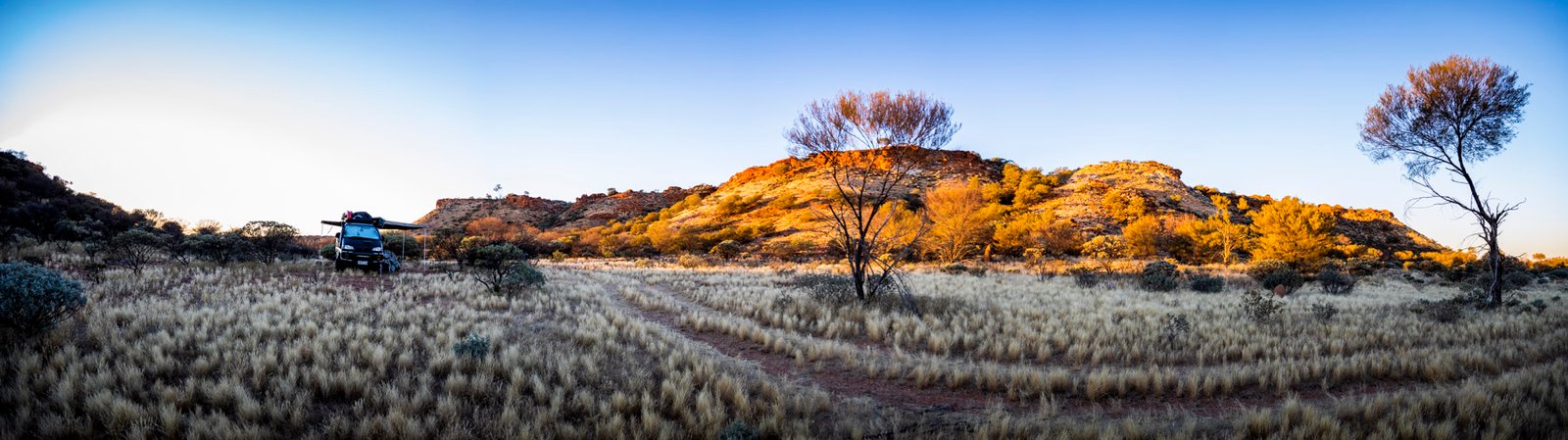
We found Bucks Hill and what appeared to be car tracks in the long grass alongside the hill, so we followed the trail to a deserted clearing containing the remains of long forgotten fires but not much of anything else.
We set up camp for the night.
Charred logs and singed circles of grass told us people had been here not too long before we arrived, but tonight we had it all to ourselves. We were alone, completely isolated, in the very middle of Australia. As the sun went down, we watched the blanket of stars come out. The milky way was there, the southern cross and a myriad of stars that can only be seen in complete darkness.
It was a restless night, that feeling of total isolation can be very unnerving when you’re not used to it, and we were only six weeks into our trip around Australia. Not long to get used to the roads, not long to get used to living in a tiny van, not long to get used to that feeling of being entirely alone.
As the sun bounced off the mountain in the early morning, we took in the vastness that surrounded us. We walked around the base of the hill and peered up at what looked like shallow caves set in the hillside.
As we packed up our stuff, I found a screwdriver on the floor on the passenger side of our van. It hadn’t been there the day before. It must have bounced out from under the dashboard as we’d bumped our way across the roads. At least, that’s what my rational brain said, the irrational part of my brain imagined someone peering in as we slept, screwdriver in hand…
We put it in our toolkit and headed back on to the now familiar red track, across corrugations and sand.

At Kiwirrikurra, we stopped for fuel, but just missed the roadhouse which was closed for lunch. We checked out Len Beadell’s burned out truck, read the signs of his ill-begotten missions and said a silent prayer that our trip wouldn’t end up the same way.
As we drove along the top of the Gibson Desert we passed a solitary camel, the only wildlife apart from birds we saw on the entire length of this part of the trip.
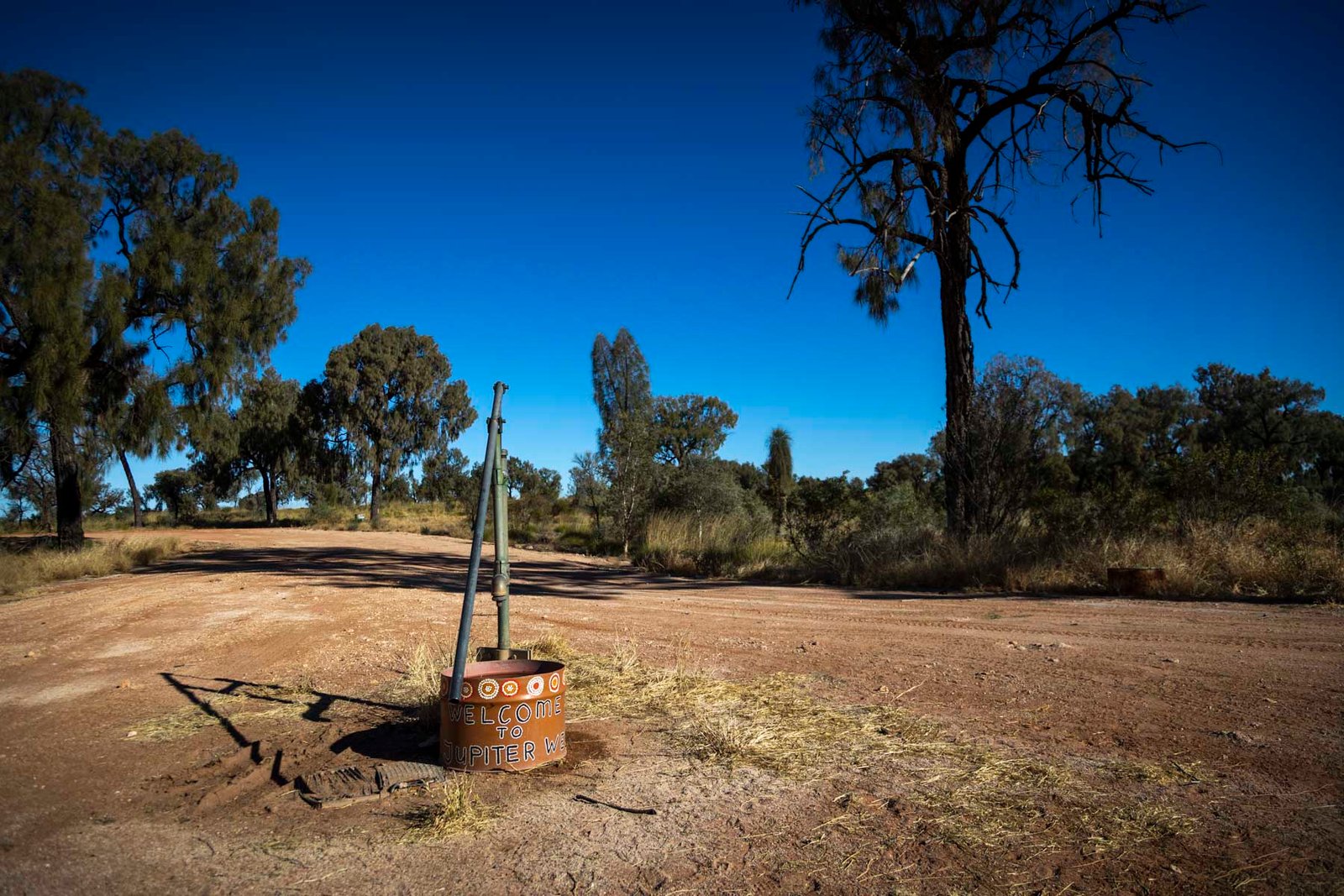
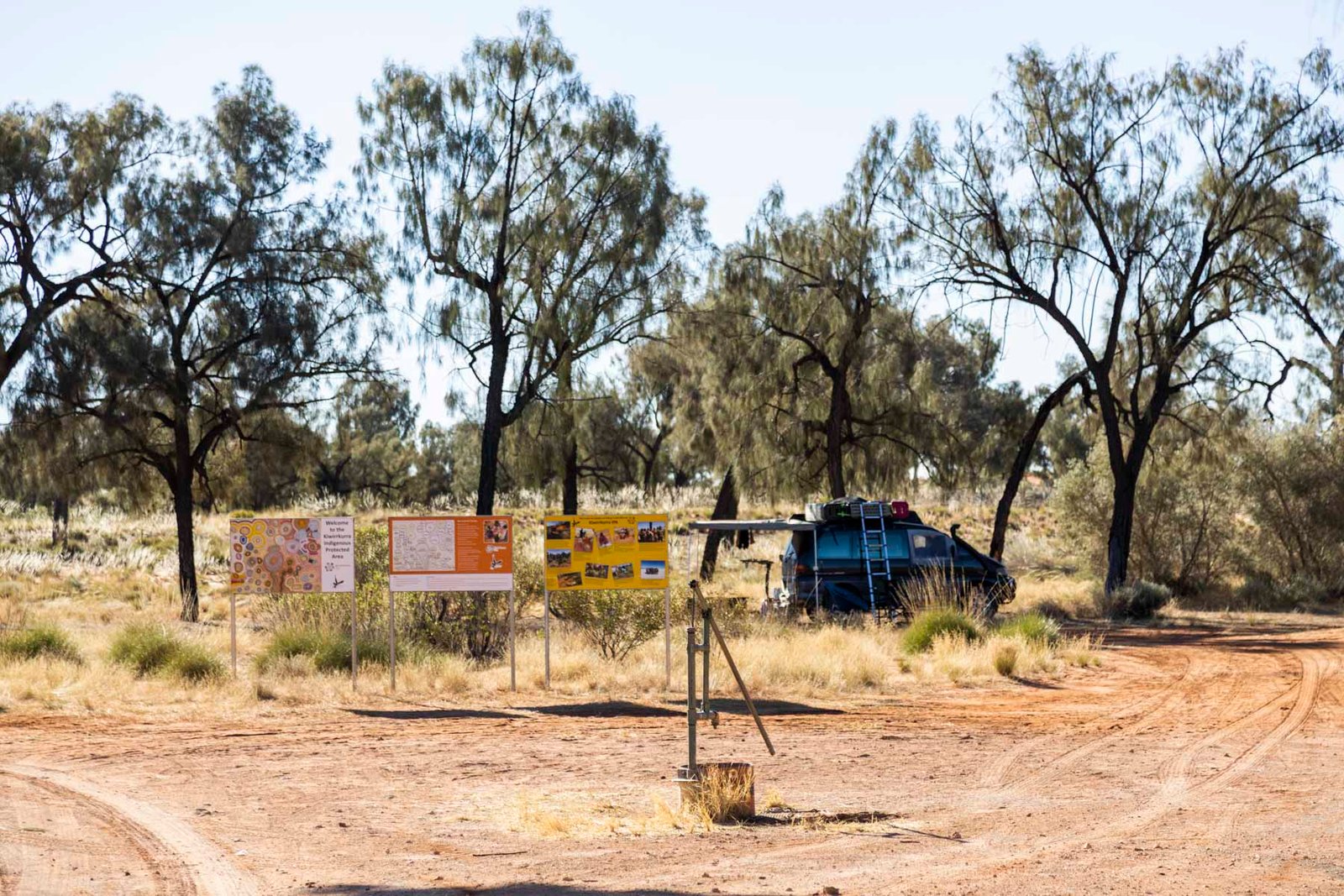
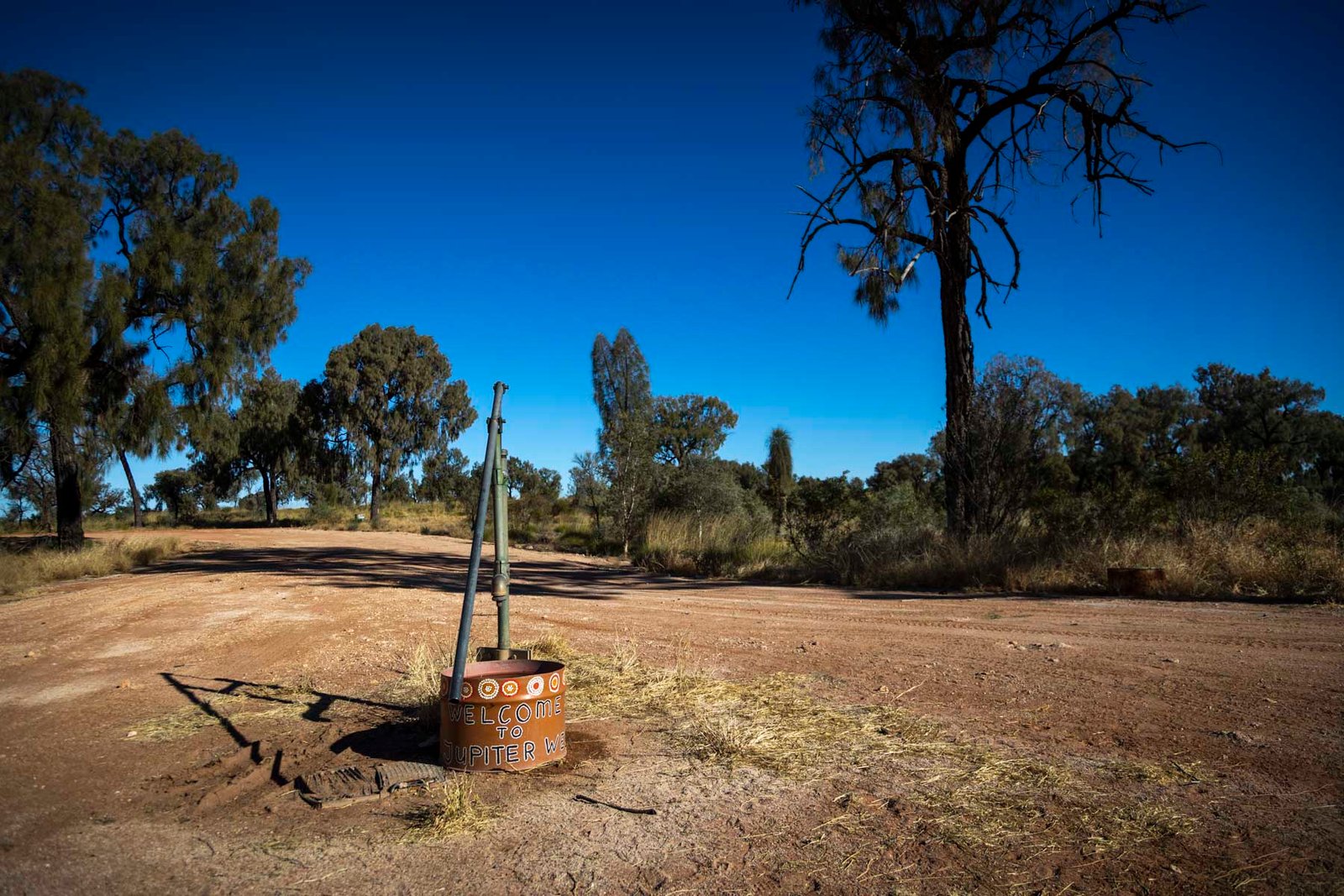
Our next stop was Jupiter Well, where a sign from the local community welcomed us in. Again, charred logs and fire pits were the only sign someone had been here. We were on our own, again, still, in the middle of the outback.
But the sign from the local community made us feel welcome – even if we couldn’t see any evidence that a local community existed.
There was a well, surrounded by hornets and wasps, but if you were lucky, you could get in and get fresh water without disturbing them. We did and celebrated by washing our clothes and splashing ourselves with a ‘Pommy bath’.
On the hill behind our campsite stood a small tin shed with a wire security door. Inside was a 44-gallon drum topped with a toilet seat – a ‘dunny’ with a view of the Australian outback. The toilet may have been rugged, but it was a toilet nonetheless, and it had one of the best views of any toilet anywhere in the world.
We checked out the old and original Jupiter Well and watched the sunset over the surrounding brush.
At Kunawarritji a friendly local, a white man who came from Victoria but had married an Aboriginal woman from up this way, met us at the fuel station and offered to go looking for the store owner.
“He’s just gone to lunch,” he said. “But I’ll get him for you.”
“No rush,” we replied, enjoying the chance to take in the small town, to soak up ‘civilisation’ once again.
We filled up with fuel, bought food in the roadhouse and sat on a wooden park bench outside to take in the essence of this little town.
A man stopped to ask us where we were going, and we chatted for a while.
He told us about the nearby well, ‘the best water there is’, he said, and the local campground.
But we pushed on and headed to Punmu where a tin cow pointed to the international airport and a large water tower nestled into the surrounding hills. In town we found the fuel station, a sign on the pump said $3 a litre.
We drove in search of the community office and found a woman walking along the road who directed us to park right outside the office, in the middle of the deserted street.
“It’s ok there,” she said, pointing to our van.
When we walked into the office a voice called out from an office somewhere.
“Two white fellas, you’re not from around here. Come in, come in, you need fuel, I suppose.”
“Fuel tomorrow and a campsite tonight,” Adrian replied.
He sent us back to the water tank.
“Camp anywhere there,” he said. “There are some people staying in the dongas, don’t mind them, and there are three dingoes nearby.”
We parked the Delica at the water tank and wandered around the deserted buildings yelling out ‘hello’ and looking for signs of life.
Adrian headed into the shower block while I drank a cup of tea and played solitaire outside the van. But when I looked up a dingo was on the other side of the camp table about a metre away from me.
Staring at me.
“Get away, shoo,” I yelled as I jumped up and bounced into the van.
Out the window I could see two dingoes hanging around looking for food.
“There are three of them here,” a voice said as I stepped out of the van.
I turned to see an Aboriginal man staring back at me.
“The man who lives in that house over there feeds them, so they come around all the time begging for food,” he was shaking his head.
“He’s been doing that since they were puppies, but he shouldn’t. They have no fear and if there was a kid here, they’d steal food from the kids. That could be dangerous.
“They’re wild animals, they need to be treated as such.”
Later this man, who was staying in the dongas with his two colleagues while they collected stories from the Aboriginal people living in the local communities, told me his grandfather had been taken as a child.
“He was part of the stolen generation,” he had said quietly. “He grew up near here, but then was taken away.”
His words were matter of fact, thoughtful, contemplative. It was a fact of his life. I felt honoured that he told me about his family history, and sad that this was a part of Australia’s history. It struck me then, that this trip through Australia, and particularly along the Gary Junction Road had taken me deeper into Aboriginal culture and the reality of their lives today, than anything had in my previous 40+ years.
How lucky we are to share this country with the Aboriginal people and their amazing culture, how sad it is that we ignore and disrespect it so.
Back in Punmu, we stopped in for our $3 a litre diesel and were then on our way again.

But we didn’t get far. Lake Dora, a stunning dry salt lake surrounded by low brush, sat alongside the road. We stopped to take a photo and once again marvelled over the beauty of the Australian outback.
We drove along Telfer Mine Rd, alongside the mine and got stuck behind a truck spreading water across the road. The driver looked at us part bemused; part confused. We hadn’t seen another vehicle, other than the odd truck, since the first day when we saw three cars on the Gary Junction Road. No doubt he hadn’t seen any other tourists either. Not for some time.
Within a couple of hours, the corrugations and the dust gave way to bitumen roads, the mountains that surrounded us began to take on a green hue and we felt a sense of lightness.
And we said a quiet thanks to our travel angels for helping us stay safe and find our way through the stunning, but challenging roads of the Australian outback.
Read more about our adventures in Australia here.
Fast Facts
We travelled in 2021.
We spent four days and three nights crossing from the West MacDonnell Ranges in the Northern Territory into Marble Bar in Western Australia.
We slept in our van, a 4WD Mitsubishi Delica.
Highlights: The vastness of the Australian outback is endless and holds a rare natural beauty. The night sky. I cannot stress enough how incredible it is to look up and see a sky full of stars. Interacting with people living in local communities in the outback and learning about lives that are so different to our own.
Join @AllabroadAU on Instagram, Facebook, X and YouTube for more travel inspiration.
Latest Posts